Menu

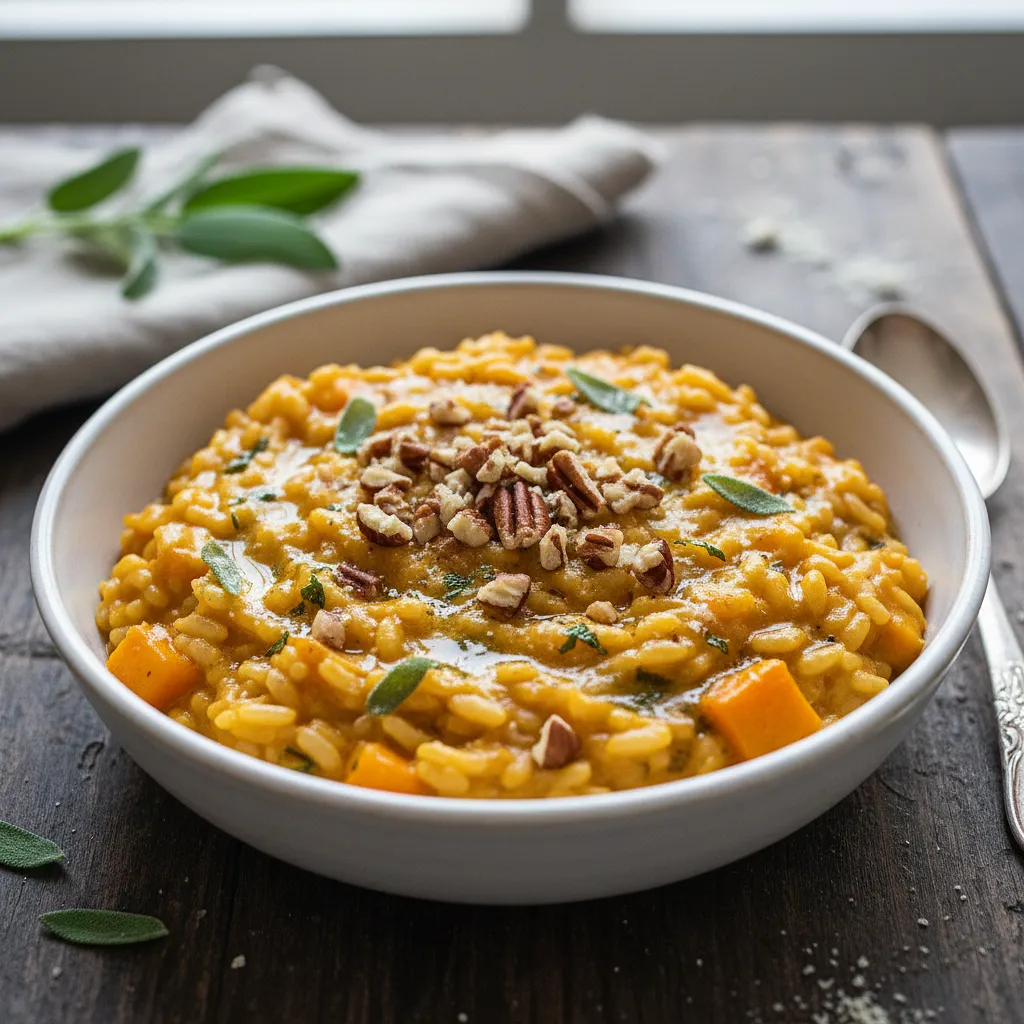
Creamy pumpkin risotto with sage butter and toasted pecans

Pikantne Dania główne Lunches Italian Cuisine 60 min Medium 10 wyświetleń ~51.36 PLN - (0)
Rate:
(0)

Description

This dish is the essence of autumn captured on a single plate. Velvety, creamy risotto in a deep orange color, made with roasted hokkaido pumpkin puree, which gives it natural sweetness and richness. Its flavor is perfectly balanced with the addition of white wine and salty Parmesan cheese. However, the true star is the aromatic sage butter – slightly nutty, with crispy leaves of the herb that pair perfectly with the pumpkin. The dish is finished with toasted pecans, adding a pleasant crunch and depth of flavor. It is not only incredibly tasty but also beautifully presented on the plate. Perfect for an elegant dinner, a family lunch on a chilly day, or simply as a way to lift your culinary spirits. Serve as a standalone main dish, possibly with a light arugula salad.

Składniki (14)

Servings:
4
  • Arborio rice 300 g
  • Hokkaido pumpkin 600 g
  • Vegetable broth 1200 ml
  • Onion 1 szt.
  • Garlic 2 ząbki
  • Dry white wine 100 ml
  • Butter 80 g
  • Parmesan cheese 50 g
  • Extra virgin olive oil 0.2 łyżek
  • Fresh sage 0.5 pęczek
  • Pecan nuts 50 g
  • 🌿 Przyprawy
  • Salt 0.2 szczypt
  • Pieprz czarny świeżo mielony 2 szczypty
  • ✨ Opcjonalne
  • Nutmeg 2 szczypty
💰 Szacowany koszt dania: ~51.36 PLN (12.84 PLN/porcję)

💡 Kliknij na składnik aby oznaczyć jako użyty

Preparation steps

Preparation of ingredients

1

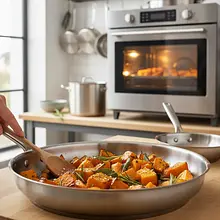
Start by preparing the pumpkin puree. Preheat the oven to 200°C (fan). Wash the hokkaido pumpkin thoroughly, cut it in half, and use a spoon to remove the seeds and fibrous flesh from the inside. Cut the pumpkin into smaller pieces (e.g., into eighths). You do not need to peel the skin. Place the pumpkin pieces on a baking sheet lined with parchment paper, drizzle lightly with oil, and bake for about 25-30 minutes, until the flesh is very soft (check with a fork - it should go in easily).

Ingredients: Hokkaido pumpkin, Extra virgin olive oil
For baking pumpkin, use a standard baking tray from the oven equipment. Do not peel the skin off the hokkaido pumpkin – after baking, it becomes soft and can be blended together with the flesh, which adds color and nutritional value to the puree.
2

Transfer the baked pumpkin to a blender jar or a tall container. Blend until smooth and creamy. If the puree is very thick, you can add 1-2 tablespoons of water or broth to make blending easier. Set the puree aside.

Ingredients: Hokkaido pumpkin
The best option is a high-power jug blender that will ensure a perfectly smooth consistency. If you are using an immersion blender, make sure the container is tall enough to avoid splattering hot pumpkin.
3

Prepare the remaining ingredients. Peel the onion and chop it into very small cubes (about 0.5 cm x 0.5 cm). Peel the garlic and finely chop it or press it through a garlic press. Grate the Parmesan cheese using a fine grater. Pour the vegetable broth into a small pot and heat it over low heat – throughout the cooking of the risotto, it should be hot but not boiling.

Ingredients: Vegetable broth, Onion, Garlic, Parmesan cheese
It is crucial that the broth is hot. Adding cold liquid to hot rice stops the cooking process and makes it difficult for the starch to release, resulting in a non-creamy risotto. Keep the pot of broth on a neighboring burner on low heat.

Cooking risotto

4

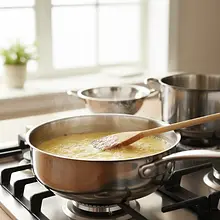
In a large, wide pot or a deep skillet with a thick bottom, heat 2 tablespoons of olive oil and 30g of butter over medium heat. When the butter melts and starts to foam, add the chopped onion. Sauté, stirring occasionally with a wooden spoon, for about 5-7 minutes, until the onion becomes soft and translucent, but not browned. Add the minced garlic and sauté for another minute, until fragrant.

Ingredients: Extra virgin olive oil, Butter, Onion, Garlic
Use a heavy-bottomed pot that distributes heat evenly and prevents the rice from burning. Be careful not to burn the garlic, as it will become bitter and ruin the flavor of the entire dish. One minute of frying is more than enough.
5

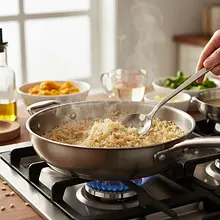
Pour the dry Arborio rice into the pan. Increase the heat and stir vigorously for about 1-2 minutes. Each grain of rice should be coated in fat and become slightly translucent at the edges, with a white, opaque center (the so-called 'pearl'). This process is called 'tostatura' and is crucial for the texture of the risotto.

Ingredients: Arborio rice
Do not skip this step! Toasting the rice 'seals' its outer layer, allowing it to gradually absorb the liquid and release starch, instead of cooking it too quickly. Stir constantly to prevent the rice from burning.
6

Pour white wine into the pan. You will hear a loud sizzling - this is normal. Stir the rice, scraping any bits stuck to the bottom with a wooden spoon, until all the alcohol evaporates and the wine is absorbed by the rice. This should take about 1-2 minutes.

Ingredients: Dry white wine
This process is called 'deglazing'. The acidity of the wine adds freshness and complexity to the risotto. Wait until the smell of alcohol completely disappears before moving on to the next step.
7

Reduce the heat to medium-low. Start adding hot broth, one ladle at a time. Pour in the first ladle and stir slowly but steadily until the rice absorbs all the liquid. Only then add the next ladle. Repeat this process for about 15-18 minutes. The rice should gently 'wink' all the time, not boil violently.

Ingredients: Vegetable broth
This is the most important step in preparing risotto, requiring patience. Slow stirring releases the starch from the rice, creating a creamy sauce. Do not pour all the broth at once! Add it gradually, ladle by ladle, waiting for the previous portion to be absorbed.
8

After about 15 minutes, add the previously prepared pumpkin puree. Mix thoroughly to combine it with the rice. Continue adding broth one ladle at a time until the rice is cooked 'al dente' – soft on the outside but with a slightly firm center. The entire cooking process for the rice should take about 20-25 minutes. Taste a grain to assess its firmness.

Ingredients: Hokkaido pumpkin
The risotto is ready when it has the consistency of thick porridge or lava ('all'onda' in Italian) – it should slowly spread on the plate. If you run out of broth and the rice is still too hard, you can add a little hot water.
9

Remove the pot from the heat. Add the grated Parmesan and the remaining 50g of diced butter. Season with salt, freshly ground pepper, and optionally a pinch of nutmeg. Stir vigorously to melt the butter and cheese, creating an emulsion and giving the risotto its final creaminess. This step is called 'mantecatura'. Cover the pot and let it sit for 2 minutes to allow the flavors to meld.

Ingredients: Parmesan cheese, Butter, Salt, Pieprz czarny świeżo mielony, Nutmeg
The 'mantecatura' step should ALWAYS be done off the heat. Too high a temperature can cause the cheese to curdle and the fat to separate. Vigorous stirring is key to achieving a perfectly creamy, smooth consistency.

Sage butter and additions

10

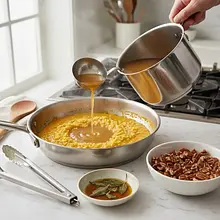
While the risotto is resting, prepare the toppings. In a dry, small skillet, toast the pecans over medium heat for 2-3 minutes, until they start to smell fragrant. Be careful not to burn them. Remove from the skillet and set aside.

Ingredients: Pecan nuts
Roasting nuts releases their natural oils and makes them crunchier and more aromatic. Shake the pan occasionally to ensure they brown evenly.
11

In the same pan, melt the remaining butter (about 50g) over medium heat. When it starts to foam, add the sage leaves. Fry for 1-2 minutes until the butter turns golden brown and begins to smell nutty, and the sage leaves become crispy. Immediately remove from heat to avoid burning the butter.

Ingredients: Butter, Fresh sage
This is 'beurre noisette', or browned butter. Watch it very closely, as the difference between perfectly brown and burnt is very short. When brown specks appear at the bottom and the smell becomes intensely nutty, the butter is ready.

Serving

12

Spoon the hot risotto into deep plates or bowls. Drizzle each serving with a tablespoon of aromatic sage butter, and garnish with crispy sage leaves. Sprinkle with toasted pecans and an extra portion of freshly grated Parmesan. Serve immediately.

Ingredients: Pecan nuts, Parmesan cheese
Risotto tastes best right after preparation, when it is hot and creamy. For serving, use deep plates that will keep the heat longer.

Fun Fact

💡

Legend has it that risotto was born in the 16th century in Milan, when saffron was used not only to color the stained glass during the construction of the Duomo but also... for eating. Master Valerius, responsible for the stained glass, had a student who loved the golden color of saffron so much that he decided to add it to rice at his master's daughter's wedding, thus creating the famous 'Risotto alla Milanese'.

Best for

Tips

🍽️ Serving

Serve the risotto in warmed, deep plates, which will help maintain its perfect temperature and consistency. The same white wine used for cooking pairs perfectly, or another dry white wine with good acidity, such as Sauvignon Blanc or unoaked Chardonnay. For a pop of color, you can add a sprig of fresh parsley.

🥡 Storage

Risotto tastes best fresh. Leftovers can be stored in the fridge in an airtight container for up to 2 days. Unfortunately, after reheating, it loses its creamy consistency. To reheat, transfer it to a pan, add a bit of broth or water, and heat over low heat, stirring constantly until hot. You can also shape the leftover risotto into balls, bread them, and fry them, creating delicious arancini.

📸 Ugotowane przez społeczność

Zaloguj się, aby dodać zdjęcie
Dodaj zdjęcie gotowej potrawy

Po zatwierdzeniu przez moderatora otrzymasz 10 punktów doświadczenia.

🍲

Nikt jeszcze nie dodał zdjęcia. Bądź pierwszy!

Comments (0)

Be the first to comment on this recipe!

Add a comment

You might also like

Recipe Categories

Dania główne
Dania główne in: Sylwester

Dania główne na Sylwestra powinny być sycące i efektowne, aby zadowolić podniebienia wszystkich gości.

See all recipes in this category

Lunches are the main meal of the day - filling, balanced, and full of flavor. Traditional two-course lunches: soup and a main dish in Polish tradition. Pork chop with potatoes and cabbage - a classic of Polish lunches. Dumplings with meat, cheese, and fruit - hand-formed delicacies. Beef goulash,...

See all recipes in this category

Italian cuisine is love at first bite - pasta, pizza, and amore on the plate. Pasta in all shapes: spaghetti, penne, rigatoni, tagliatelle, and lasagna with homemade sauces. Italian sauces: bolognese, carbonara, pomodoro, pesto, and aglio e olio - classics. Neapolitan pizza with a crispy crust an...

See all recipes in this category

Vegetarian cuisine is a wealth of flavors without meat - healthy, colorful, and filling. Plant-based proteins: lentils, chickpeas, beans, peas, and soy take center stage. Cheeses and dairy: feta, halloumi, ricotta, and mascarpone in main dishes. Eggs in various forms: omelets, frittata, shakshuka...

See all recipes in this category
I don't know
I don't know in: For Kids

Don't know what to cook? This category is your culinary compass - inspirations for every occasion. Random recipes from various categories - discover something new every day. Quick dishes in 30 minutes - when you don't have time to cook. Recipes using what you have in the fridge - zero food waste....

See all recipes in this category
Reklama