Salt
Description
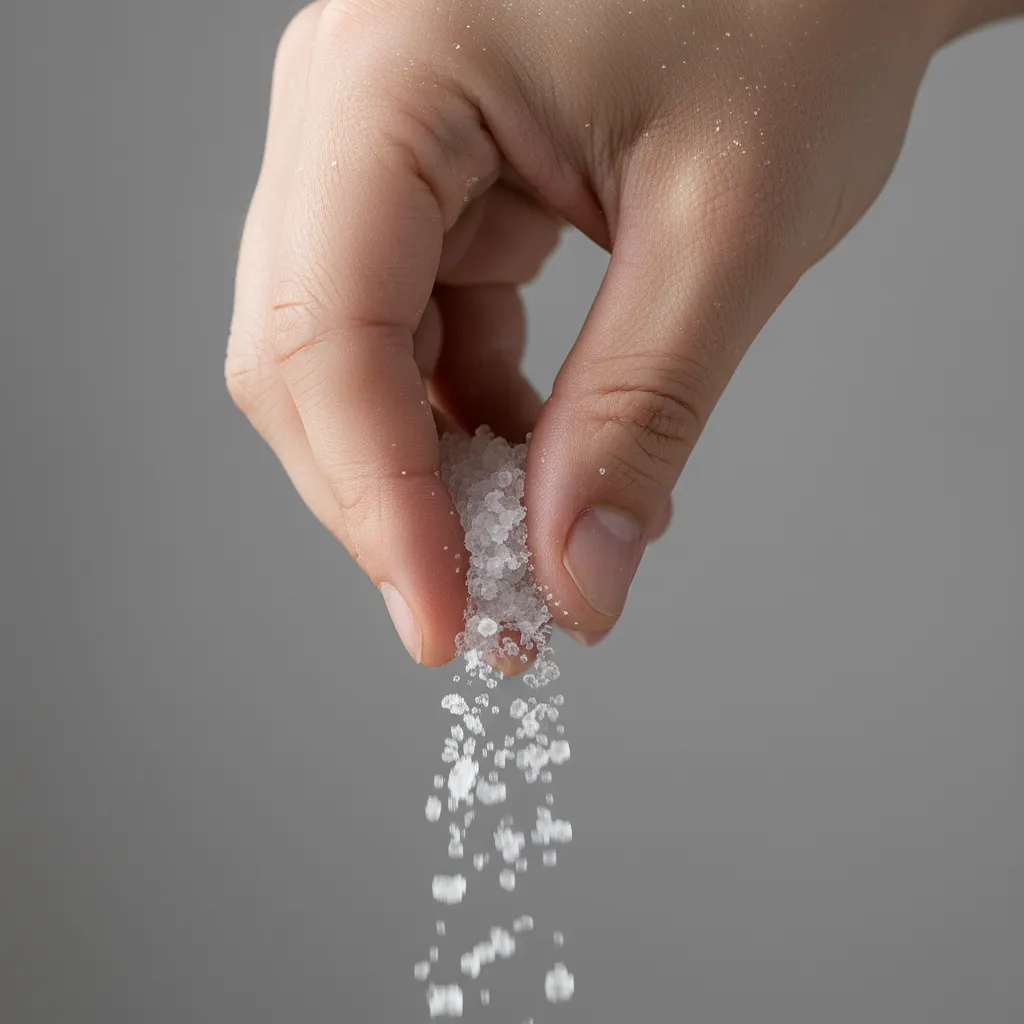
Salt is a white, crystalline mineral with a distinct salty taste; it comes in grains ranging from very fine to coarse flakes and in varieties such as table salt, sea salt, or Himalayan salt, differing in color and texture. Chemically, the dominant component is sodium chloride, and salt itself does not provide calories or fats, but it is the main source of sodium, essential for maintaining fluid balance, conducting nerve impulses, and muscle function; small amounts of iodized salt prevent iodine deficiency and thyroid diseases, while excess sodium is associated with the risk of hypertension. In the kitchen, salt enhances and balances flavors, preserves products, regulates yeast activity in baking, and breaks down proteins in meat and fish during curing; it pairs well with almost all dishes — soups, meats, vegetables, baked goods, and marinades. It should be stored in an airtight, dry container away from moisture and direct light, using a dry spoon to avoid clumping and contamination.