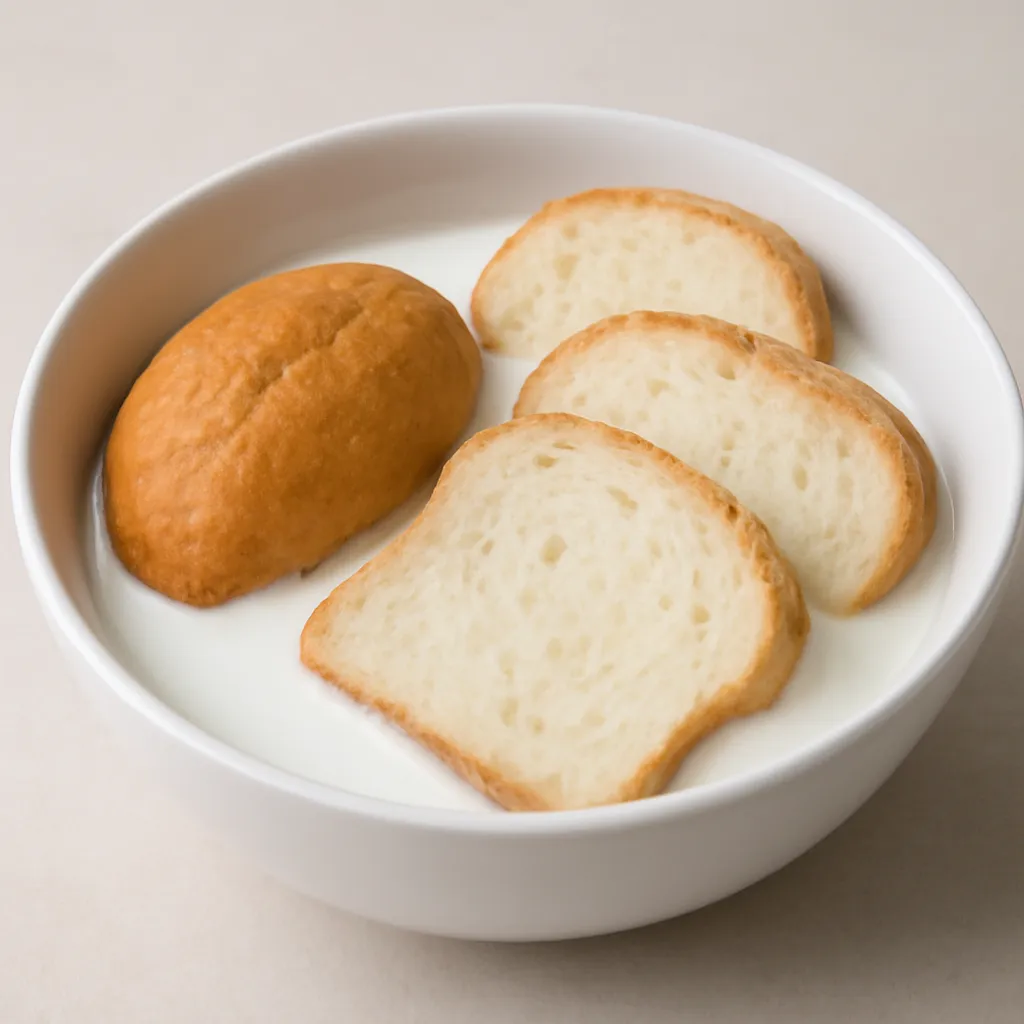
Stale wheat roll
Description
Stale bread has a distinctly dry, hard crust and a dense, slightly yellowish crumb with a mild, grainy, somewhat sweet flavor. The loss of moisture enhances the structure and aroma of the flour, making it easier to slice and bread. Nutritionally, it remains a source mainly of starchy carbohydrates, a small amount of protein, and trace amounts of fat, as well as minerals and B vitamins; due to its lower water content, it provides slightly more calories per serving compared to fresh bread. As a dietary element, it serves as a quick source of energy and helps with the feeling of fullness, and its further use reduces food waste. In the kitchen, stale bread is exceptionally versatile: it is great for breadcrumbs, fillings, meatballs, and casseroles, for thickening soups, for croutons or bread pudding, and can also be refreshed in the form of French toast after soaking. It is best stored in a dry place in a paper bag or a container that allows for ventilation for the short term, and for longer storage in the freezer; to refresh it, simply moisten and bake in the oven or toaster.