Blue cheese
Description
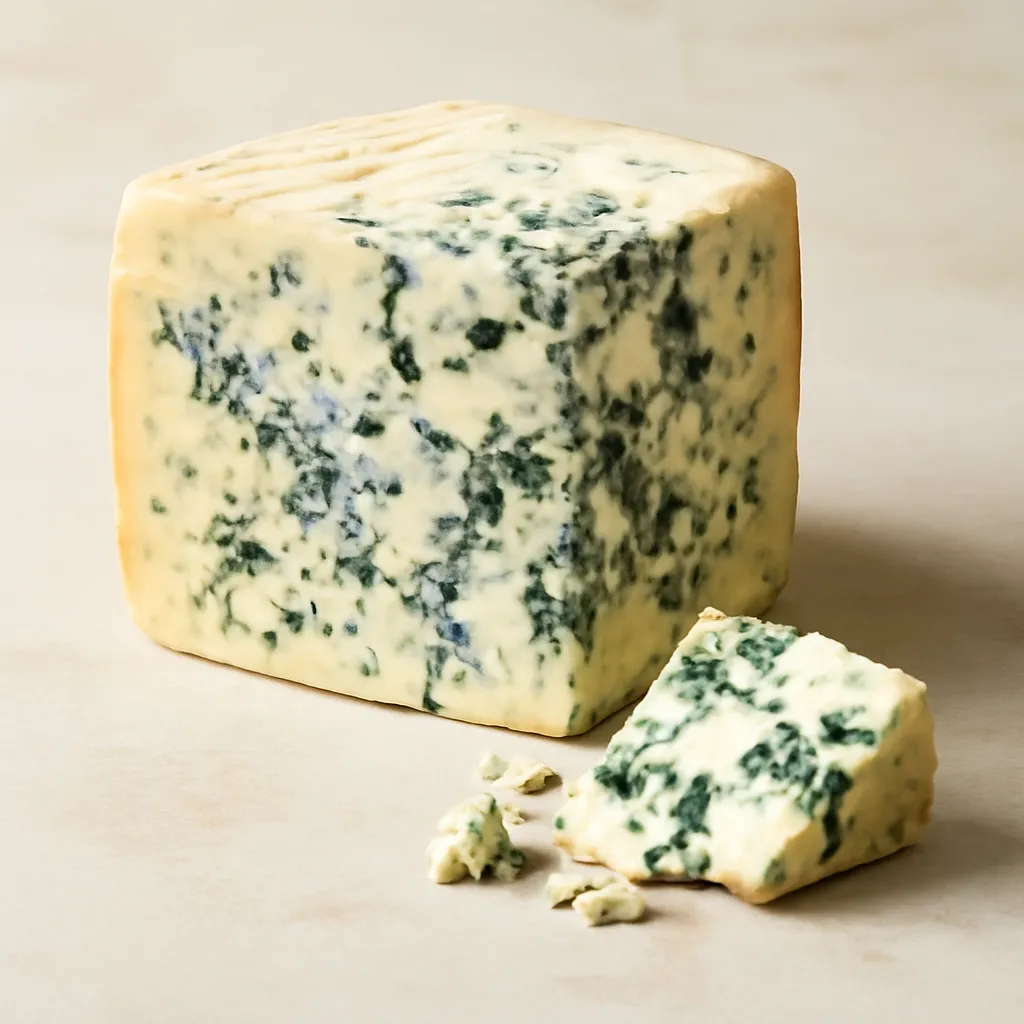
Blue cheese is characterized by a distinct, spicy-salty flavor with nutty and earthy notes, along with an intense blue-green network of mold veins on a creamy or crumbly texture. The appearance and aroma may vary depending on the aging process, but it always attracts attention with its contrasting color and scent. Nutritionally, it is a good source of protein, calcium, phosphorus, and B vitamins, especially B12; it also contains saturated fats and sodium, so it is advisable to consume it in moderation. Benefits include support for bone health and protein supplementation in the diet, and the presence of mold cultures may enhance flavor qualities and, in some cases, gut microbiota. In the kitchen, it works well in salads with fruits (pear, figs), sauces, in risotto, on pizza, in spreads, and baked with honey or nuts, as well as an addition to a cheese and wine board. Store in the refrigerator wrapped in parchment and loosely in foil or in a container, at a temperature of 2–6°C, separately from delicate products, and consume within 1–3 weeks; freezing is not recommended due to changes in texture.