Water (for soaking and blanching vegetables)
Description
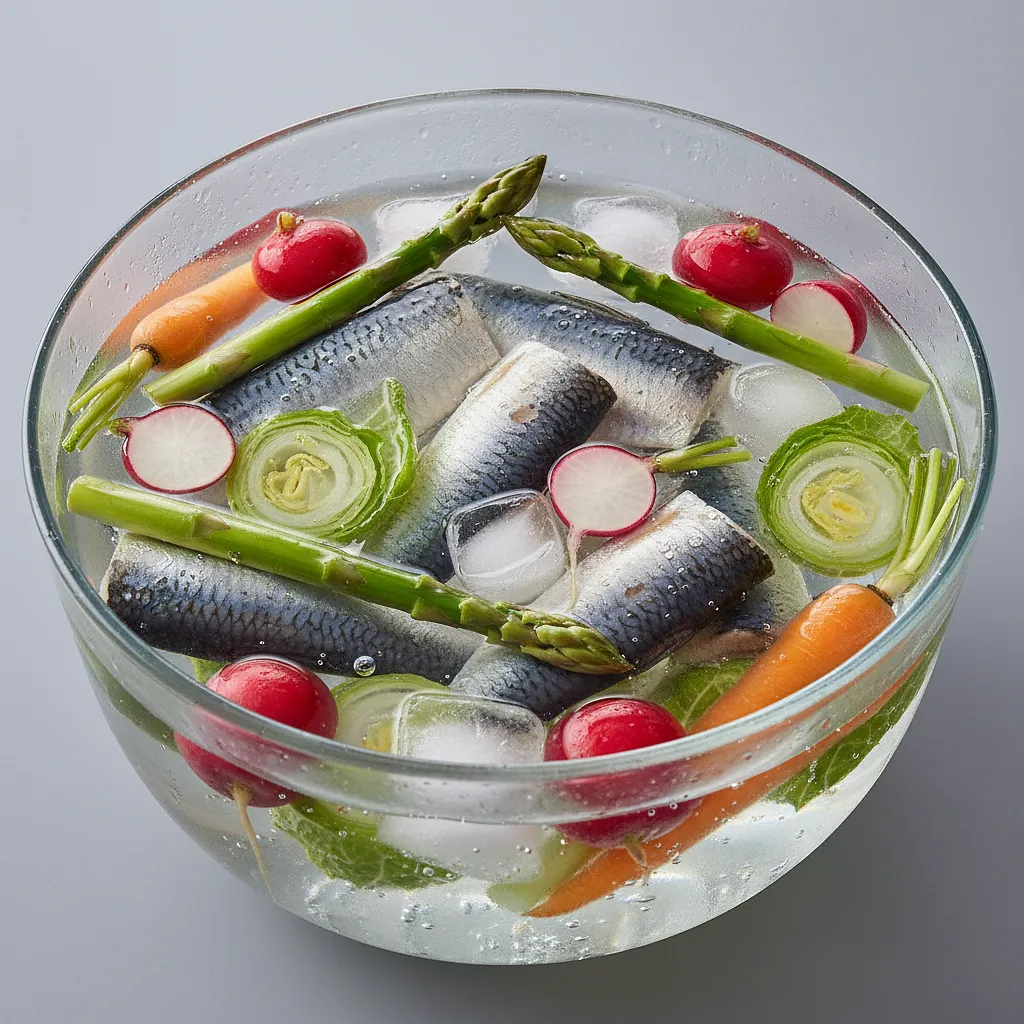
Water for soaking and blanching vegetables is colorless and transparent, usually tasteless and odorless, although it may have a slight flavor depending on mineral content. Its neutrality ensures that it does not mask the natural aromas of the vegetables, and blanching with hot or cold water affects the texture and color of the products. Nutritionally, water does not provide calories or macronutrients, but it is essential for proper hydration and metabolic processes; mineral water can replenish electrolytes. In the kitchen, it is used for rinsing, soaking to remove sand and bitterness, blanching and cooling after heat treatment, as well as a base for cooking and preparing soups. Store drinking water in clean, airtight containers in a cool, dark place and use fresh water for subsequent soaks; bottled water should be chilled and consumed within a few days after opening.