Menu

Toffee candies

Desserts Snacks 150 min Medium 14 wyświetleń ~29.17 PLN - (0)
Rate:
(0)

Description

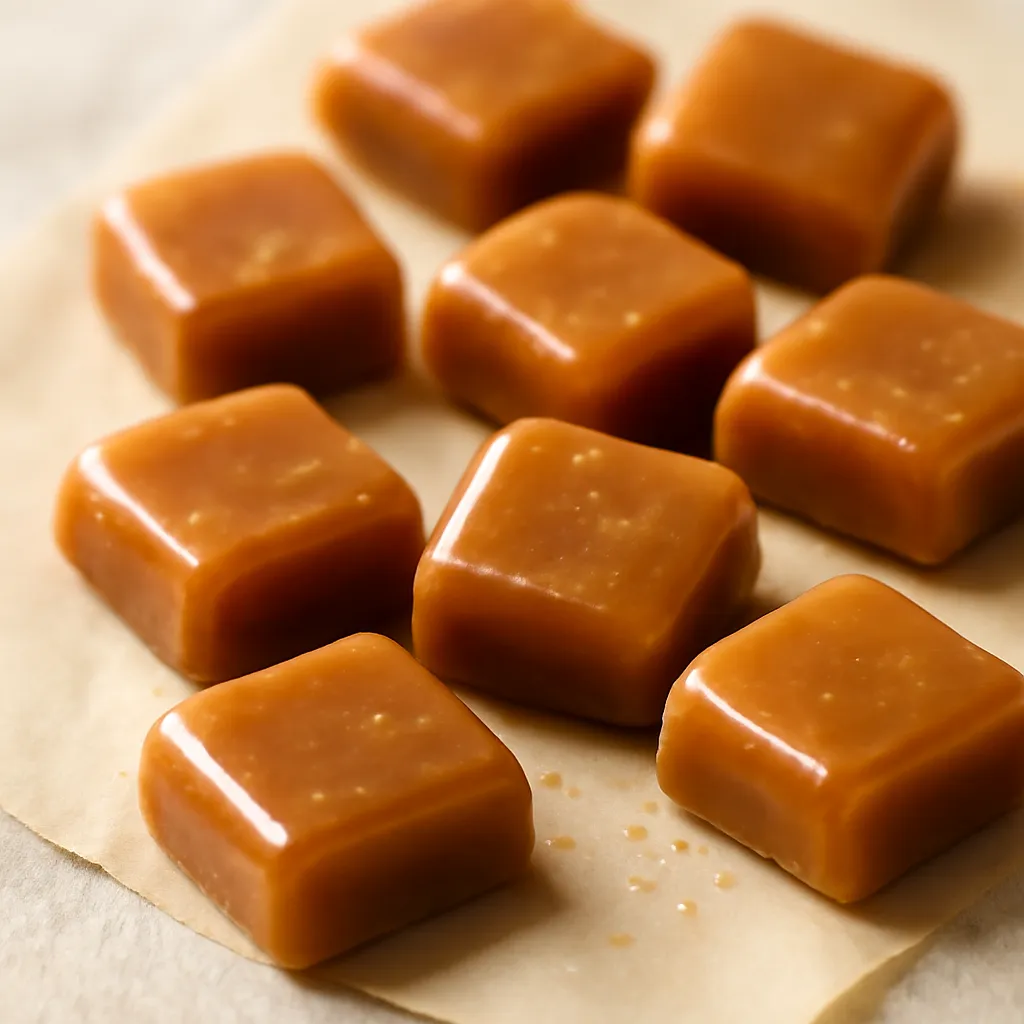
Toffee candies are classic, chewy sweet-and-salty caramels with a golden-amber color and a velvety texture. Made from sugar, glucose syrup, heavy cream, and butter, they have a rich, buttery-caramel flavor that contrasts beautifully with a delicate sprinkle of sea salt or crunchy nuts. Toffee comes from the confectionery traditions of Europe and America — they are a popular feature of sweet buffets, homemade gifts, and New Year's Eve parties, as they can be individually wrapped and displayed beautifully on a table. They look great as hand-wrapped candies in transparent foil: shiny, with an even color, sometimes with small pieces of nuts. They are perfect to serve with coffee, dessert liqueurs, or as a sweet touch in gift boxes.

Składniki (9)

Servings:
60
  • White sugar 600 g
  • Glucose syrup 200 g
  • Cream 30-36% 300 ml
  • Butter 120 g
  • Vanilla extract 5 g
  • Water 60 ml
  • 🌿 Przyprawy
  • Table salt 6 g
  • ✨ Opcjonalne
  • Coarse sea salt (for sprinkling) 3 g
  • Chopped walnuts (optional) 100 g
💰 Szacowany koszt dania: ~29.17 PLN (0.49 PLN/porcję)

💡 Kliknij na składnik aby oznaczyć jako użyty

Preparation steps

Preparing the toffee

1

Prepare all the dishes and tools: measure and place next to each other the sugar, syrup, cream, butter, and salt. Line a 20x30 cm baking tray (or a pan of similar size) with parchment paper and lightly grease the paper with butter so the toffee doesn't stick. Set the digital candy thermometer or classic candy thermometer ready for use.

Use a heavy pot with a thick bottom (diameter 18-20 cm) that distributes heat evenly. Prepare a silicone spatula, kitchen scale, measuring cup, knife, and a sheet of wrapping paper. Do not start heating until everything is at hand - the process requires attention.

2

Measure and weigh the ingredients: 600 g of sugar, 200 g of glucose syrup, 300 ml of cream, 120 g of butter, 6 g of salt, 5 g of vanilla extract, 60 ml of water. If using nuts, toast them in a dry pan for 2-3 minutes until fragrant and lightly browned, then chop and set aside.

Ingredients: White sugar, Glucose syrup, Cream 30-36%, Butter, Table salt, Vanilla extract, Chopped walnuts (optional), Water
Precise weighing is key in baking — use a kitchen scale with an accuracy of 1 g. Do not add nuts to the mixture while cooking; they will be added on top or mixed in after the mixture has been set aside.
3

In a heavy pot, combine sugar and water. Over medium heat, warm the mixture, stirring only for the first 1-2 minutes with a wooden spoon to evenly moisten the sugar. Once the sugar has dissolved (the mixture becomes clear), stop stirring - from this point on, gently swirl the pot to dissolve any potential crystals, but do not stir vigorously.

Ingredients: White sugar, Water
Use a wooden or silicone spatula for initial mixing. If you see sugar crystals on the edges, you can wipe them with a damp brush. Do not add extra water while cooking.
4

When the sugar mass reaches a light golden color and the sugar has completely dissolved (this usually takes 6-10 minutes from boiling), pour in the glucose syrup. Gently increase the heat to medium and allow the mixture to boil. At this point, prepare the candy thermometer — attach it to the side of the pot so that its sensor is submerged in the liquid but does not touch the bottom of the pot.

Ingredients: Glucose syrup
Glucose syrup prevents excessive crystallization. Be careful, as the mixture is hot and may splatter. Continuous stirring after adding the syrup is not recommended — you can only vigorously swirl the pot.

Cooking toffee

5

Bring the mixture to a boil and cook without stirring (you can gently swirl the pot) until the temperature on the thermometer reaches 124°C (you can aim for the range of 120–125°C depending on your preferred hardness: 118–120°C for soft toffee, 122–125°C for harder). The entire process from the moment it boils takes about 10–20 minutes.

Ingredients: White sugar, Glucose syrup
This is a KEY step — use a precise candy thermometer. If you don't have a thermometer, you can perform the cold water test: put a teaspoon of cold water and drop a bit of the mixture; if it forms a soft ball, it's close to soft-ball stage (about 118–120°C). Remember that the mixture is very hot — avoid skin contact with it.

Finishing the mixture

6

When the temperature reaches the desired 124°C, immediately remove the pot from the heat. Slowly and carefully pour in the warmed cream (heat it beforehand to slightly warm, 35–40°C, to avoid vigorous bubbling). Pour in a thin stream while continuously stirring with a silicone spatula. The mixture will splatter intensely and increase in volume — do this carefully.

Ingredients: Cream 30-36%
Heated cream reduces the temperature difference and limits splattering. Use kitchen gloves to protect your hands from the hot steam. A silicone spatula will work better than a metal one, as it doesn't stick.
7

After adding the cream, add the cold butter cut into pieces and the salt. Stir vigorously until the butter is completely melted and the mixture is smooth, thick, and shiny — this takes 1–2 minutes. Finally, add the vanilla extract and mix quickly.

Ingredients: Butter, Table salt, Vanilla extract
It's best to add the butter in batches to prevent the mixture from separating. If you notice that the mixture is grainy, continue to stir vigorously over low heat for 30–60 seconds, but do not let it get too hot again.

Shaping and Cooling

8

Quickly pour the hot mixture into the prepared pan lined with baking paper. Use a silicone spatula to spread the mixture evenly. If you are using nuts, sprinkle them evenly over the surface right after pouring. If you want sea salt, sprinkle the coarser crystals right after pouring (the mixture should still be liquid for the salt to settle slightly).

Ingredients: Chopped walnuts (optional), Coarse sea salt (for sprinkling)
Act quickly — the mixture will set within a few minutes. Make sure the surface is even, as it will be difficult to level it after it has set. The best temperature for pouring the toffee is when the mixture is hot but does not burn upon brief touch (use the distance of a finger).

Cooling

9

Set the mold in a cool, but not icy place (room temperature about 18–22°C) and leave it to set for 2 hours, until the mixture is completely firm. If you want to speed up the process, you can place the mold in the refrigerator for 30 minutes after 90 minutes — but do not leave it longer than an hour, as the toffee may become too hard.

Avoid drafts that can cause uneven concentration. A kitchen countertop or a shelf in a cool room is suitable for cooling.

Slicing and Packaging

10

Once fully set, remove the toffee block from the mold along with the paper and turn it onto a board. Remove the paper and, using a sharp knife dipped in hot water (dried with a towel), cut into rectangles or squares measuring about 2.5 x 2.5 cm (this yields about 60 pieces). If the mixture crumbles slightly while cutting, heat the knife in hot water and cut quickly.

Dip the knife in hot water before each cut to achieve even edges. Be careful of the steam when heating the knife.

Packing and storage

11

Wrap each piece individually in parchment paper or candy foil, twisting the ends like a candy. Place the wrapped candies in an airtight container, layering them with parchment paper to prevent sticking.

If you plan to store them for a longer time, keep the candies in a dry, cool place (15–20°C). Do not put them in the freezer, as the temperature change may alter the texture.

Final tips

12

Before serving, allow the candies to reach room temperature (if they were stored in the cold). Serve on a tray in small paper cups or arrange in decorative bowls on the dessert table. If you are preparing a New Year's sweet buffet, optionally label the version with nuts so that guests with allergies can easily avoid them.

Ingredients: Coarse sea salt (for sprinkling), Chopped walnuts (optional)
Additionally, you can add more sea salt or sprinkle with cocoa instead of nuts for a different flavor version. Make sure to provide labels for guests with allergies.

Fun Fact

💡

The word 'toffee' appeared in the English vocabulary in the 19th century and likely comes from regional expressions describing sticky, sweet treats. In 19th-century England, toffee became a popular homemade confection sold at fairs.

Best for

Tips

🍽️ Serving

Serve the toffee in small paper cups or individually wrapped in parchment. Arrange on a tray along with small cards informing about the ingredients (e.g., nuts). Excellent alongside espresso, milk coffee, or dessert liqueurs (e.g., Baileys).

🥡 Storage

Store in an airtight container at room temperature (15–20°C) for up to 2 weeks. Separate layers with parchment paper to prevent the candies from sticking together. In the fridge, the toffee hardens and becomes less chewy - before serving, let it sit for 20–30 minutes at room temperature to regain its elasticity.

📸 Ugotowane przez społeczność

Zaloguj się, aby dodać zdjęcie
Dodaj zdjęcie gotowej potrawy

Po zatwierdzeniu przez moderatora otrzymasz 10 punktów doświadczenia.

🍲

Nikt jeszcze nie dodał zdjęcia. Bądź pierwszy!

Comments (0)

Be the first to comment on this recipe!

Add a comment

You might also like

Recipe Categories

Desserts
Desserts in: Christmas Eve Dinner

Desserts are a sweet ending to a meal that brings joy to both children and adults. In this category, we present recipes for a variety of sweets - from simple creams and mousses, to elegant panna cottas, and exquisite fruit tarts. Our desserts include both classics of Polish cuisine - fruit jelly,...

See all recipes in this category
Snacks
Snacks in: Christmas Eve Dinner

Snacks are small pleasures between meals - savory, sweet, and always delicious. Vegetable chips, seasoned popcorn, and roasted nuts - healthy alternatives. Dips and spreads: hummus, guacamole, tzatziki, and baba ghanoush with vegetables. Skewers, canapés, and finger sandwiches for a party - elega...

See all recipes in this category
Reklama