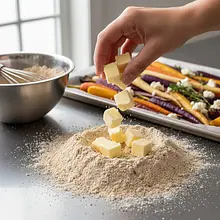
Prepare a large bowl or a work surface. Add both types of flour: wheat and buckwheat, as well as 3 pinches of salt. Mix the dry ingredients using a whisk or a fork to distribute them evenly and aerate.
Description
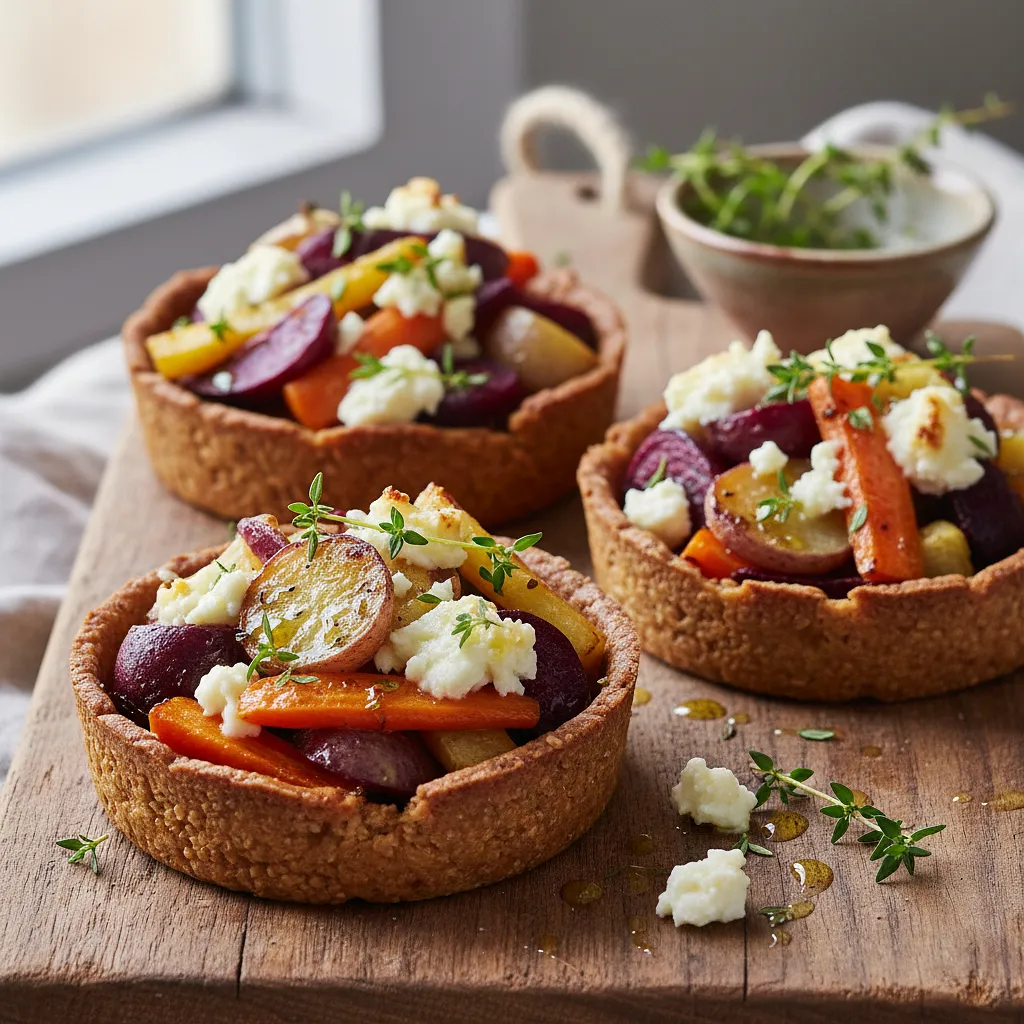
This is an exquisite yet simple dish that is perfect as a takeout meal, an elegant appetizer, or a light dinner. The crispy, slightly nutty base made with buckwheat flour provides an excellent foundation for sweet, caramelized root vegetables – carrots, parsnips, and beets. The dish is completed with creamy, slightly tangy goat cheese and aromatic, fresh thyme. The tartlets delight not only with their depth of flavor but also with their appearance – the contrasting colors of the roasted vegetables and white cheese create an appetizing composition. They are delicious both warm, straight from the oven, and at room temperature, making them an ideal choice for a lunchbox. Served with a simple arugula salad and vinaigrette, they create a wholesome, balanced meal.
Składniki (17)
- Wheat flour type 500 120 g
- Buckwheat flour 80 g
- Cold butter 100 g
- Egg yolk 1.1 szt.
- Cold water 30 ml
- Carrot 1.9 szt.
- Parsnip 150 g
- Beetroot 100 g
- Extra virgin olive oil 0.2 łyżek
- 30% cream 150 ml
- Egg 2 szt.
- Ser kozi 100 g
- Fresh thyme 0.1 pęczków
- 🌿 Przyprawy
- Salt 0.2 szczypt
- Pieprz czarny świeżo mielony 2 szczypty
- ✨ Opcjonalne
- Walnuts 30 g
- Liquid honey 15 g
💡 Kliknij na składnik aby oznaczyć jako użyty
Preparation steps
Buckwheat Shortcrust Pastry
Take the butter straight from the fridge and cut it into small cubes (about 1x1 cm). Add the butter cubes to the flour. Using a knife or a special pastry cutter, vigorously chop the butter with the flour until clumps resembling wet sand or coarse crumbs form. You can also rub the butter into the flour with your fingertips, but do it quickly to prevent the butter from warming up.
Make a well in the center of the mixture. Crack an egg yolk into it and pour in very cold water. Now, quickly knead all the ingredients into a uniform ball. Do not knead the dough for long – just enough for the ingredients to combine. Wrap the ball of dough in plastic wrap and flatten it slightly into a disc.
Place the dough wrapped in foil in the refrigerator for at least 30 minutes, preferably for an hour. Chilling the dough is crucial – this allows the butter to firm up again and the gluten in the flour to 'rest', which will make the dough flaky and prevent it from shrinking during baking.
Roasted vegetable filling
In the meantime, prepare the vegetables. Preheat the oven to 200°C (fan). Peel the carrot, parsnip, and beetroot using a vegetable peeler. Then cut them into even, small cubes about 1 cm on each side. Even size will ensure that all the vegetables roast at the same time.
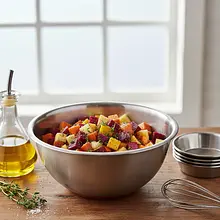
Transfer the chopped vegetables to a bowl. Drizzle with olive oil, add leaves from 2-3 sprigs of thyme, and season with salt and pepper. If using, also add honey. Mix everything thoroughly with your hands so that each vegetable is coated with a thin layer of oil and seasoning. Spread the vegetables in a single layer on a baking sheet lined with parchment paper and place in the preheated oven for 20-25 minutes. The vegetables should be soft and slightly caramelized at the edges.
Assembling and baking the tartlets
Take the chilled dough out of the fridge. Dust the work surface with a little flour and roll out the dough into a circle about 3 mm thick. Using a bowl or a rim, cut out 4 circles with a diameter larger than the diameter of the tartlet molds (about 12-14 cm). Gently press the dough into 4 tartlet molds with a diameter of 10 cm, pressing the dough against the bottom and sides. Trim off the excess dough with a knife.
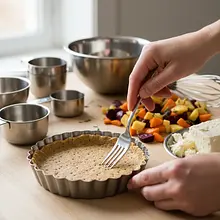
Prick the bottom of each tartlet shell with a fork in several places. This will prevent the dough from puffing up during baking. Then cover each tartlet pan with a piece of parchment paper and weigh it down with dry beans, peas, or special ceramic baking beads. Place in an oven preheated to 190°C and bake for 15 minutes. After this time, carefully remove the paper with the weights and bake for another 5-7 minutes, until the bottoms are lightly golden.
Evenly distribute the roasted vegetables on the pre-baked crusts. Crumble goat cheese on top, spreading it among the vegetables. If using, sprinkle everything with coarsely chopped walnuts.
Carefully pour the prepared egg and cream mixture over the ingredients in the molds, filling them almost to the top. Place a small sprig of fresh thyme on top of each tartlet. Put the tartlets back in the oven and reduce the temperature to 180°C. Bake for 20-25 minutes.
Remove the finished tartlets from the oven and set them on a rack to cool for at least 15 minutes. This will allow the filling to set and make it easier to remove from the molds. Serve warm or at room temperature, garnished with fresh thyme leaves.
Egg and cream mixture
In a medium bowl, whisk 2 eggs with a whisk. Add 30% cream, 2 pinches of salt, and 2 pinches of freshly ground pepper. Mix vigorously until the ingredients combine into a uniform, smooth mixture.
Fun Fact
Buckwheat flour, despite its name, is not related to wheat and does not contain gluten. It is made from the seeds of common buckwheat, a plant related to rhubarb and sorrel. It was one of the staple foods in Slavic regions as early as the Middle Ages.
Best for
Tips
Serve the tarts warm or at room temperature. They pair wonderfully with a light salad of arugula, lamb's lettuce, and cherry tomatoes, drizzled with a simple vinaigrette made from oil and lemon juice. For added sweetness, you can gently drizzle them with a stream of liquid honey just before serving.
Store the finished tartlets in the refrigerator in an airtight container for up to 3 days. They can be eaten cold straight from the fridge or warmed up. To maintain the crispness of the pastry, it is best to heat them in an oven preheated to 160°C for about 10-12 minutes, rather than in the microwave.
📸 Ugotowane przez społeczność
Zaloguj się, aby dodać zdjęcieDodaj zdjęcie gotowej potrawy
Po zatwierdzeniu przez moderatora otrzymasz 10 punktów doświadczenia.
Nikt jeszcze nie dodał zdjęcia. Bądź pierwszy!
Comments (0)
Be the first to comment on this recipe!
Add a comment