Preheat the oven to 200°C (fan). Wash the hokkaido pumpkin thoroughly, as we will be roasting it with the skin on. Cut it in half with a sharp, large knife and use a spoon to remove all the seeds and fibrous flesh from the inside. Then, cut the pumpkin into cubes about 2-3 cm on each side.
Description
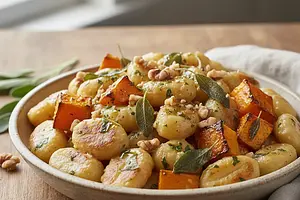
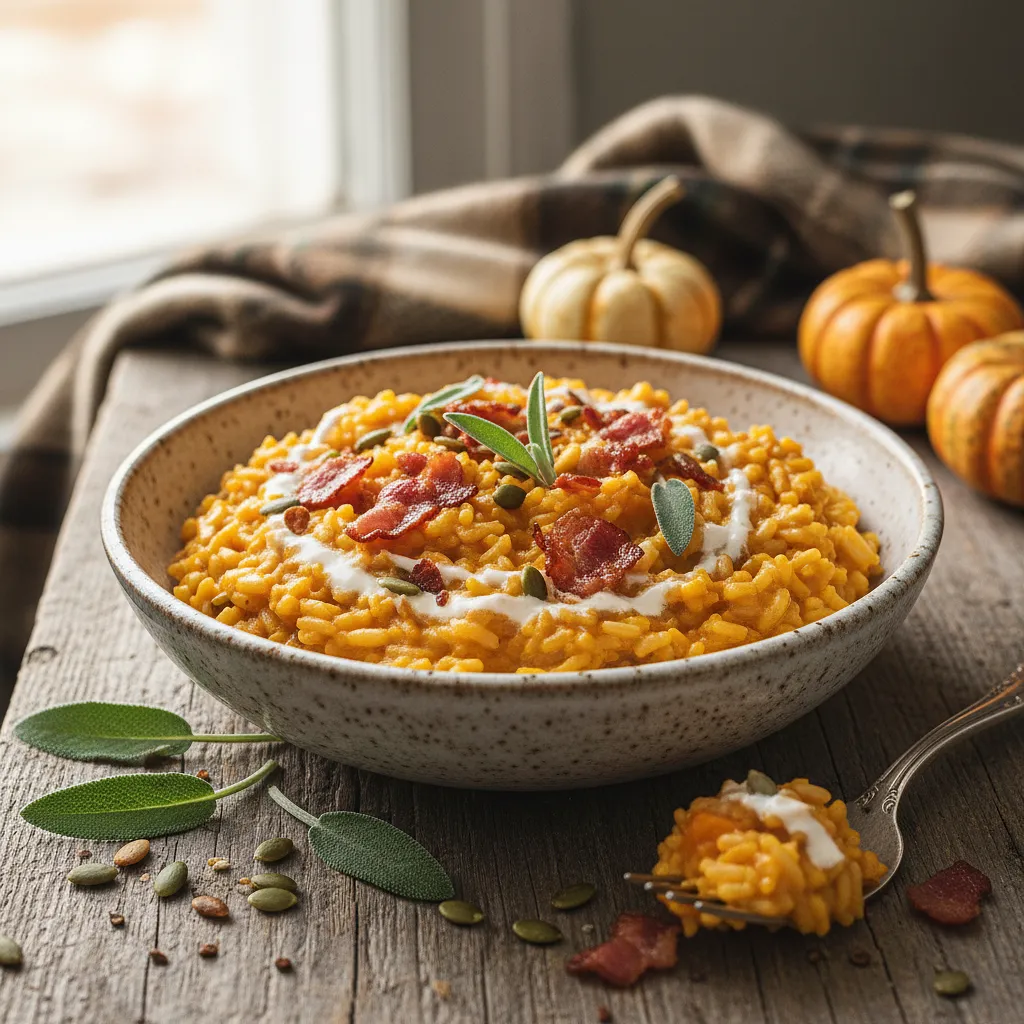
This dish is the essence of autumn captured in a deep bowl. Velvety, creamy risotto with an intensely orange color, made with roasted hokkaido pumpkin, which gives it natural sweetness and depth of flavor. Its rich, buttery character perfectly balances the addition of white wine and salty Parmesan cheese. The whole is enriched with crispy, smoky pieces of bacon and aromatic, butter-fried sage leaves that add an herbal note and extraordinary texture. This risotto is a classic dish of Northern Italian cuisine that requires patience and attention, but the end result is absolutely worth every minute of stirring. Serve it as an elegant main course for dinner or a hearty, warming lunch on a chilly day. Its appearance is as impressive as its taste – a true feast for the senses.
Składniki (15)
- Arborio rice 300 g
- Hokkaido pumpkin 500 g
- Vegetable broth 1200 ml
- Boczek wędzony parzony 100 g
- Onion 1 szt.
- Garlic 2 ząbki
- Dry white wine 100 ml
- Parmesan cheese 50 g
- Butter 50 g
- Extra virgin olive oil 0.2 łyżek
- Fresh sage 0.5 pęczek
- 🌿 Przyprawy
- Salt 0.2 szczypt
- Pieprz czarny świeżo mielony 2 szczypty
- ✨ Opcjonalne
- Pumpkin seeds 20 g
- Nutmeg 2 szczypty
💡 Kliknij na składnik aby oznaczyć jako użyty
Preparation steps
Preparing the pumpkin
Transfer the chopped pumpkin onto a baking sheet lined with parchment paper. Drizzle with half of the olive oil (about 15g), and sprinkle with salt and pepper. Mix thoroughly with your hands to ensure each piece is coated with oil and seasonings. Spread the pumpkin in a single layer and place it in the preheated oven. Bake for 25-30 minutes, until the pumpkin is tender and slightly browned at the edges. You can check its tenderness by piercing a piece with a fork.
When the pumpkin is roasted, take it out of the oven. Transfer half of the roasted cubes to a tall container or blender bowl. Add about 100 ml of hot broth and blend until smooth and creamy. If the purée is too thick, add a little more broth. Set the remaining pumpkin cubes aside.
Preparation of toppings
Cut the bacon into small cubes or thin strips. Place the chopped bacon in a cold, dry skillet and set to medium heat. Cook slowly, stirring occasionally, until the fat renders and the bacon becomes golden and crispy. This will take about 8-10 minutes. Use a slotted spoon to transfer the cooked bacon to a plate lined with paper towels to drain excess fat. Leave the rendered fat in the skillet.
In a pan with the bacon fat, add 1 tablespoon of butter (about 15g). When the butter melts, toss in the washed and dried sage leaves. Fry on medium heat for 1-2 minutes on each side until they become crispy and slightly translucent. Be careful not to burn them. Transfer the finished leaves to a paper towel.
Cooking risotto
Meanwhile, prepare the remaining ingredients. Peel the onion and chop it into very small cubes. Peel the garlic and finely chop it or press it through a garlic press. Grate the Parmesan cheese using a fine grater. Heat the broth in a separate pot and keep it on low heat to ensure it stays hot throughout the risotto cooking process.
In a large, wide pot or deep skillet, heat the remaining olive oil (15g). Add the chopped onion and sauté over medium heat, stirring, for about 5-7 minutes, until it becomes soft and translucent. Do not let it brown. Then add the minced garlic and sauté for another minute, until it releases its aroma.
Increase the heat, add the dry Arborio rice to the pot, and stir vigorously with a wooden spoon for about 1-2 minutes. Each grain of rice should be coated in fat and become slightly translucent at the edges, with a white, opaque center (the so-called 'pearl'). This process, called 'tostatura', seals the grains and helps them absorb the liquid gradually.
Pour the white wine into the pot. Stir constantly, scraping up anything that may have stuck to the bottom. Cook until the wine has completely evaporated and the sharp smell of alcohol is gone. This will take about 2 minutes.
Reduce the heat to medium-low. Start adding hot broth, one ladle at a time. After adding each portion of broth, stir the rice slowly and almost continuously until the liquid is completely absorbed. Only then add another ladle. Repeat this process for about 18-20 minutes. Stirring releases the starch from the rice, creating a creamy sauce.
After about 15 minutes of adding broth, when the rice is almost cooked, add the prepared pumpkin purée to the pot. Mix thoroughly to combine it with the rice. Then gently fold in the remaining cubes of roasted pumpkin. Continue cooking, adding the last ladle of broth if necessary, until the risotto reaches the desired consistency.
Finishing and serving
Remove the pot from the heat. It's time for 'mantecatura', the final creaminess. Add the remaining cold butter (about 35g) cut into cubes and grated Parmesan cheese. Stir vigorously until the butter and cheese are completely melted, creating an emulsion that gives the risotto its final, glossy, and velvety texture.
Taste the risotto and season to taste with salt, freshly ground black pepper, and optionally a pinch of freshly grated nutmeg. Cover the pot with a lid and let it sit for 1-2 minutes to allow the flavors to meld.
Serve the risotto immediately on deep plates. The correct consistency is 'all'onda' (like a wave) – when tilting the plate, the risotto should slowly spread out. On top of each serving, place crispy bacon, a few leaves of fried sage, and optionally sprinkle with toasted pumpkin seeds.
Fun Fact
The Italian term 'mantecatura', meaning the final step in preparing risotto (adding butter and cheese), comes from the word 'manteca', which in some dialects means butter. This process is what gives the dish its legendary creaminess, creating an emulsion of fat, water, and starch.
Best for
Tips
Serve the risotto in warmed, deep plates, which will help maintain its temperature. You can also drizzle it with a little good quality olive oil or garnish it with freshly grated Parmesan. It pairs perfectly with a glass of chilled, dry white wine, the same one you used for cooking, such as Pinot Grigio.
Risotto tastes best fresh, but if there are leftovers, store them in an airtight container in the fridge for up to 2 days. To reheat, transfer the risotto to a pan, add a little broth or water, and heat over low heat, stirring constantly, until it regains its creamy consistency. Reheating in the microwave will make it dry and sticky.
📸 Ugotowane przez społeczność
Zaloguj się, aby dodać zdjęcieDodaj zdjęcie gotowej potrawy
Po zatwierdzeniu przez moderatora otrzymasz 10 punktów doświadczenia.
Nikt jeszcze nie dodał zdjęcia. Bądź pierwszy!
Comments (0)
Be the first to comment on this recipe!
Add a comment