Menu

Creamy pumpkin risotto with crispy sage and toasted pecans

Pikantne I don't know Dania główne Vegetarian Dishes 60 min Medium 11 wyświetleń ~52.09 PLN - (0)
Rate:
(0)

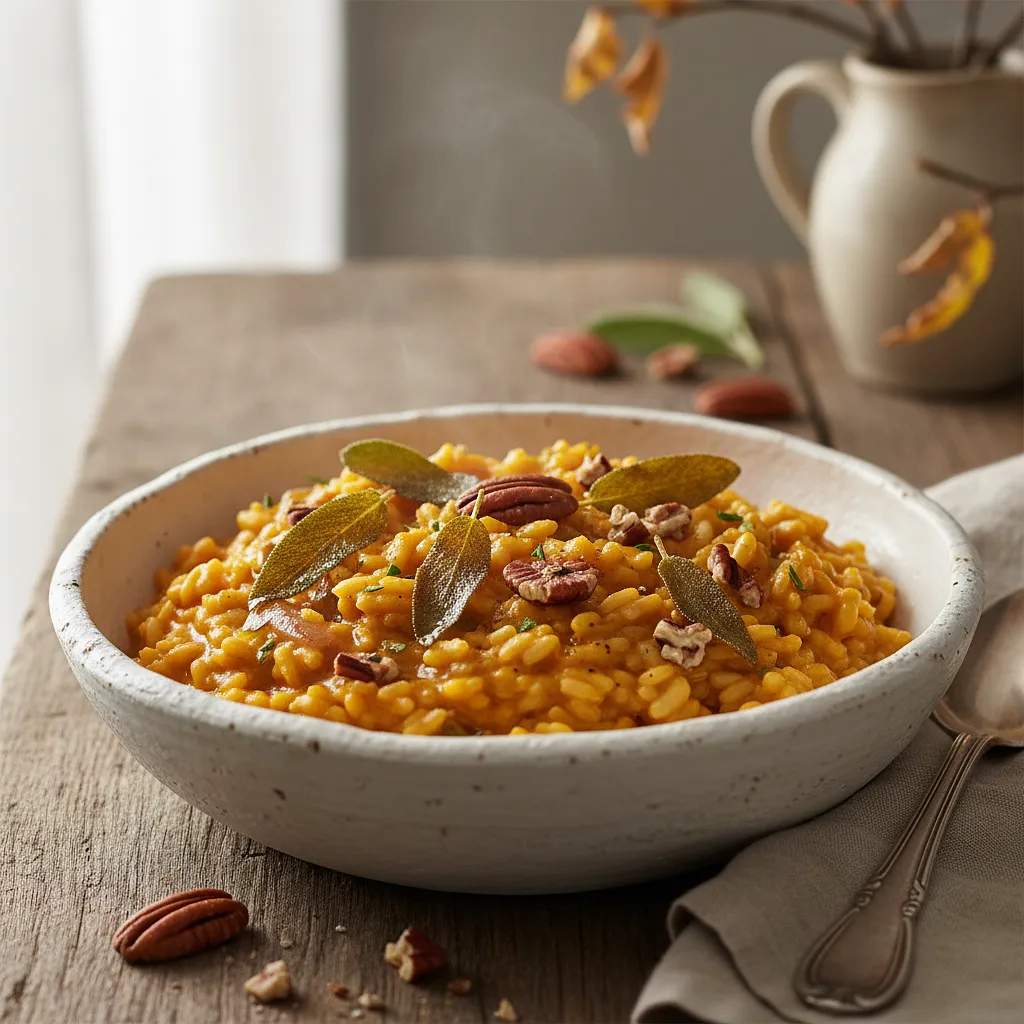
Description

This dish is the essence of autumn captured in a single plate. Creamy pumpkin risotto is incredibly comforting, filling, and full of deep, seasonal flavors. The velvety texture of Arborio rice, perfectly combined with the sweetness of roasted pumpkin, creates a base that melts in your mouth. The whole is enhanced by a hint of dry white wine and the salty, intense flavor of Parmesan cheese. However, the real stars are the toppings: butter-fried sage leaves become incredibly crispy and release an earthy, slightly peppery aroma that pairs perfectly with the pumpkin. Toasted pecans add not only a pleasant crunch but also a buttery, nutty aftertaste. Visually, the dish delights with its intense orange color, contrasting with the deep green of the sage. Perfect for an elegant dinner, a family autumn lunch, or simply when you crave something special but aren't quite sure what.

Składniki (14)

Servings:
4
  • Arborio rice 300 g
  • Hokkaido pumpkin 500 g
  • Onion 1 szt.
  • Garlic 2 ząbki
  • Vegetable broth 1200 ml
  • Wytrawne białe wino 100 ml
  • Ser parmezan (parmigiano reggiano) 80 g
  • Butter 60 g
  • Olive oil 15 ml
  • Fresh sage 0.7 pęczek
  • Pecan nuts 50 g
  • 🌿 Przyprawy
  • Salt 0.2 szczypt
  • Pieprz czarny świeżo mielony 2 szczypty
  • ✨ Opcjonalne
  • Nutmeg 2 szczypty
💰 Szacowany koszt dania: ~52.09 PLN (13.02 PLN/porcję)

💡 Kliknij na składnik aby oznaczyć jako użyty

Preparation steps

Ingredient Preparation

1

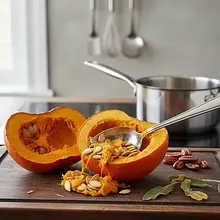
Preheat the oven to 200°C (fan). Wash the pumpkin, cut it in half, and remove the seeds with a spoon. Do not peel the skin. Cut the pumpkin into smaller pieces (about 3-4 cm), place them on a baking sheet lined with parchment paper, drizzle lightly with oil, and bake for 20-25 minutes until the flesh is completely soft (check with a fork). After baking, let it cool slightly, then separate the flesh from the skin (it should come off easily) and blend into a smooth purée. Measure out the required 400g of purée.

Ingredients: Hokkaido pumpkin
Use a hand blender or a countertop blender. If the purée is too thick, add 1-2 tablespoons of water. Roasting the pumpkin instead of boiling concentrates its flavor and sweetness. You can roast more pumpkin and freeze the purée for later.
2

In a dry, medium skillet (without fat), toast the pecans. Set the burner to medium heat and toast the nuts for 3-4 minutes, stirring or shaking the skillet frequently, until they become fragrant and lightly browned. Be careful not to burn them! Immediately transfer them to a plate to cool, and then chop them coarsely with a knife.

Ingredients: Pecan nuts
It's best to use a heavy-bottomed pan that distributes heat evenly. Don't walk away from the pan, as the nuts can burn quickly. Transferring them to a cold plate stops the roasting process.
3

In the same pan, melt 1 tablespoon of butter (15g). When the butter starts to foam, add the washed and dried sage leaves. Fry over medium heat for 1-2 minutes, until they become dark green and crispy. Be careful not to burn them. Remove them with a slotted spoon to a paper towel to drain excess fat. Keep the butter left in the pan - you will add it later to the risotto to enhance the flavor.

Ingredients: Butter, Fresh sage
The sage leaves must be completely dry; otherwise, the butter will splatter. Fry them in batches to avoid overcrowding the pan. The finished leaves are very brittle, so handle them gently.

Risotto base

4

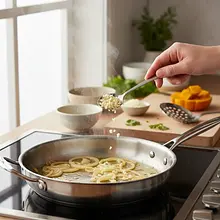
In a small pot, heat the vegetable broth and keep it on low heat to stay hot throughout the risotto cooking process. In a large, wide pot or deep skillet with a thick bottom, heat the olive oil and 2 tablespoons of butter (30g). Peel and finely dice the onion. Add it to the heated fat and sauté over medium heat for 5-7 minutes, stirring until it becomes translucent and soft, but not brown.

Ingredients: Vegetable broth, Olive oil, Butter, Onion
Use a pot with a capacity of at least 3 liters. Hot broth is key - adding cold liquid will stop the cooking process of the rice. Finely chopping the onion will cause it to break down in the risotto, creating a uniform flavor base.
5

Peel the garlic and finely chop it or press it through a garlic press. Add it to the sautéed onion and fry for about 1 minute until it releases its aroma. Be careful not to burn it, as it will become bitter. Then, add the dry Arborio rice to the pan. Increase the heat and stir vigorously with a wooden spoon for about 2 minutes. Each grain of rice should be coated in fat and become slightly translucent at the edges, with a white center (the so-called 'pearl'). This process is called 'tostatura' and is crucial for the texture of the risotto.

Ingredients: Garlic, Arborio rice
A wooden spoon is the best because it doesn't scratch the pot and doesn't conduct heat. Toasting the rice 'seals' the grains from the outside, allowing for a slow release of starch and preventing overcooking.

Cooking risotto

6

Pour white wine into the pan. It will bubble and sizzle vigorously. Stir constantly, scraping up all the stuck bits from the bottom of the pan, until the wine has almost completely evaporated and the smell of alcohol is gone. This process is called 'deglazing', which adds depth of flavor to the dish.

Ingredients: Wytrawne białe wino
Do not skip this step, even if it seems insignificant. The acidity of the wine balances the richness of the butter and cheese. Make sure the wine has completely evaporated before you start adding the broth.
7

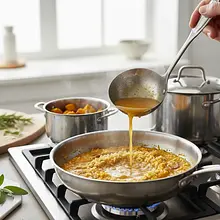
Reduce the heat to medium-low. Start adding hot broth, in portions, one ladle at a time (about 150-200 ml). After adding each portion of broth, stir the risotto slowly and almost continuously until the rice absorbs all the liquid. Only then add the next ladle. Continue this process for about 15-18 minutes. Stirring releases the starch from the rice, creating a creamy sauce.

Ingredients: Vegetable broth
Patience is the key to good risotto. Do not pour in all the broth at once! The rice should always be covered with a small amount of liquid and gently 'wink'. Slow, regular stirring is essential.
8

After about 15 minutes, add the previously prepared pumpkin purée to the risotto. Mix thoroughly to combine it with the rice. Continue adding broth and cooking for another 5-7 minutes. Taste the rice – it should be 'al dente', meaning soft on the outside but with a slightly firm center. If the rice is still hard, add a bit more broth and cook a little longer. The risotto should have the consistency of a thick soup, flowing smoothly on the plate ('all'onda').

Ingredients: Hokkaido pumpkin
The total cooking time for the rice is usually 18-22 minutes. Do not overcook the rice! It's better to be slightly firm than a mushy mess. If you run out of broth, you can use hot water.
9

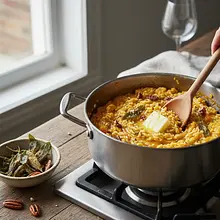
Remove the pot from the heat. This is the most important moment - 'mantecatura'. Add the last tablespoon of cold butter (15g), the sage butter from the pan, and freshly grated Parmesan. Season with salt, freshly ground pepper, and optionally a pinch of nutmeg. Stir vigorously for a minute until the butter and cheese melt, creating an emulsion and giving the risotto its final creamy and glossy texture. Cover the pot and let it sit for 2 minutes to allow the flavors to meld.

Ingredients: Butter, Ser parmezan (parmigiano reggiano), Salt, Pieprz czarny świeżo mielony, Nutmeg
Removing the pot from the heat before adding the butter and cheese is crucial to prevent the cheese from curdling and becoming rubbery. Using cold butter helps create the perfect emulsion. Don't skimp on the Parmesan – it’s what creates the flavor.

Serving

10

Immediately after resting, spread the risotto onto warmed, deep plates. On top of each serving, place a few crispy sage leaves and generously sprinkle with chopped, toasted pecans. You can also add some shavings of Parmesan, grated with a vegetable peeler. Serve immediately while it is hot and creamy.

Ingredients: Fresh sage, Pecan nuts, Ser parmezan (parmigiano reggiano)
Heating the plates will prevent the risotto from cooling down quickly. This dish tastes best right after it's prepared, so make sure everyone is ready to eat as soon as you finish cooking.

Fun Fact

💡

Legend has it that risotto was born by accident in the 16th century in Lombardy. A young assistant to a master glassmaker, who used saffron to color glass, added a pinch of the precious pollen to rice at his master's daughter's wedding. The guests were delighted by the golden color and flavor, which gave rise to the famous 'Risotto alla Milanese'.

Best for

Tips

🍽️ Serving

Always serve risotto on warm, wide, and deep plates, which will allow it to spread beautifully and maintain its temperature. An ideal complement would be a glass of the same white wine that was used for cooking. You can also drizzle the dish with a bit of high-quality olive oil just before serving.

🥡 Storage

Risotto is best right after preparation and does not reheat well, as the rice loses its perfect texture. However, if you have leftovers, store them in the fridge for up to 2 days. Instead of reheating, shape the cold risotto into small balls, coat them in breadcrumbs, and fry them in deep oil to create delicious Italian snacks - arancini.

📸 Ugotowane przez społeczność

Zaloguj się, aby dodać zdjęcie
Dodaj zdjęcie gotowej potrawy

Po zatwierdzeniu przez moderatora otrzymasz 10 punktów doświadczenia.

🍲

Nikt jeszcze nie dodał zdjęcia. Bądź pierwszy!

Comments (0)

Be the first to comment on this recipe!

Add a comment

You might also like

Recipe Categories

I don't know
I don't know in: For Kids

Don't know what to cook? This category is your culinary compass - inspirations for every occasion. Random recipes from various categories - discover something new every day. Quick dishes in 30 minutes - when you don't have time to cook. Recipes using what you have in the fridge - zero food waste....

See all recipes in this category
Dania główne
Dania główne in: Sylwester

Dania główne na Sylwestra powinny być sycące i efektowne, aby zadowolić podniebienia wszystkich gości.

See all recipes in this category

Vegetarian cuisine is a wealth of flavors without meat - healthy, colorful, and filling. Plant-based proteins: lentils, chickpeas, beans, peas, and soy take center stage. Cheeses and dairy: feta, halloumi, ricotta, and mascarpone in main dishes. Eggs in various forms: omelets, frittata, shakshuka...

See all recipes in this category

Pasta and risotto are Italian classics loved by the whole world - creamy, hearty, and delicious. Pasta carbonara, bolognese, puttanesca, arrabiata, and cacio e pepe - sauces with tradition. Fresh homemade pasta: tagliatelle, fettuccine, and ravioli with handmade dough. Meat and vegetarian lasagna...

See all recipes in this category
Reklama