Preheat the oven to 200°C (fan) or 220°C (top-bottom). Wash the Hokkaido pumpkin thoroughly under running water. Since its skin is edible, you don't need to peel it. Using a sharp, large knife, cut the pumpkin in half. Be careful, it is quite hard, so make the cut with a firm, cautious motion. Use a large metal spoon to scoop out the seeds and fibrous flesh from both halves. You can keep the seeds, clean them, and roast them later.
Description
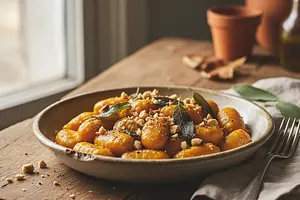
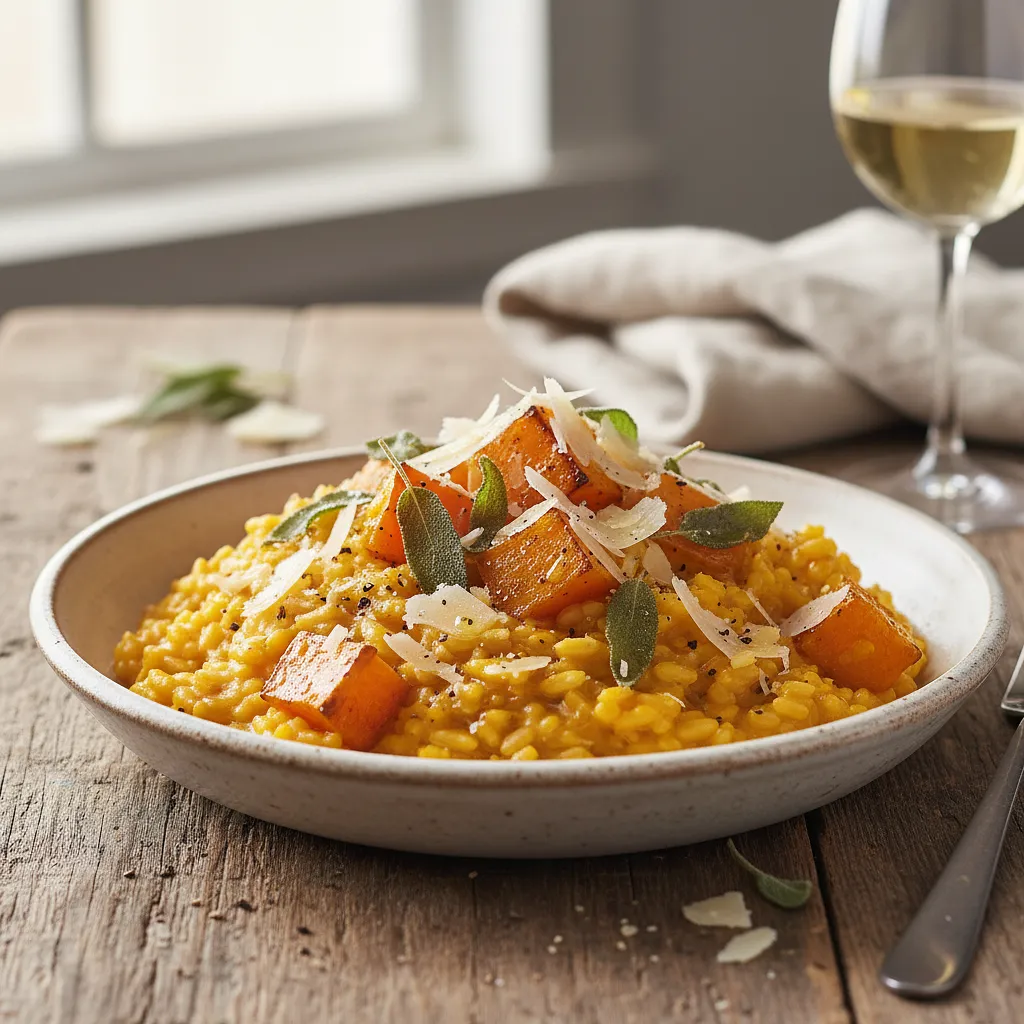
This exceptional dish is the essence of autumn captured on a plate. Creamy, velvety risotto, made with classic Arborio rice, combines the deep, natural sweetness of roasted Hokkaido pumpkin with the earthy, slightly spicy aroma of fresh sage. The whole is complemented by a distinctive Polish touch – aged Bursztyn cheese, which adds a nutty note and delicate amino acid crystals, giving the dish extraordinary depth and serving as a perfect alternative to Italian parmesan. The dish has a beautiful, warm orange color and an incredibly appetizing, thick consistency. It is perfect as a main course for an elegant dinner, a romantic evening for two, or simply as a way to lift your spirits on a chilly autumn day. Served warm, garnished with crispy sage leaves and toasted pumpkin seeds, it is not only a feast for the palate but also for the eyes.
Składniki (14)
- Hokkaido pumpkin 500 g
- Arborio rice for risotto 300 g
- Vegetable broth 1200 ml
- Onion 1 szt.
- Garlic 2 ząbki
- Białe wytrawne wino 100 ml
- Amber cheese 80 g
- Butter 50 g
- Extra virgin olive oil 0.2 łyżek
- Fresh sage 0.3 pęczków
- Sea salt 5 g
- 🌿 Przyprawy
- Pieprz czarny świeżo mielony 2 szczypty
- ✨ Opcjonalne
- Pumpkin seeds 30 g
- Nutmeg 2 szczypty
💡 Kliknij na składnik aby oznaczyć jako użyty
Preparation steps
Preparing the pumpkin
Cut the pumpkin halves into thick slices (about 2-3 cm), then into cubes with a side of about 2 cm. Transfer the chopped pumpkin to a large bowl. Add 2 tablespoons (30g) of olive oil, 2 pinches of salt, and 1 pinch of pepper. Tear off 8-10 sage leaves, tear them into smaller pieces, and add them to the pumpkin. Mix everything thoroughly with your hands, ensuring each piece of pumpkin is evenly coated with oil and seasonings.
Line a large baking sheet with parchment paper. Spread the seasoned pumpkin in a single layer on it. It is important that the pieces do not overlap, as they will steam instead of roasting. Place the sheet in the preheated oven and bake for 25-30 minutes. The pumpkin is ready when a fork easily pierces it, and the edges of the cubes are slightly browned and caramelized. After baking, remove from the oven and set aside.
Preparation of the risotto base (Soffritto)
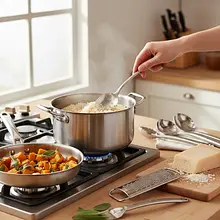
Meanwhile, while the pumpkin is baking, prepare the rest of the ingredients. Peel the onion and chop it into very small cubes (known as 'brunoise'). Peel the garlic and chop it just as finely or press it through a garlic press. Grate the Bursztyn cheese on a fine grater. In a small pot, heat the vegetable broth and keep it on low heat to ensure it stays hot throughout the risotto cooking process. This is crucial!
Cooking risotto
In a wide, large pot or deep skillet with a thick bottom, heat the remaining tablespoon (15g) of olive oil. Add the chopped onion and a pinch of salt. Sauté over medium heat for about 5-7 minutes, stirring frequently with a wooden spoon, until the onion becomes soft, translucent, and glassy, but not browned. Then add the chopped garlic and sauté for another minute until it releases its aroma.
Increase the burner to medium-high. Add the dry Arborio rice to the pot. Stir vigorously with a wooden spoon for about 1-2 minutes. This process is called 'tostatura'. Each grain of rice should be coated in fat and become slightly translucent at the edges, with a white, matte center (known as the 'pearl'). This is a very important step that 'seals' the rice grains, ensuring that the risotto will be creamy on the outside while the rice remains 'al dente' on the inside.
Pour the whole white wine into the pot. You will hear a loud sizzling. Stir vigorously, scraping any stuck pieces of onion from the bottom of the pot. Cook for 1-2 minutes until the alcohol completely evaporates and the sharp smell of wine disappears, leaving only a pleasant aroma. The rice will absorb all the liquid.
Reduce the heat to medium. Pour one ladle of hot broth into the rice. Stir slowly and almost continuously until the rice absorbs all the liquid. Only then add another ladle of broth. Repeat this process patiently for about 18-20 minutes. Stirring releases the starch from the rice, creating a creamy consistency. This is the essence of making risotto.
After about 15 minutes of cooking, when the rice is almost done, taste one grain. It should be soft on the outside but still have a slight bite in the center (al dente). At this point, take about 1/3 of the roasted pumpkin and mash it with a fork into a smooth purée. Add the purée to the risotto and mix thoroughly. This will give the risotto a beautiful color and deep pumpkin flavor.
Finishing (Mantecatura)
Remove the pot from the heat. This is very important - the final step takes place off the burner. Add the cold diced butter and 3/4 of the grated Bursztyn cheese. Stir vigorously or shake the pot to emulsify the fat from the butter and cheese with the rest of the dish. This process, called 'mantecatura', will make the risotto incredibly creamy, smooth, and shiny. Add the remaining cubes of roasted pumpkin and gently mix.
Taste the risotto and season it with salt, freshly ground black pepper, and, if using, freshly grated nutmeg. Cover the pot with a lid and let it sit for 1-2 minutes. This short rest will allow the flavors to meld, and the risotto will reach the perfect consistency - it should be 'all'onda', meaning 'wavy', when moved on the plate, not clumpy or too runny.
Serving
In a small, dry skillet, toast the pumpkin seeds until they start to 'pop' and lightly brown. Remove them from the skillet. In the same skillet, heat a little olive oil and add the remaining sage leaves. Fry them for a few seconds until they become crispy and dark green. Place them on a paper towel. Serve the risotto on deep plates, preferably warmed. Garnish each portion with the remaining grated cheese, toasted pumpkin seeds, and crispy sage leaves.
Fun Fact
Legend has it that risotto was born in the 16th century in Milan during the construction of the Duomo cathedral. A young apprentice, responsible for dyeing the stained glass with saffron, decided as a joke to add a pinch of the precious spice to the rice at his master's wedding. The effect delighted the guests, giving rise to the famous 'risotto alla milanese'.
Best for
Tips
Serve the risotto immediately after preparation on deep, warmed plates. Before serving, you can drizzle it with a few drops of high-quality olive oil or pumpkin seed oil to enhance the flavor. It pairs perfectly with a glass of the same white wine you used for cooking.
Risotto tastes best fresh and is not ideal for reheating, as it loses its creamy consistency. However, if you have a portion left, store it in the fridge for up to 2 days. Instead of reheating, you can shape the cold risotto into small balls, coat them in breadcrumbs, and fry them in deep oil, creating delicious Italian arancini.
📸 Ugotowane przez społeczność
Zaloguj się, aby dodać zdjęcieDodaj zdjęcie gotowej potrawy
Po zatwierdzeniu przez moderatora otrzymasz 10 punktów doświadczenia.
Nikt jeszcze nie dodał zdjęcia. Bądź pierwszy!
Comments (0)
Be the first to comment on this recipe!
Add a comment