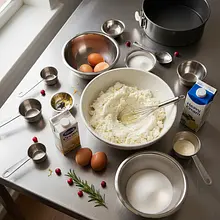
Preheat the oven to 180°C (fan). Line the bottom of a 24 cm springform pan with parchment paper, securing the ring on the paper. Do not grease the sides of the pan. Place the gingerbread cookies in a food processor or kitchen robot and blend them into fine crumbs. If you don't have a food processor, put the cookies in a sturdy ziplock bag, seal it, and crush them thoroughly using a rolling pin.
Description
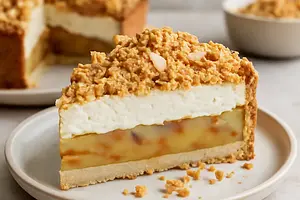
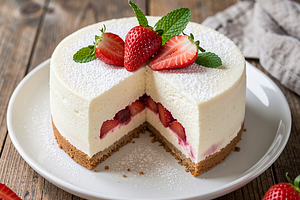
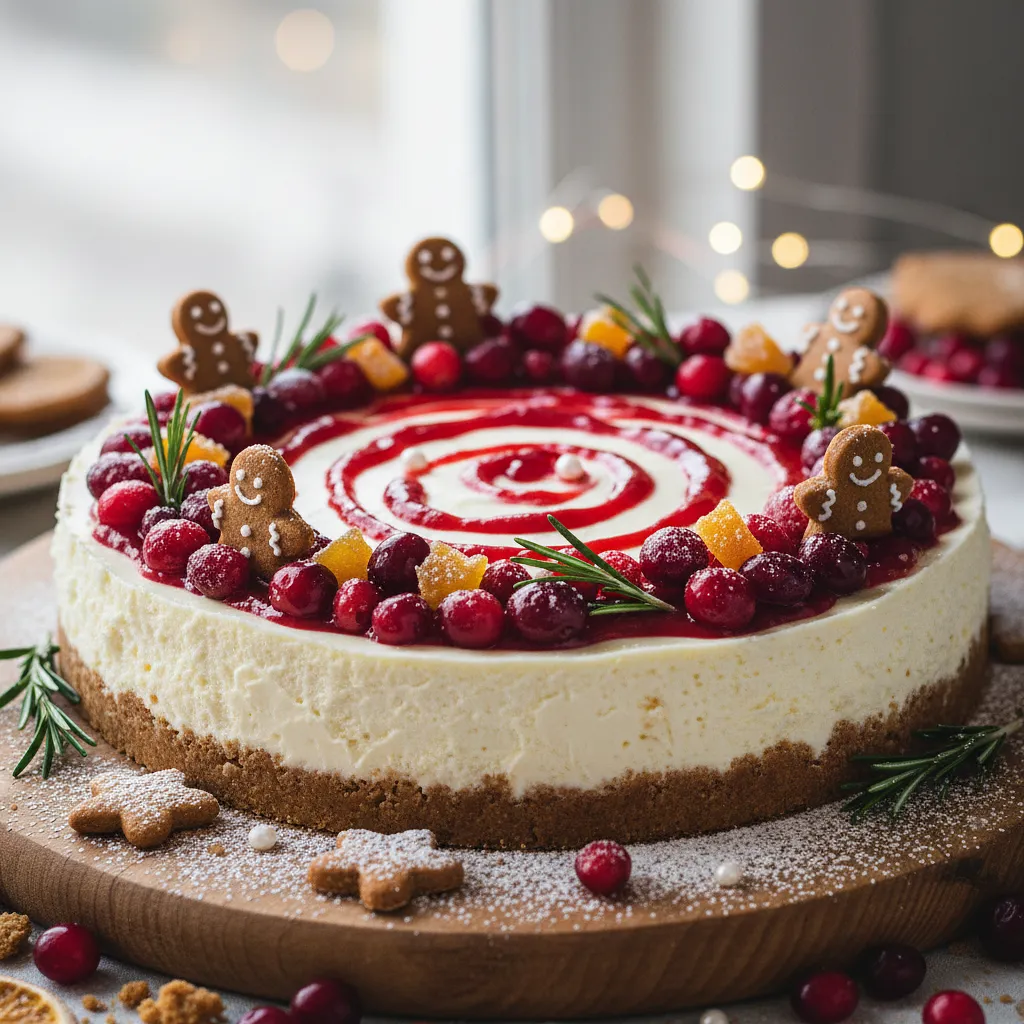
This cheesecake is the essence of the holidays captured in the form of an elegant dessert. Its base is a crunchy and intensely spiced crust made from crushed gingerbread, which perfectly contrasts with the velvety, creamy, and rich cheese filling. A delicate hint of orange in the cheesecake adds freshness and a festive aroma. The whole is topped with a bold, ruby sauce made from sour cranberries, which cuts through the sweetness and introduces a refreshing note. The cheesecake looks exceptionally impressive, especially when decorated with 'frosted' sprigs of rosemary and fresh cranberries, creating a miniature Advent wreath on its surface. It is a dessert that not only delights with its flavor but also serves as a beautiful decoration on the Christmas table. Perfect to serve after a festive dinner, accompanied by aromatic coffee or winter tea.
Składniki (14)
- Gingerbread cookies (e.g. Katarzynki) 250 g
- Masło 82% 100 g
- Triple-ground cheesecake curd 1000 g
- Cukier drobny do wypieków 13.3 łyżek
- 36% heavy cream 200 ml
- Farm eggs (size L) 4 szt.
- Potato flour 30 g
- Vanilla extract 15 g
- Grated orange zest 2 szt.
- Fresh or frozen cranberries 300 g
- Freshly squeezed orange juice 100 ml
- 🌿 Przyprawy
- Ground cinnamon 2 g
- ✨ Opcjonalne
- Gałązki świeżego rozmarynu 15 g
- Białko jaja 0.5 szt.
💡 Kliknij na składnik aby oznaczyć jako użyty
Preparation steps
Gingerbread base
In a small saucepan, melt the butter over low heat and let it cool slightly. Crumble the gingerbread into a bowl, add the ground cinnamon, and mix. Then pour in the melted butter and stir thoroughly with a spoon until all the crumbs are moist and the mixture resembles wet sand.
Transfer the gingerbread mixture to the prepared springform pan. Evenly spread it across the bottom and PRESS DOWN VERY FIRMLY, using the bottom of a glass or a small jar for this. It is important that the base is compact and does not crumble when cutting. Place the base in the preheated oven and bake for 10 minutes. After this time, remove the pan and set it aside to cool completely. Reduce the oven temperature to 150°C (fan).
Cheese mixture
Prepare all the ingredients for the cheese filling. It is ABSOLUTELY CRUCIAL that the cottage cheese, eggs, and cream are at room temperature. Take them out of the fridge at least 2 hours before you start working. In a large mixing bowl, place the cheesecake cottage cheese and sugar.
Using the whisk attachment, mix the cottage cheese with the sugar on the lowest speed of the mixer, just until the ingredients are combined and the mixture is smooth (about 1-2 minutes). Scrape the mixture from the sides of the bowl using a silicone spatula. Then, still mixing on low speed, add one egg at a time, taking about a 30-second break after each added egg.
After adding all the eggs, add the sifted potato flour, vanilla extract, freshly grated orange zest, and heavy cream. Blend everything again on the lowest speed, just until the ingredients combine into a uniform, smooth mixture. Do not mix longer than necessary. The finished mixture should be fluid and velvety.
Baking in a water bath
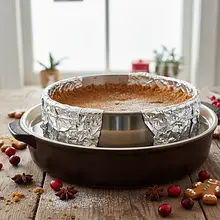
Prepare a water bath. Wrap the cooled springform pan very tightly with two layers of aluminum foil, reaching all the way up to the top of the rim. This will protect the cheesecake from water getting inside. Boil about 1.5 liters of water in a kettle. Pour the cheese mixture onto the prepared gingerbread base. Smooth the surface with a spatula.
Carefully place the wrapped springform pan into a larger, deep baking dish or roasting pan. Place the whole setup in the oven preheated to 150°C. Now that the dish is in the oven, carefully pour boiling water into the larger dish so that it reaches halfway up the sides of the springform pan. Close the oven door and bake the cheesecake for about 60-70 minutes.
After 60 minutes, gently move the pan. The cheesecake is ready when its edges are set and stable, while the center (a circle with a diameter of about 10 cm) is still slightly wobbly and gelatinous. Turn off the oven, slightly ajar the door (you can place a wooden spoon in it to keep it from closing), and leave the cheesecake in the cooling oven for at least 1 hour. Then remove it, take off the aluminum foil, and let it cool completely on the countertop. Only after it has completely cooled should you place the cheesecake in the refrigerator for a minimum of 6 hours, preferably overnight.
Cranberry sauce
While the cheesecake is cooling, prepare the sauce. In a small saucepan, place fresh or frozen cranberries, sugar, and freshly squeezed orange juice. Cook over medium heat, stirring occasionally, until the sugar dissolves and the cranberries begin to burst and release their juice (about 10-15 minutes). The sauce should thicken. Remove from heat and set aside to cool completely.
Decoration (optional)
To prepare the 'frosted' decorations, lightly beat the egg white in a small bowl with a fork. Pour the sugar onto a flat plate. Dip each sprig of rosemary and cranberry fruit into the egg white, shake off the excess, and then coat thoroughly in sugar. Set aside on a plate or rack to dry for about 1 hour.
Serving
Carefully remove the chilled cheesecake from the mold (run a thin knife along the edge, then release the ring). Transfer it to a serving platter. Pour the cooled cranberry sauce on top, allowing it to beautifully drip down the sides. Decorate with the prepared 'frosted' sprigs of rosemary and cranberries, arranging them in a wreath shape along the edge of the cheesecake. Serve immediately or store in the refrigerator.
Fun Fact
Although cheesecake is mainly associated with Polish or American cuisine, its roots date back to ancient Greece! The first mentions of cheese cakes date back to the 5th century BC. They were served to athletes during the Olympic Games as an energy meal. The Polish version, based on unique curd cheese, is valued worldwide for its exceptional, slightly grainy yet creamy texture.
Best for
Tips
Serve the cheesecake always well chilled, straight from the fridge. Cutting will be easier with a long, sharp knife dipped briefly in boiling water and dried before each cut. This way, you will achieve perfectly smooth and even portions. The cheesecake pairs wonderfully with a cup of strong espresso, Irish coffee, or a mug of aromatic winter tea with cloves and orange.
Store the cheesecake in the refrigerator, in an airtight cake container or covered, to prevent it from absorbing odors. It stays fresh for 4-5 days. Moreover, on the second and third day, it tastes even better as all the flavors meld together. The cheesecake (without sauce and decorations) can also be frozen whole or in portions, tightly wrapped in plastic wrap and aluminum foil, for up to 3 months.
📸 Ugotowane przez społeczność
Zaloguj się, aby dodać zdjęcieDodaj zdjęcie gotowej potrawy
Po zatwierdzeniu przez moderatora otrzymasz 10 punktów doświadczenia.
Nikt jeszcze nie dodał zdjęcia. Bądź pierwszy!
Comments (0)
Be the first to comment on this recipe!
Add a comment