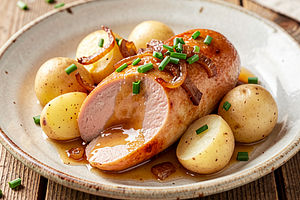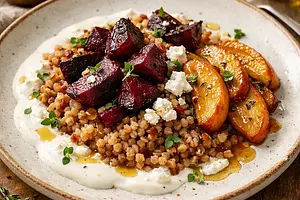
Bacowski pot – stewed cabbage with sausage, potatoes, and beets

Pikantne Anything Regional Cuisine of Poland Soups 120 min Medium 29 wyświetleń ~35.43 PLN - (0)
Rate:
(0)
Start Cooking

Description

Bacowski kettle is a warming, highlander one-pot dish that combines the sourness of sauerkraut with the richness of sausage and bacon, along with the sweetness of roasted/cooked beets and potatoes. The dish originates from the highlander cuisine of the Tatra Mountains, where hearty, easy-to-prepare meals were cooked in one kettle during winter days. It has a moderately sour taste, aromatic from marjoram and bay leaves, with pleasant pieces of meat and soft vegetables. Serve hot, straight from the kettle or in deep plates, with a spoonful of sour cream and a sprinkle of dill or parsley - perfect for winter lunches, after coming in from the cold, or as a dish for a larger group. It looks rustic: colorful pieces of beet and sausage against a backdrop of golden-brown cabbage, with a steaming aromatic sauce.

Ingredients Used

Ingredients (18)

Servings:
4
  • Sauerkraut 800 g
  • Potatoes 4 szt. (~600 g)
  • Beets (raw) 400 g
  • Sausage 400 g
  • Smoked bacon 150 g
  • Onion 1 szt. (~150 g)
  • Carrot 1.3 szt. (~100 g)
  • Garlic 3 ząbki (~15 g)
  • Lard 30 g
  • Rapeseed oil 15 g
  • Tomato paste 70 g
  • 🌿 Przyprawy
  • Marjoram 2 g
  • Bay leaf 6.7 szt. (~2 g)
  • Allspice (berries) 2 szt. (~2 g)
  • Salt 0.2 szczypt (~5 g)
  • Black pepper 4 szczypty (~2 g)
  • ✨ Opcjonalne
  • Sour cream 100 g
  • Dill 1.5 pęczki (~30 g)
💰 Szacowany koszt dania: ~35.43 PLN (8.86 PLN/porcję)

💡 Kliknij na składnik aby oznaczyć jako użyty

Preparation steps

Preparation of ingredients

1

Prepare all the ingredients: peel the potatoes and cut them into cubes about 2 cm on each side (even pieces will ensure even cooking). Peel the beets and leave them whole for cooking or slice them if you want to speed up the cooking process. Peel the onion and chop it finely. Peel the carrot and grate it on a coarse grater or cut it into small cubes. Peel and finely chop the garlic. Cut the sausage into slices about 1 cm thick, and the bacon into small cubes. If the sauerkraut is very sour, quickly rinse it with cold water and squeeze it well (but do not rinse out all the flavor).

Ingredients: Onion, Carrot, Garlic, Sausage, Smoked bacon, Sauerkraut
Use a cutting board and a sharp kitchen knife. For grating the carrot, use a grater with large holes. If you are using large, hard beets, consider roasting them beforehand or cooking them longer.
Cooking beets

2

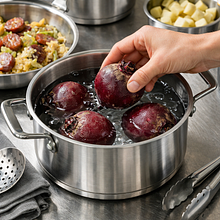
If you are using raw beets: place whole beets in a pot, cover with cold water so they are submerged by about 2 cm, and bring to a boil. Reduce the heat and cook for about 30-40 minutes depending on their size (check with a fork; the fork should easily pierce the thickest part). After cooking, drain the water, let cool slightly, and peel the skin off (it comes off easier after cooking). Cut into cubes.

Use a medium pot with a capacity of at least 2-3 liters. Check the softness with a fork — if the fork goes in easily, the beet is ready. Alternative: roast the beets wrapped in foil in the oven at 200°C for 50-70 minutes.

Steaming/paring potatoes

3

To shorten the stewing time, place the chopped potatoes in a separate pot with cold water, bring to a boil, and cook for 6-8 minutes (they should be tender but not falling apart). Drain and set aside. The goal is to slightly pre-cook the potatoes so they don't break apart in the pot before the cabbage softens.

Use a strainer. The time depends on the size of the cubes; check with a fork — it should go in slightly, but the potato should not fall apart.

Sautéing bacon and sausage

4

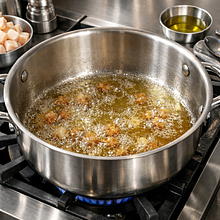
In a large pot or wide saucepan (capacity 3-4 L), heat lard and rapeseed oil over medium heat. Add the chopped bacon and fry for 4-6 minutes until the fat renders and the pieces are lightly browned. Add the sausage and fry for 3-4 minutes until the slices are browned on both sides. Remove some of the bacon and sausage (about half) to a plate - leave the fat and the remaining meat in the pot.

Ingredients: Lard, Rapeseed oil, Smoked bacon, Sausage
Use a cast iron pot or a heavy pot, preferably with a diameter of 22-26 cm. A wooden spoon makes stirring easier. Do not fry on too high heat – the meat will burn on the outside and will not be juicy.

Frying vegetables

5

Add the chopped onion and carrot to the fat in the pot. Sauté over medium heat for 6-8 minutes, stirring, until the onion becomes translucent and slightly golden. Add the finely chopped garlic and sauté for another 30-45 seconds, until it starts to smell (be careful not to burn it).

Ingredients: Onion, Carrot, Garlic
Use a spatula or wooden spoon. The translucence of the onion indicates that it is soft and semi-transparent; it should not be burnt.

Combining ingredients in the cauldron

6

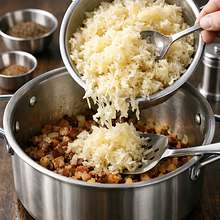
Add the sauerkraut (if it has been rinsed, squeeze it well) to the pot and mix it with the sautéed vegetables. Add the previously parboiled potatoes and half of the sausage with bacon that was set aside earlier. Stir in 70 g of tomato paste mixed with 150-200 ml of warm water (this helps to combine the paste without lumps). Add a bay leaf and allspice. Pour in enough hot water to slightly cover the ingredients (about 200-300 ml) - less water will result in a thicker sauce, more will give a more "stew-like" liquid.

Ingredients: Sauerkraut, Tomato paste, Bay leaf, Sausage, Smoked bacon
Stir with a wooden spoon, pressing the cabbage to evenly release its juice and combine with the fat. Use a pot with a lid to control the steaming.

Stewing

7

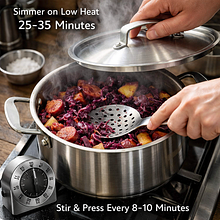
Cover the pot and cook on low heat for 25-35 minutes. Stir every 8-10 minutes, pressing the cabbage down to the bottom to ensure it stews evenly. Check the potatoes after 20 minutes – they should be soft but not falling apart. When the potatoes are almost soft, add the chopped, cooked beets and the remaining sautéed pieces of sausage and bacon to heat through for 8-10 minutes and infuse their flavor into the dish.

Ingredients: Sauerkraut, Sausage, Smoked bacon, Salt, Black pepper, Marjoram
Simmering on low heat allows the cabbage to soften and mellow the acidity. If the dish becomes too dry, add 50-100 ml of hot water. Check the taste at the end and season with salt and pepper.

Finishing and seasoning

8

Taste the stew and season with salt and freshly ground pepper to taste (remember that the sausage and bacon can be salty). Add a teaspoon of dried marjoram, stir, and cook for another 2-3 minutes. If you want a richer aroma, add 1-2 tablespoons of lard or butter at the end and mix.

Ingredients: Salt, Black pepper, Marjoram, Lard
Add salt gradually — it's easier to add more salt than to fix it if it's too salty. Add marjoram at the end of cooking to preserve its aroma.

Serving

9

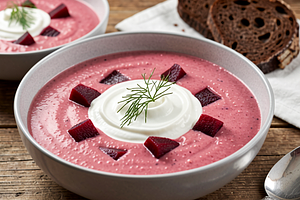
Serve the pot hot in deep plates or directly from the pot. For each serving, add a tablespoon of sour cream (optional) and sprinkle with freshly chopped dill. The cream will soften the acidity of the cabbage and add creaminess, while the dill will add freshness.

Ingredients: sour cream, Dill
Use large ladles for serving. Additionally, you can serve dark bread or pickles to cut through the richness.

Final tips

10

The pot dish tastes just as good the next day when the flavors meld together. If you plan to prepare it in advance, cool it, store it in the fridge, and reheat slowly over low heat with a little water.

Use a wide pot for slow heating, stirring gently to avoid mashing the potatoes. While heating, you can add 1-2 tablespoons of water or broth if the sauce thickens too much.

Fun Fact

💡

In the shepherd's huts in the Tatra Mountains, the pot was one of the basic dishes, cooked in one pot over a fire — hence the name and rustic character. Sauerkraut was extremely important in winter, as it provided vitamin C and helped survive harsh conditions.

Best for

Tips

🍽️ Serving

Serve hot, with a dollop of sour cream and fresh dill. It pairs well with rye bread or whole grain bread. A red beer or honey tea after the meal complements the dish nicely.

🥡 Storage

Store in a closed container in the refrigerator for up to 3 days. To reheat, warm over low heat, stirring occasionally; if the sauce is too thick, add a small amount of hot water. Refreezing after thawing is not recommended.

📸 Ugotowane przez społeczność

Zaloguj się, aby dodać zdjęcie
Dodaj zdjęcie gotowej potrawy

Po zatwierdzeniu przez moderatora otrzymasz 10 punktów doświadczenia.

🍲

Nikt jeszcze nie dodał zdjęcia. Bądź pierwszy!

Comments (0)

Be the first to comment on this recipe!

Add a comment

You might also like

Recipe Categories

Anything
Anything in: For Kids

Category Whatever is a random selection of recipes - for the undecided and open to experiments. Mixed categories: breakfasts, lunches, dinners, and desserts all in one place. Recipes from around the world - Polish cuisine alongside Asian and Italian. Meat and vegetarian - variety at your fingerti...

See all recipes in this category

Traditional recipes from various regions of Poland that showcase the richness of local flavors and ingredients.

See all recipes in this category

Soups are the essence of home cooking - they warm, satisfy, and comfort in any weather. In this category, we present recipes for Polish soups - chicken broth, sour rye soup, borscht, tomato soup, cucumber soup, and pea soup. Our dishes also include cream soups, cold soups, and broths. You will fi...

See all recipes in this category
Reklama