Prepare the pan. Line the bottom of a 24 cm springform pan with parchment paper. To do this, place a sheet of paper at the bottom of the pan, then secure the ring on top of it. Trim any excess paper hanging over the edge with scissors. Do not grease the sides.
Description
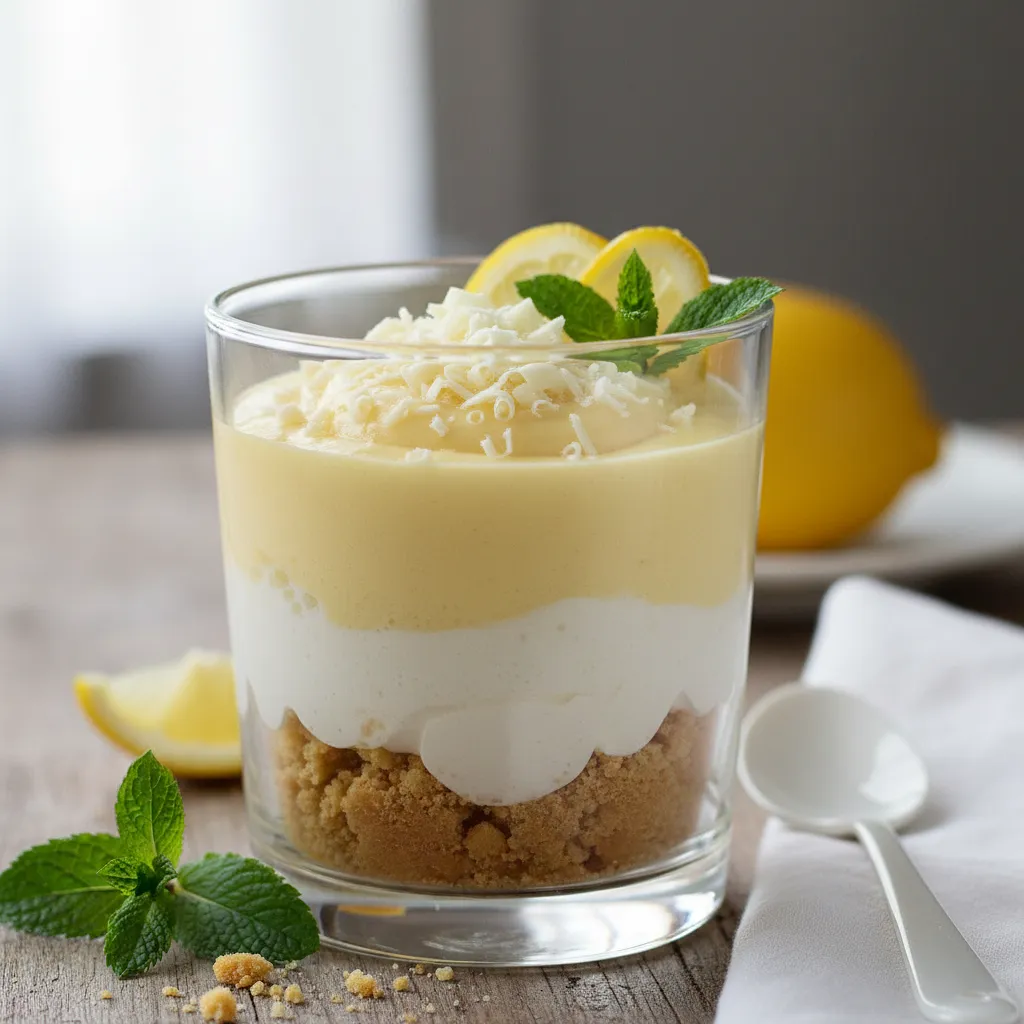
Discover the refreshing power of lemon in the form of a velvety, creamy dessert that requires no baking! This unique lemon dessert is the perfect choice for warm days, elegant gatherings, or simply a moment of sweet indulgence. It consists of three perfectly composed layers: a crunchy, buttery base made from biscuits, a fluffy, cloud-like cheese filling with an intense flavor of fresh lemons, and a glossy lemon jelly that crowns the creation. The delicacy of mascarpone and cheesecake curd perfectly balances the tartness of the lemon, creating a dessert that is both rich and incredibly light. Served straight from the fridge, it brings instant refreshment and delights with its smooth texture. This cake is not only a feast for the palate but also for the eyes – its sunny yellow color and elegant appearance will make it the star of any table.
Składniki (12)
- Butter cookies 200 g
- Butter 100 g
- Twaróg sernikowy z wiaderka 500 g
- Serek mascarpone 250 g
- 30% heavy cream 250 ml
- Powdered sugar 150 g
- Lemon 3.8 szt.
- Powdered gelatin 20 g
- lemon jelly 1 szt.
- Water 450 ml
- ✨ Opcjonalne
- White chocolate chips 30 g
- Listki świeżej mięty 5 g
💡 Kliknij na składnik aby oznaczyć jako użyty
Preparation steps
Cookie crust
Crush the biscuits into fine crumbs. You can do this in two ways: place the biscuits in a food processor (a kitchen machine with an 'S' blade) and pulse until you achieve the consistency of wet sand. Alternatively, transfer the biscuits to a sturdy ziplock bag, seal it while removing the air, and roll with a heavy rolling pin until they are finely crushed.
In a small saucepan over the lowest heat, melt the butter. Be careful not to burn it – it should only be liquid. Remove from heat as soon as it melts. You can also melt the butter in the microwave by heating it in 30-second intervals.
Pour the crushed biscuits into a bowl. Add the melted butter and mix thoroughly with a spoon until all the crumbs are moist. The mixture should resemble wet sand. Transfer the mixture to the prepared springform pan and spread it evenly. Then, using the bottom of a glass or a spoon, press the mixture firmly into the bottom of the pan to create an even and compact base. Place the pan in the refrigerator for at least 30 minutes to allow the base to set.
Lemon dough
Prepare the gelatin. In a small bowl, add 20 g of gelatin and pour in 50 ml of cold water (part of the total water amount). Mix and set aside for about 10 minutes, until the gelatin swells and absorbs all the water, forming a thick mass.
Thoroughly scrub the lemons and blanch them in boiling water. Grate the zest from two lemons using a fine grater (only the yellow part, the white part is bitter). Then squeeze the juice from both lemons. You should get about 100-120 ml of juice.
In a large, clean, and dry bowl, place the well-chilled heavy cream. Whip it with a mixer on high speed. Start at medium speed, and when the cream begins to thicken, increase to maximum. Whip until it is stiff and leaves clear marks from the mixer beaters. Be careful not to 'overwhip' it, as it will turn into butter and buttermilk.
In a separate, large bowl, place the cheesecake curd, mascarpone cheese, sifted powdered sugar, grated lemon zest, and squeezed juice. Mix everything with a mixer on medium speed just until the ingredients are combined into a smooth, uniform mass. Do not mix for too long.
Soak the gelatin and heat it in the microwave (about 15-20 seconds) or in a water bath until it becomes completely liquid and clear. Do not let it boil, as it will lose its gelling properties! To the liquid, warm gelatin, add 2-3 tablespoons of the cheese mixture and vigorously mix with a whisk. Then, pour the 'tempered' gelatin in a thin stream into the rest of the cheese mixture, while continuously mixing on low speed.
Add the whipped cream to the cheese mixture with gelatin. Do this in batches, in 2-3 rounds. Mix very gently using a large silicone spatula, making movements from the bottom to the top (the so-called folding method). The goal is to combine the ingredients without destroying the air bubbles in the cream. Mix only until you achieve a uniform, fluffy mixture.
Remove the chilled base from the refrigerator. Pour the prepared lemon mixture onto the base and smooth the top using a spatula or knife. Place the cake in the refrigerator for at least 2-3 hours to allow the mixture to set well before pouring the jelly on top.
Lemon jelly and finishing touches
Prepare the jelly. Pour the contents of the package into a bowl and add 400 ml of hot (but not boiling) water. Stir vigorously until the powder is completely dissolved. Set the jelly aside to cool completely at room temperature. It should start to thicken slightly, having the consistency of a pudding.
Remove the set cake from the refrigerator. Carefully pour the thickening jelly on top of the cheese mixture. To avoid creating a hole in the mixture, pour the jelly slowly over the back of a large spoon, holding it just above the surface of the cake. Place the cake back in the refrigerator for another 2-3 hours, or preferably overnight, until the jelly is completely set.
Before serving, gently run a thin, sharp knife along the inner edge of the springform pan to separate the cake from the mold. Carefully unclip the ring and remove it. Transfer the cake to a serving platter. Optionally, decorate the top with white chocolate shavings and fresh mint leaves.
Fun Fact
No-bake cakes, known in England as 'icebox cakes', gained immense popularity in the 1920s and 1930s with the widespread adoption of refrigerators in homes. They were promoted as a modern and easy way to prepare an impressive dessert without using an oven, which was especially desirable during hot summers.
Best for
Tips
Serve the cake straight from the fridge, as it tastes best that way and maintains the perfect consistency. Each piece can be additionally decorated with a dollop of whipped cream or fresh fruits, such as blueberries or raspberries, which will beautifully balance the sweetness and add color.
Store the cake in the refrigerator, in an airtight container or covered, to prevent it from absorbing odors. It will stay fresh for 3-4 days. The biscuit base may soften over time due to moisture from the filling, so the dessert is best enjoyed in the first two days after preparation.
📸 Ugotowane przez społeczność
Zaloguj się, aby dodać zdjęcieDodaj zdjęcie gotowej potrawy
Po zatwierdzeniu przez moderatora otrzymasz 10 punktów doświadczenia.
Nikt jeszcze nie dodał zdjęcia. Bądź pierwszy!
Comments (0)
Be the first to comment on this recipe!
Add a comment