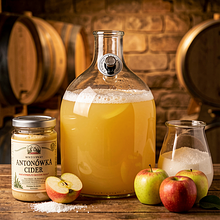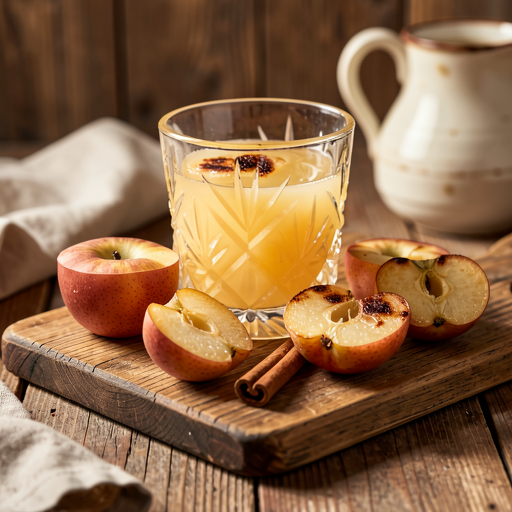
Recipe for: Cider from roasted Antonówka apples

Drinks Regional Cuisine of Poland 90 min Medium 12 views ~12.56 PLN * - (0)
Rate:
(0)
Start Cooking

Description

Traditional summer cider made from Polish Antonówki apples, whose slightly tart aroma gains a hint of caramel and depth after baking. This regional variant combines the simplicity of Greater Polish cuisine with delicate fermentation – the result is a clear, aromatic drink with balanced acidity and the freshness of apple enhanced by baking notes. Great as a refreshing drink for summer gatherings, served chilled in a bottle or pitcher, it pairs well with grilled dishes (pork neck, oscypek) and light desserts (no-bake cheesecake, fruit jellies). The cider can be prepared without added sugar (lower alcohol content) or with a slight sweetening, allowing for adjustment to guests' tastes.

Ingredients Used

Ingredients (4)

Servings:
6
  • Antonówka 4000 g
  • Wine yeast 5 g
  • ✨ Optional
  • Sugar 300 g
  • Cinnamon 2 g
💰 Estimated dish cost: ~12.56 PLN (2.09 PLN/serving)
* Prices missing for some ingredients

💡 Click an ingredient to mark it as used

Preparation steps

Baking apples

1

Wash the Antonovka apples under running water, remove any damaged spots, do not peel the skins. Preheat the oven to 180°C (top-bottom). Prick each apple several times with a fork so that steam can escape during baking. Arrange the apples on a baking sheet lined with parchment paper in a single layer, making sure they do not touch each other too much. Bake for 35–50 minutes depending on the size of the apples — the apples are ready when the skin splits, the flesh is soft and easily pierced with a knife, and the juices begin to caramelize slightly.

Ingredients: Antonówka
Use a large rimmed baking sheet or two sheets. A large oven mitt and an oven thermometer are best for checking the temperature. Avoid excessive charring, but a light golden crust enhances the flavor.
Cooling and Crushing

2

Remove the baked apples and set aside for 20–30 minutes until they are cool enough to handle. Cut each apple in half and remove the cores with a spoon. Transfer the flesh of the baked apples (along with the skin) to a large bowl. Mash the apples with a potato masher or use an immersion blender on low speed — the goal is to achieve a pulp, not a complete puree. If you don't have a blender, you can pass the apples through a manual sieve, but it's better to keep the pulp for pressing.

Ingredients: Antonówka
Use a large metal or plastic bowl (min. 5 l). If you are using a blender, work in batches and do not blend for too long to avoid aerating the mixture. A hand-held food mill gives very good results.

Pressing

3

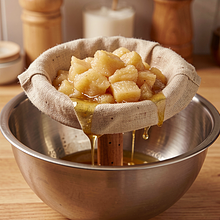
Prepare a fruit press if you have one. If you don't have a press: line a strainer with a thick material (tetra, cheese mat) over a large bowl or pot. Place a portion of the apple pulp into the material, tie the edges, and press by hand or use a lever (e.g., a board and weight) — squeeze out as much juice as possible, and repeat with the remaining pulp. Collect the juice in a clean container. You should get about 2.5–3.5 liters of juice from 4 kg of apples, depending on the pulp. Strain the juice through a fine sieve to remove larger particles.

Ingredients: Antonówka
If you don't have a press, use a blender to chop, and then squeeze strongly through cheesecloth. It's best to press over a sink with a faucet or a large bowl. Do not use plastic containers with a strong smell; glass or stainless steel is best.

Clarifying the juice

4

Set the freshly squeezed juice in a cool place for 6–12 hours so that larger particles settle at the bottom. You can also gently pour the juice into another container, leaving the sediment at the bottom (this is called decantation). Fine suspensions do not interfere with fermentation, but clearer juice results in a cleaner cider.

Ingredients: Antonówka
Use a large glass container or a food-grade plastic fermenter. Avoid metal containers that react with the juice.

Preparation of the starter

5

If you want to sweeten, dissolve the sugar (if using) in a small amount of hot water and let it cool. Check the temperature of the juice — it should be 18–24°C. In a small bowl, dissolve the yeast in 20–30 ml of lukewarm (about 30°C) water and wait 10 minutes until it activates (light foam). Pour the yeast into the juice and gently mix. If you are adding cinnamon, add it to the mixture now and stir.

Ingredients: Wine yeast, Sugar, Cinnamon, Antonówka
Use a clean stainless steel or silicone spoon for mixing. If you don't have a kitchen scale, measure the yeast accurately with a measuring spoon. Temperature is key — juice that is too hot will kill the yeast.

Primary fermentation

6

Pour the must into a glass or plastic fermenter (carboy, balloon), leaving about 10–15% of free space under the stopper. Attach an airlock with water and place the vessel in a location with a stable temperature of 16–20°C. Primary fermentation should last 7–14 days; during the first 48–72 hours, you will notice intense foaming and bubbling. When the activity weakens (bubbles become sporadic), proceed to racking.

Ingredients: Wine yeast, Antonówka, Sugar
Use a carboy or balloon with a capacity greater than the volume of the must. If you don't have an airlock, cover the neck with clean cheesecloth, but monitor the risk of contamination. A common mistake: filling the vessel to the brim — leave some space so that the foam doesn't overflow.

Racking and secondary fermentation

7

After the intense bubbling has stopped (usually 7–14 days), gently siphon the cider off the sediment into a clean vessel using a hose, leaving the sediment at the bottom. Cover it again with an airlock and let it sit for 2–4 weeks until the drink becomes clear and fermentation has practically stopped (no bubbles). You can repeat the siphoning after another 2 weeks if the sediment is large.

Ingredients: Antonówka
Use a tap and hose to siphon off without disturbing the sediment. Store at a constant temperature of 12–16°C for better clarification. Check the taste every few days — the process may take shorter or longer.

Bottling

8

When the cider is clear and fermentation has stopped, prepare clean bottles and caps or corks. If you want to achieve a slightly sparkling cider, add a small amount (about 2–4 g per liter) of dissolved sugar to the bottles for refermentation and cork them immediately. If you want a still cider, bottle without adding sugar. Fill the bottles to about 2–3 cm from the neck and seal tightly. Store the bottles in a cool place (about 10–15°C) for at least 2 weeks before serving; for a fuller flavor, store for 1–3 months.

Ingredients: Sugar
Use clean, disinfected bottles (wash and rinse with boiling water or use a disinfectant). If you are making sparkling cider, use bottles for carbonated drinks to avoid bottle breakage.

Serving

9

Before serving, chill the cider in the refrigerator to 8–12°C. Serve in tulip glasses or tall drink glasses to enhance the aroma. If you added cinnamon, the aroma will be noticeable right away. Check the taste and, if needed, gently chill and aerate (by pouring between containers).

Ingredients: Antonówka
Use cool, clean glasses. Do not store bottles at temperatures above 20°C — excessive refermentation may occur.

Fun Fact

💡

Antonówka is an old Polish variety of apples valued in cooking and gastronomy for its intense acidity and aroma; baked Antonówki were used in many regions for the production of preserves and homemade beverages even before the widespread use of modern yeast.

Best for

Tips

🍽️ Serving

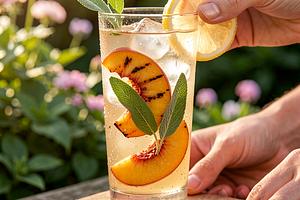
Serve well chilled (8–12°C). Cider will be an excellent companion to cheese mousse, grilled sausage, or light desserts. For effect, garnish the glass with a slice of baked apple or a sprig of fresh mint.

🥡 Storage

Store bottles upright in a cool, dark place (10–15°C). Still cider retains freshness for 6–12 months; for sparkling cider, keep it for a shorter time and be cautious of the pressure in the bottles. After opening, store in the refrigerator and consume within 3–5 days (still) or 1–2 days (sparkling).

📸 Cooked by the community

Log in to add a photo
Add a photo of the finished dish

After moderator approval, you will receive 10 experience points.

🍲

No one has added a photo yet. Be the first!

Comments (0)

Be the first to comment on this recipe!

Add a comment

You might also like

Recipe Categories

Drinks
Drinks in: Valentine's Day

Romantic drinks that will enhance the atmosphere and highlight the flavors of the dishes, perfect for a Valentine's Day dinner.

See all recipes in this category

Traditional recipes from various regions of Poland that showcase the richness of local flavors and ingredients.

See all recipes in this category
Advertisement