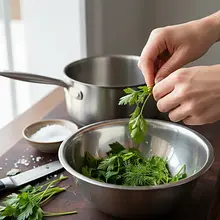
Start by thoroughly preparing the herbs. Place all the fresh herbs (parsley, dill, thyme, rosemary) in a large bowl of cold water and gently rinse them, moving them around to remove sand and dirt. Then, take them out and dry them very well using paper towels or a salad spinner. This is a crucial step – any remaining moisture can cause the salt to clump and spoil.
Description
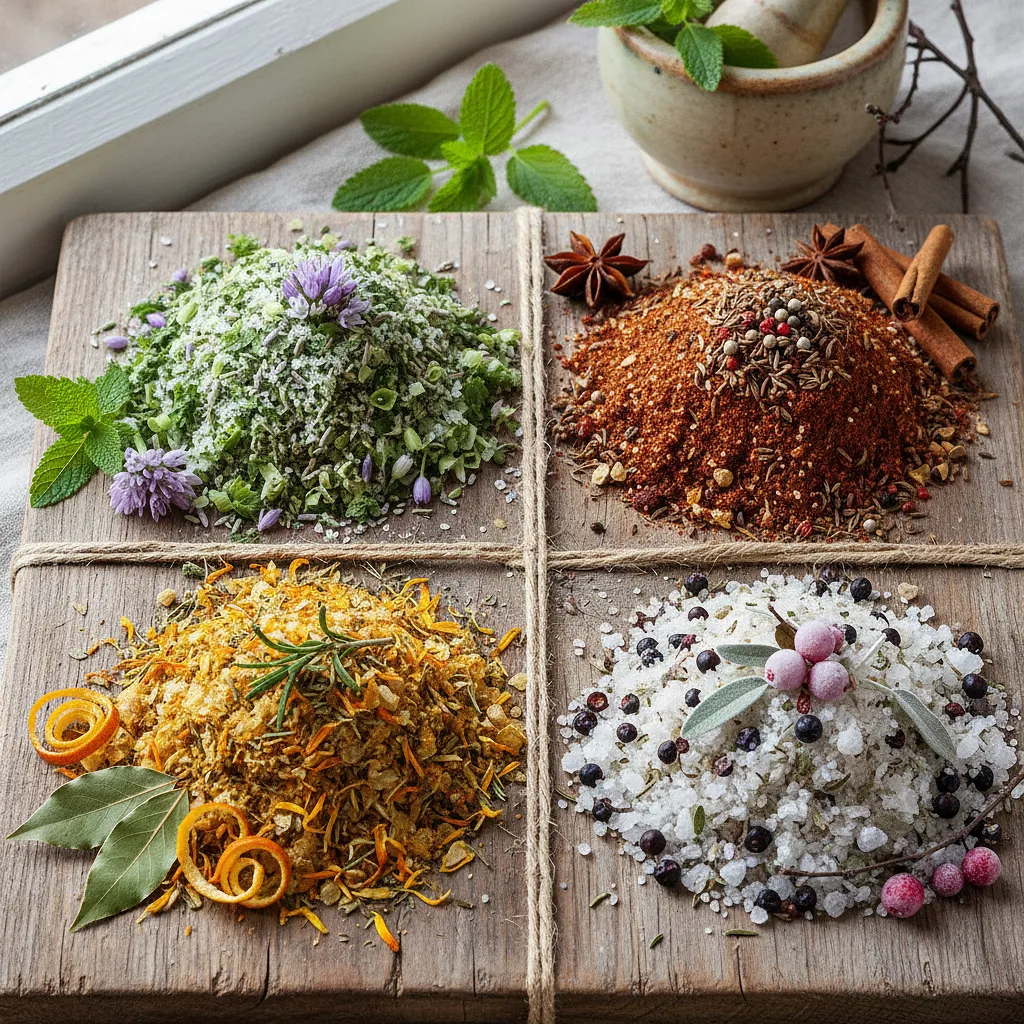
Homemade herb salt is the essence of flavor captured in a jar and a wonderful way to use fresh herbs from the garden, balcony, or market. It is an aromatic, intensely green mixture of coarse sea salt with a bouquet of freshly chopped herbs, garlic, and refreshing lemon zest. Its greatest advantage is versatility – it replaces regular salt, adding incomparable depth, freshness, and character to dishes. Thanks to it, you can reduce sodium intake in your diet, as the intense aroma of the herbs makes dishes seem more 'salty' and flavorful. Visually, it looks stunning; its vibrant color enlivens any dish. It can be given as a beautiful, homemade culinary gift. It pairs perfectly with rubbing meats and fish, seasoning roasted vegetables, salads, soups, and even sprinkling on an avocado toast.
Składniki (9)
- Fresh parsley 1 pęczek
- Fresh dill 1.5 pęczki
- Fresh thyme 0.2 pęczków
- Fresh rosemary 0.2 pęczków
- Garlic 3 ząbki
- Lemon zest 10 g
- 🌿 Przyprawy
- Coarse sea salt 200 g
- ✨ Opcjonalne
- Chili flakes 2 szczypty
- Dried marigold petals 1 łyżeczka
💡 Kliknij na składnik aby oznaczyć jako użyty
Preparation steps
Preparation of herbs and spices
Separate the edible parts of the herbs from the tough stems. For parsley and dill, you can use the thinner stems, but discard the thicker ones. Remove only the leaves/needles from the sprigs of thyme and rosemary. Place all the prepared herbs on a large cutting board and chop them very finely with a sharp chef's knife. The finer you chop the herbs, the better they will release their aroma into the salt.
Prepare the remaining aromatic ingredients. Peel the garlic cloves and crush them using a garlic press or grate them on the finest side of a grater to create a smooth paste. Wash the lemon thoroughly, pour boiling water over it, and dry it. Then, zest only the yellow part of the peel using a zester or the fine side of a regular grater. Be careful not to grate the white, bitter part (albedo).
Combining and drying the ingredients
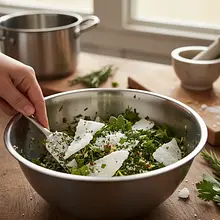
In a large, dry bowl, place the coarse sea salt. Add all the chopped herbs, garlic paste, and grated lemon zest. Now for the most important part – using your hands, start rubbing all the ingredients into the salt. Do this for 3-4 minutes, crushing the salt crystals with the herbs between your fingers. The salt will begin to absorb moisture and essential oils, changing color to a vibrant green and taking on a moist consistency resembling wet sand.
Prepare a large baking tray and line it with parchment paper. Evenly spread the moist salt mixture over the entire surface, creating a thin layer. The thinner the layer, the faster and more evenly the salt will dry. Now you have two drying options: in the oven (faster) or air drying (longer). In the oven: preheat it to the lowest possible temperature (50-60°C) with the fan on, place the tray inside, and leave the door slightly ajar. Dry for 1-2 hours, stirring every 30 minutes, until the salt is completely dry. Air drying: leave the tray in a dry, well-ventilated place for 1-2 days, stirring occasionally.
Final preparation and storage
After drying, the salt may form larger clumps. To achieve a uniform consistency, transfer it to a food processor, blender, or coffee/spice grinder. Blend briefly using short, pulsing motions. Just a few seconds is enough – the goal is to break up the clumps, not to grind the salt into powder. We want to maintain a pleasant, coarse texture. If you wish, at this stage you can add optional chili flakes or marigold petals and gently mix with a spoon.
Transfer the finished, completely cooled herb salt into clean, dry, and airtight jars. Store in a dark and cool place, such as a kitchen cabinet, away from heat and light sources. This will help the salt retain its beautiful color and intense aroma for many months.
Fun Fact
Herb salting, known as 'green salt', is a traditional method of preserving herbs for winter, used in Europe for centuries. Salt, being a natural preservative, draws water from plant cells while absorbing their essential oils, allowing one to enjoy the aroma of summer even in the middle of winter.
Best for
Tips
Use it to rub meats (chicken, pork) and fish before baking or grilling. Add it to soups, sauces, and stews at the end of cooking to enhance their flavor. Sprinkle it on avocado sandwiches, fried eggs, or fresh tomatoes with olive oil. It pairs wonderfully with baked potatoes, fries, and root vegetables. You can also mix it with good olive oil to create an aromatic dip for fresh bread.
Store in a tightly sealed jar in a dark and dry cupboard. Properly dried salt will retain its aroma and color for 6-12 months. If the salt clumps slightly over time due to residual moisture, simply shake the jar vigorously or break up the clumps with a fork.
📸 Ugotowane przez społeczność
Zaloguj się, aby dodać zdjęcieDodaj zdjęcie gotowej potrawy
Po zatwierdzeniu przez moderatora otrzymasz 10 punktów doświadczenia.
Nikt jeszcze nie dodał zdjęcia. Bądź pierwszy!
Comments (0)
Be the first to comment on this recipe!
Add a comment