
Menu

Creamy Mushroom Sauce with Homemade Bread Dumplings

Czech Cuisine Dania główne Lunches 120 min Medium 10 wyświetleń ~40.32 PLN - (0)
Rate:
(0)

Description

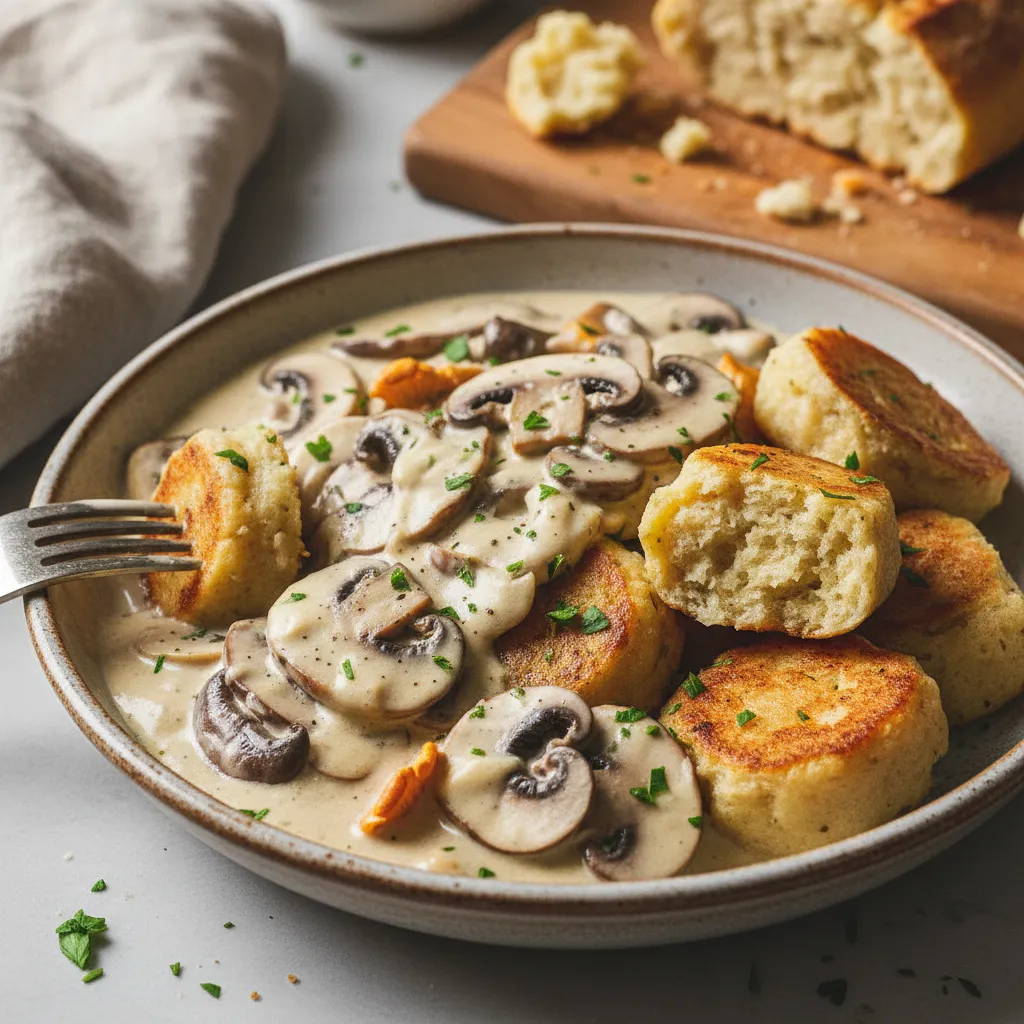
Mushroom sauce, or velvety mushroom sauce, is a gem in the crown of Czech cuisine and the essence of autumn comfort. It is a dish that transports you straight to the heart of a Czech home, where the aroma of sautéed wild mushrooms mingles with the scent of fluffy steamed dumplings. The base of the sauce is the richness of forest mushrooms, such as porcini or bay boletes, sautéed with onion and caraway, and then combined with broth and cream, giving it an extraordinary depth and creamy consistency. A key addition is homemade bread dumplings (houskový knedlík) – fluffy, light, with pieces of stale bread, perfectly absorbing every gram of delicious sauce. The dish is incredibly filling, warming, and full of umami flavor. It is traditionally served with a slice of lemon, whose acidity perfectly balances the richness of the sauce, and garnished with fresh parsley for added freshness and color.

Składniki (16)

Servings:
4
  • Wheat flour type 500 500 g
  • Fresh yeast 25 g
  • Milk 3.2% 250 ml
  • Egg 1 szt.
  • Stale wheat rolls 2 szt.
  • Fresh forest mushrooms 500 g
  • Onion 1.3 szt.
  • Masło klarowane 2 łyżki
  • Vegetable broth 500 ml
  • 30% cream 200 ml
  • sugar 5 g
  • Ground cumin 2 g
  • 🌿 Przyprawy
  • Salt 10 g
  • Pieprz czarny świeżo mielony 2 szczypty
  • ✨ Opcjonalne
  • Parsley 0.5 pęczek
  • Lemon 0.6 szt.
💰 Szacowany koszt dania: ~40.32 PLN (10.08 PLN/porcję)

💡 Kliknij na składnik aby oznaczyć jako użyty

Preparation steps

Homemade Bread Dumplings

1

Start by preparing the yeast starter. In a small saucepan, heat 100 ml of milk to a temperature of about 37°C - it should feel pleasantly warm to the touch, like bath water for a baby, but not hot. Crumble fresh yeast into a small bowl, add a teaspoon of sugar, and pour in the warm milk. Mix thoroughly with a fork until the yeast is completely dissolved. Cover the bowl with a cloth and set it in a warm place (e.g., near a radiator or in a slightly preheated oven) for about 10-15 minutes. After this time, a thick, bubbly foam should appear on the surface - this is a sign that the yeast is active and ready to work.

Ingredients: Fresh yeast, Milk 3.2%, sugar
This is a key step! If the milk is too hot (above 45°C), it will kill the yeast. If no foam appears after 15 minutes, the yeast is inactive and you should start over with a fresh cube. Don't skip the sugar - it's food for the yeast.
2

While the leaven is rising, prepare the rolls. Cut the stale rolls into even, small cubes with a side of about 1 cm using a sharp knife. Transfer the cut rolls to a large bowl and set aside. The cubes should be dry, allowing them to absorb moisture from the dough without falling apart completely.

Ingredients: Stale wheat rolls
Use a serrated knife; it will make cutting stale bread easier without crushing it. If you only have fresh rolls, cut them into cubes and dry them out in the oven for 10 minutes at 120°C.
3

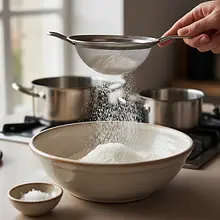
In a large bowl, sift the flour, add a teaspoon of salt, and mix. Make a well in the center. Pour the risen yeast mixture into the well, add the rest of the milk (150 ml) at room temperature, and crack in the egg. Start mixing the ingredients from the center, gradually incorporating the flour from the edges until a uniform dough forms. Knead the dough by hand for about 10 minutes or with a mixer and dough hook for 5-7 minutes. The finished dough should be smooth, elastic, and pull away from the sides of the bowl. Finally, add the diced rolls and gently but thoroughly fold them into the dough, just until combined.

Ingredients: Wheat flour type 500, Salt, Milk 3.2%, Egg, Stale wheat rolls
Use a large bowl, the dough will rise significantly. Do not knead the dough too long after adding the breadcrumbs to avoid breaking them. If the dough is too sticky, add a little flour, and if it's too dry - add a little milk.
4

Shape the dough into a ball, place it back in the bowl, lightly dust with flour, cover with a clean kitchen towel, and set aside in a warm, draft-free place for about 60-90 minutes. During this time, the dough should double in size.

The ideal place for rising is an oven with just the light on or set to 30°C. You can also place the bowl in the sink with warm water.
5

Remove the risen dough onto a lightly floured surface. Gently knead it to remove air bubbles. Divide the dough into two equal parts. From each part, shape a long roll with a diameter of about 6-7 cm and a length of 20-25 cm, resembling a loaf. Try to ensure the surface is smooth and without cracks.

Do not roll the dough too much to avoid destroying its fluffy structure. Make sure the dumplings will fit in your pot - they need some space because they will expand while cooking.
6

In a large, wide pot (minimum 5 liters), bring a large amount of salted water to a boil (about 1 teaspoon of salt per liter). When the water starts to boil vigorously, gently place both dumplings into it. Reduce the heat so that the water is just gently 'blinking' (slightly bubbling). Cook the dumplings covered for 20-25 minutes, turning them to the other side halfway through cooking using two wooden spoons.

Ingredients: Salt
The best is a wide pot where the dumplings can float freely. Too vigorous boiling can cause them to fall apart. To check if the dumpling is ready, take one out and poke it in the thickest part with a wooden skewer. If the skewer is dry, the dumpling is cooked.
7

Carefully remove the cooked dumplings from the water using a slotted spoon and immediately, while still hot, poke them in several places with a fork or a stick. This will allow the steam to escape and prevent them from collapsing (becoming soggy). Set aside for a moment to cool slightly, and then cut into slices about 1.5-2 cm thick. Traditionally, this is done using a taut thread, which gives a perfectly smooth cut.

To cut the dumpling with thread, place it under the rolling pin, cross the ends at the top, and tighten. This is the best way to avoid crushing the fluffy structure, which can happen when using a knife.

Creamy mushroom sauce

8

While the dumplings are cooking, prepare the sauce. Clean the mushrooms thoroughly with a brush or a damp cloth (avoid washing them under running water to prevent them from soaking up moisture). Cut larger caps and stems into thicker slices, and leave smaller mushrooms whole or cut them in half. Peel the onion and chop it into small cubes.

Ingredients: Fresh forest mushrooms, Onion
Use a large, wide skillet or a thick-bottomed pot with a diameter of about 28 cm. This will ensure even frying of the mushrooms, rather than stewing them.
9

In a pan, heat the clarified butter. Add the chopped onion and sauté over medium heat for about 5-7 minutes, stirring frequently, until it becomes soft and translucent. Do not let it brown. Add the ground cumin and sauté for another minute until it releases its aroma.

Ingredients: Masło klarowane, Onion, Ground cumin
Adding cumin to hot fat just before adding the rest of the ingredients (the so-called 'tempering of spices') brings out a deeper aroma.
10

Increase the heat, add the prepared mushrooms to the pan. Sauté for about 10-15 minutes, stirring occasionally, until the mushrooms release their moisture, which will then evaporate, and the mushrooms begin to brown slightly. This is key to achieving a deep, mushroom flavor.

Ingredients: Fresh forest mushrooms
Do not stir the mushrooms too often at the beginning, let them brown. Do not salt the mushrooms at this stage, as it will cause them to release more water and start to boil instead of frying.
11

When the mushrooms are sautéed, reduce the heat. Sprinkle them with flour (1 tablespoon) and mix vigorously, cooking for about a minute. This will create a light roux that will thicken the sauce. Then, slowly start pouring in the hot broth in batches, constantly stirring with a whisk to avoid lumps. Once you have poured in all the broth, bring the sauce to a boil, then reduce the heat and simmer for 10 minutes to allow the flavors to meld and the sauce to thicken.

Ingredients: Wheat flour type 500, Vegetable broth
Use a whisk to mix the sauce while adding the broth - this is the best way to avoid lumps. Adding hot broth to hot roux also minimizes the risk of lumps forming.
12

Remove the pot from the heat for a moment. In a small bowl, temper the cream: pour a ladle of hot sauce into it and mix vigorously. Then slowly pour the tempered cream into the rest of the sauce, stirring constantly. Place the pot back on low heat and warm it, without boiling, for 2-3 minutes until the sauce is smooth and creamy.

Ingredients: 30% cream
Tempering the cream is crucial to prevent it from curdling when added to the hot sauce. Never pour cold cream straight from the fridge into boiling liquid. Once the cream is added, the sauce should not be brought to a boil again.

Serving

13

Finally, season the sauce to taste with salt and freshly ground black pepper. On a deep plate, arrange 4-5 warm slices of dumpling, generously drizzle with hot mushroom sauce. Sprinkle everything with freshly chopped parsley and serve with a wedge of lemon for drizzling over the dish.

Ingredients: Salt, Pieprz czarny świeżo mielony, Parsley, Lemon
The dish tastes best right after preparation, when the dumplings are the most delicate, and the sauce is hot and velvety. Don't skimp on the sauce!

Fun Fact

💡

Dumplings are an absolute staple of Czech and Austrian cuisine. There are countless variations: bread, potato, made from raw or cooked dough, and even sweet ones with fruit. Cutting dumplings with thread is an old, homemade method passed down from generation to generation, ensuring perfectly even slices without crushing their delicate structure.

Best for

Tips

🍽️ Serving

Serve the dish in deep plates to prevent the sauce from spilling over the sides. Each portion should consist of 4-5 slices of dumpling, generously drizzled with sauce. Be sure to place a slice of lemon next to it – its juice wonderfully brightens the flavor and cuts through the richness of the sauce. A chilled Czech pilsner beer (světlý ležák) pairs perfectly with this dish, as its bitterness beautifully balances the creaminess of the meal.

🥡 Storage

If you have leftovers, store the dumplings and sauce in separate airtight containers in the fridge for up to 3 days. The dumplings are best reheated by steaming (just a few minutes), which will restore their original fluffiness. They can also be sautéed in butter. Reheat the sauce slowly over low heat, adding a little water or broth if necessary to restore the proper consistency.

📸 Ugotowane przez społeczność

Zaloguj się, aby dodać zdjęcie
Dodaj zdjęcie gotowej potrawy

Po zatwierdzeniu przez moderatora otrzymasz 10 punktów doświadczenia.

🍲

Nikt jeszcze nie dodał zdjęcia. Bądź pierwszy!

Comments (0)

Be the first to comment on this recipe!

Add a comment

You might also like

Recipe Categories

Czech cuisine is a treasure trove of Central European flavors - hearty, aromatic, and full of tradition. Discover classic Czech dumplings - steamed, bread, or potato, served with sauces and braised meat. Svíčková na smetaně, vepřo-knedlo-zelo, smažený sýr, or trdelník are just some of the iconic ...

See all recipes in this category
Dania główne
Dania główne in: Sylwester

Dania główne na Sylwestra powinny być sycące i efektowne, aby zadowolić podniebienia wszystkich gości.

See all recipes in this category

Lunches are the main meal of the day - filling, balanced, and full of flavor. Traditional two-course lunches: soup and a main dish in Polish tradition. Pork chop with potatoes and cabbage - a classic of Polish lunches. Dumplings with meat, cheese, and fruit - hand-formed delicacies. Beef goulash,...

See all recipes in this category

European cuisine is a mosaic of culinary traditions from the Old Continent - from Spain to Scandinavia. Valencian paella and tapas from Spain - sunshine on a plate. Boeuf bourguignon and ratatouille from France - elegance and finesse. Wiener schnitzel and strudel from Austria - Central European c...

See all recipes in this category
Reklama