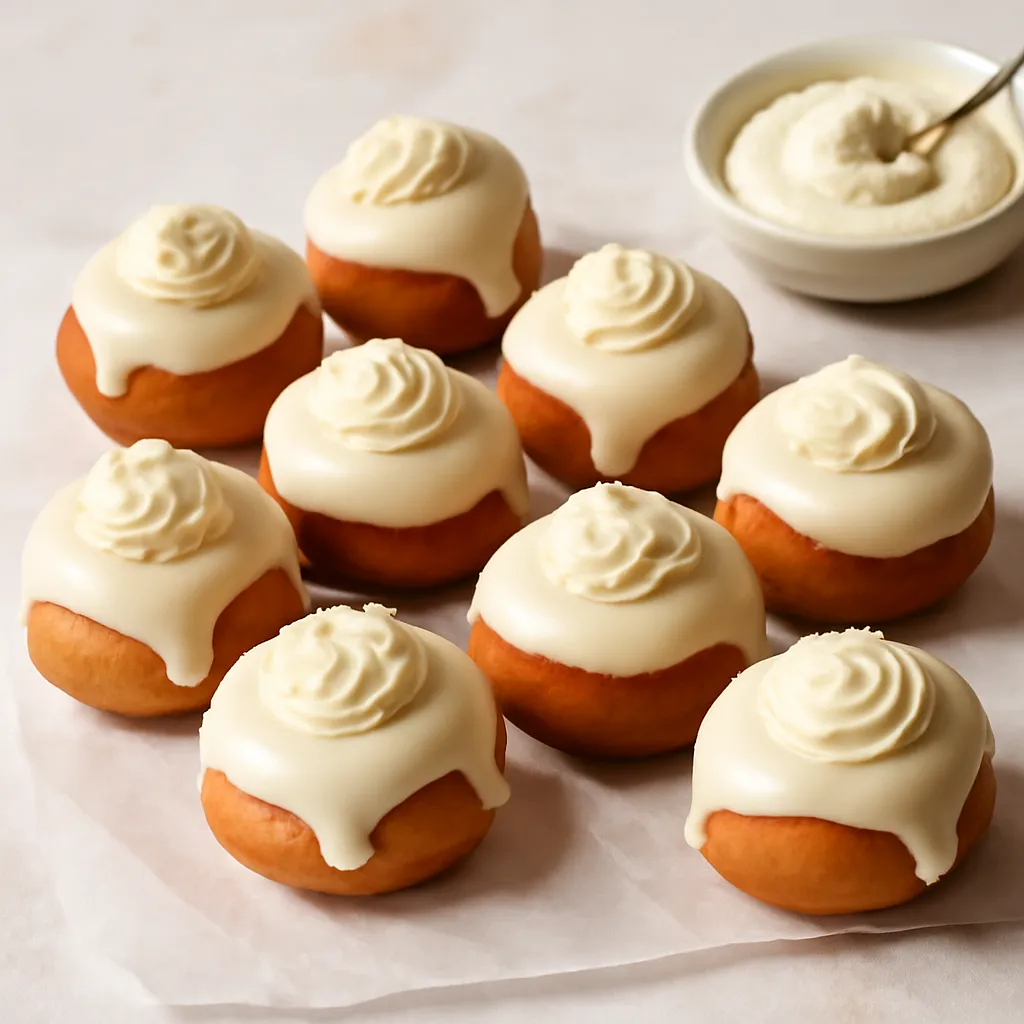
Delicate, fluffy mini doughnuts inspired by classic custard doughnuts, but in a modern, blog-style version. The yeast dough enriched with custard powder gives a subtle vanilla note in the structure of the doughnuts, while the inside is filled with smooth vanilla-mascarpone cream. The whole is topped with a velvety white chocolate glaze and optionally sprinkled with powdered sugar and lemon zest for freshness. Perfect for afternoon coffee, a party, or a sweet table — they look impressive, and thanks to their mini size, they encourage trying several flavors. Flavor: creamy vanilla, buttery note of the dough, and sweet white chocolate; texture: soft interior, delicate crust on the outside.
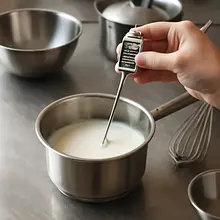
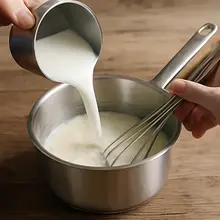
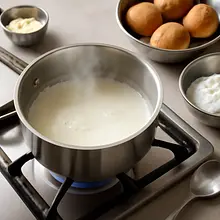
Start by preparing the cream so it has time to cool and thicken. In a small pot, pour in 300 ml of milk for the cream. Set aside 2 tablespoons (about 20 g) of milk and mix in 40 g of pudding powder to avoid lumps. In a separate bowl, place 18 g of egg yolk and 10 g of sugar (use from the total amount of sugar) and whisk with a fork.
Use a saucepan with a capacity of at least 1 liter and a whisk to eliminate lumps; do not pour the dry powder directly into hot milk, as it will create a lumpy mixture.
2
Heat the milk over medium heat. When it starts to gently steam and the first bubbles appear at the edges (do not let it boil), pour in the pudding mixture in a thin stream, constantly whisking. Cook for 1-2 minutes until the cream thickens to a pudding-like consistency. Remove from heat, add 60 g of mascarpone, and mix vigorously until the cream is smooth. Cover with plastic wrap pressed against the surface of the cream to prevent a skin from forming. Set aside to cool completely.
Use medium heat and stir constantly to prevent the cream from sticking. The cream should be thick and silky; if it is thin, cook for another 30-60 seconds.
Yeast dough
3
Prepare the starter: heat 120 ml of milk to a temperature of about 35-38°C (it should be warm, but not hot — check with the inside of your wrist). Crumble 15 g of fresh yeast into a cup, add 1 teaspoon of sugar (from the total of 80 g) and 2 tablespoons of flour (about 20 g), pour in the warm milk and mix with a fork. Set aside in a warm place for 8-10 minutes — a light foam should appear on the surface.
Ingredients:
Milk for the dough, Fresh yeast, sugar, Wheat flour
Use a small bowl or cup; if after 10 minutes there is no foam, the yeast is inactive — discard and start over. The milk must not be hot (above 45°C will kill the yeast).
4
In a large bowl, sift 300 g of flour and add 30 g of pudding powder and 3 g of salt. Mix the dry ingredients. Make a well in the flour, pour in the frothy starter, add 120 g of beaten egg (from two eggs) and the remaining sugar. Start mixing with a wooden spoon, gradually incorporating the ingredients until a sticky mass forms.
Use a large bowl and a wooden spoon or a mixer with a dough hook; mix just until the ingredients are combined — do not knead yet intensively.
5
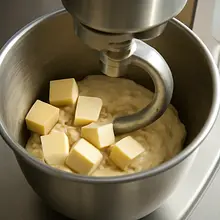
When the ingredients are combined, add 60 g of soft butter in pieces and knead with a hook mixer for 6-8 minutes on medium speed until the dough becomes smooth, elastic, and stops sticking heavily to your hand. If kneading by hand, knead for 10-12 minutes on a lightly floured surface. The finished dough should be soft, elastic, and slightly springy.
Ingredients:
Butter, Wheat flour, Egg
Use a mixer bowl with a dough hook for the yeast dough. Do not add too much flour — the dough should be soft. If it sticks to your hands a lot, you can grease your hands with a little oil.
6
Transfer the dough to a lightly oiled bowl, cover with a cloth or plastic wrap, and set aside in a warm place (about 24-26°C) for 60-75 minutes, until it doubles in size. The dough is ready when an indentation made with your finger gently springs back, but not completely (leaving a slight mark).
Ingredients:
Wheat flour, Fresh yeast
It's best to place the bowl in an oven that is turned off but with the light on (if you have one). Do not rush the rising process with too high a temperature — it can ruin the structure.
Shaping and second rising
7
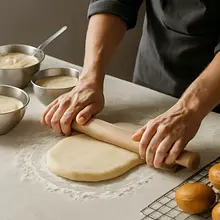
After the dough has risen, remove it onto a lightly floured surface. Roll it out or stretch it gently to a thickness of about 2 cm. Use a small cutter (e.g., a glass with a diameter of 4-5 cm) to cut out circles. Gather the remaining dough gently and reshape it, cutting out more circles — you should get about 12 pieces. Place the circles on a floured board, leaving some space between them. Cover with a cloth and let them rest for 20-30 minutes for a slight puffing up (second rising).
Ingredients:
Wheat flour
Use a mold with a diameter of 4-5 cm to make mini doughnuts; do not knead the dough too vigorously again — gently shape the rolls with your fingers.
Frying
8
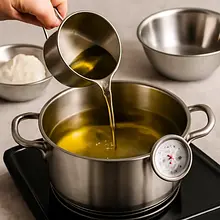
Fill a deep saucepan or pot with oil to 1/3 of its height (about 600 g). Heat the oil to 170-175°C — if you don't have a thermometer, drop in a small piece of dough: it should slowly rise to the surface and brown within about 40-50 seconds. Fry the doughnuts in batches: gently place 4-5 pieces in the oil and fry for 2-3 minutes on one side, then turn them over with a slotted spoon and fry for another 2-3 minutes until they are golden and evenly cooked. Once fried, place them on a plate lined with paper towels to drain excess fat.
Ingredients:
Rapeseed oil for frying, Wheat flour
The best is a medium-sized deep frying pan or a thick-walled pot; do not overcrowd the pot — the oil temperature will drop and the doughnuts will absorb more fat.
Stuffing
9
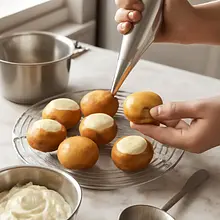
When the doughnuts have cooled to a warm temperature (not hot), fill them with the cream prepared earlier. The best way to fill them is using a pastry bag with a filling tip or a regular syringe: insert the tip into the side of the doughnut and inject 1-1.5 tablespoons of cream (about 20-25 g). Repeat with the remaining doughnuts.
If the cream is very thick, lightly whip it with a whisk before filling; do not fill the donuts with hot cream, as they will crack and become soggy.
Glaze and decoration
10
Prepare the glaze: in a water bath, melt 120 g of white chocolate together with 60 ml of 30% cream, stirring until you achieve a smooth, shiny mixture. If the mixture is too thick, add 1-2 teaspoons more cream. Dip the top of each doughnut in the glaze or drizzle it with a spoon and let the excess drip off. Place on a rack, and after it sets, optionally sprinkle with 30 g of powdered sugar and/or grated lemon zest (5 g) for freshness.
Ingredients:
White chocolate, 30% cream for frosting, Powdered sugar, Lemon zest (grated)
For the water bath, use a bowl placed over a pot with a small amount of boiling water; do not allow the bowl to touch the water. The glaze should be liquid but not watery.
Serving
11
Serve the doughnuts when the glaze has slightly thickened, but the doughnuts are still fresh and soft inside. Arrange them on a platter, garnishing with a mint leaf or extra grated lemon zest. Mini doughnuts taste best on the same day — they are fluffiest then.
Ingredients:
White chocolate, Powdered sugar
Serve with a cup of coffee or tea. If you are making them for a party, prepare the glaze just before serving so the doughnuts don't get too soft.
Cleaning and Final Tips
12
After finishing, cool the oil in the pot, strain it through cheesecloth if you plan to use it again, or transfer it to a container and dispose of it according to local regulations. Wash all the dishes and wipe the countertop. Note down the proportions in your notebook if you changed the flavor of the cream (e.g., adding raspberry puree).
Ingredients:
Rapeseed oil for frying
Do not pour oil down the sink — it will clog the pipes. Store it in a sealed container out of reach of children.
Fun Fact
💡
Adding pudding powder to yeast dough is an old baking trick that gives baked goods a more delicate structure and a natural vanilla aroma — popular in home recipes since the 1980s in Central Europe.
Serve the doughnuts slightly warm (room temperature) alongside espresso or Earl Grey tea. For a flavor contrast, you can add a bit of lemon juice (1-2 g) to the glaze and lightly sprinkle with sea salt for adults. Mini doughnuts look great arranged on a multi-tiered stand.
🥡Storage
Store in an airtight container at room temperature for up to 24 hours. The cream may separate; if you plan to store them longer (up to 48 hours), keep the donuts in the fridge, but take them out 30 minutes before serving to soften. It's best to prepare the glaze just before serving; thawed donuts lose some of their fluffiness.
Desserts are a sweet ending to a meal that brings joy to both children and adults. In this category, we present recipes for a variety of sweets - from simple creams and mousses, to elegant panna cottas, and exquisite fruit tarts. Our desserts include both classics of Polish cuisine - fruit jelly,...
Homemade cakes and pastries are the heart of Polish culinary tradition - sweet memories from childhood. In our collection, you will find recipes for classic yeast cakes, shortcrust, sponge, and cheesecake. Apple pie, poppy seed cake, gingerbread, Easter babka, chocolate cake, and New York cheesec...
Comments (0)
Be the first to comment on this recipe!
Add a comment