Menu

Mini Custard Doughnuts with Vanilla Cloud

Desserts Cakes and Bakes For Kids 160 min Medium 12 wyświetleń ~22.79 PLN - (0)
Rate:
(0)

Description

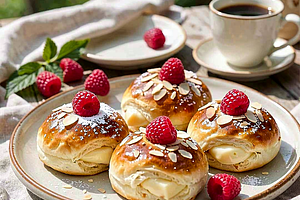
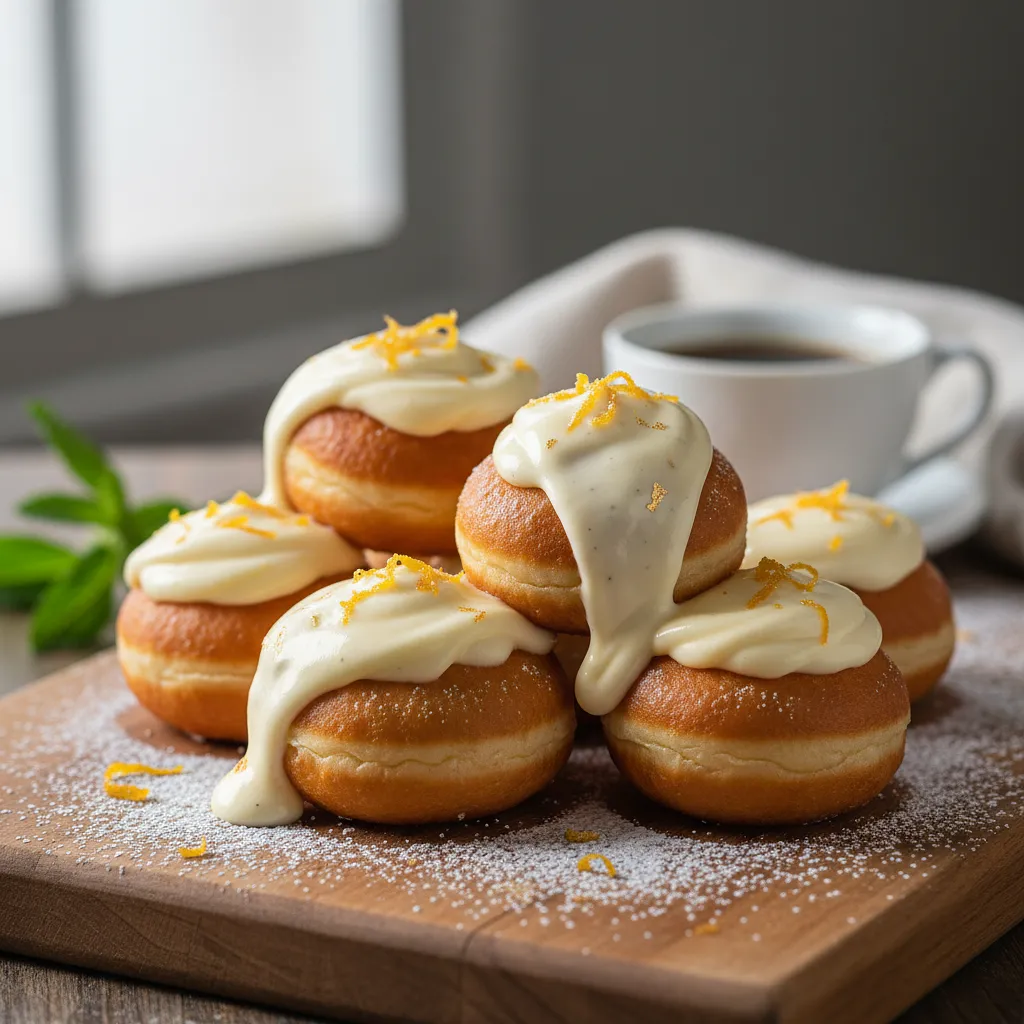
Discover the recipe for absolutely heavenly mini doughnuts that melt in your mouth, releasing a velvety, homemade custard cream with an intense aroma of real vanilla. These small, fluffy balls of happiness are perfectly risen, light as a cloud, and fried to a golden color, with a characteristic light rim that signifies their perfection. Unlike their larger cousins, the mini version is more elegant and perfect for one or two bites. This dessert combines the tradition of Polish Fat Thursday with the finesse of pastry craftsmanship. Served on an elegant plate, generously dusted with powdered sugar, they are not only a treat for the palate but also for the eyes. They are perfect for parties, as a sweet snack with coffee, or simply as a way to lift your spirits on a gray day. Making them from scratch provides immense satisfaction and allows you to control the quality of the ingredients, resulting in an unmatched flavor.

Składniki (16)

Servings:
6
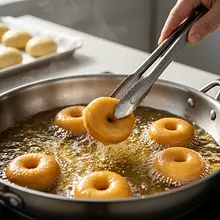
  • Mąka pszenna tortowa typ 450 500 g
  • Fresh yeast 25 g
  • Milk 3.2% 250 ml
  • Cukier drobny 60 g
  • Egg yolks 4 szt.
  • Masło 82% 60 g
  • 3.2% milk for pudding 500 ml
  • Fine sugar for pudding 100 g
  • Egg yolks for pudding 3 szt.
  • Cornstarch 40 g
  • Butter 82% for pudding 50 g
  • Rapeseed oil for frying 1000 g
  • Powdered sugar for decoration 50 g
  • 🌿 Przyprawy
  • Salt 0.1 szczypt
  • ✨ Opcjonalne
  • Rectified spirit 1 łyżka
  • Vanilla bean 1 szt.
💰 Szacowany koszt dania: ~22.79 PLN (3.80 PLN/porcję)

💡 Kliknij na składnik aby oznaczyć jako użyty

Preparation steps

Yeast starter

1

Start by preparing the starter. In a small saucepan, heat 100 ml of milk (from the total 250 ml intended for the dough) to a temperature of about 37°C. The milk should feel pleasantly warm to the touch, like bath water for a baby, but not hot. Crumble fresh yeast into a bowl, add 1 tablespoon of sugar (from the total 60 g) and 1 tablespoon of flour. Pour the warm milk over everything and mix thoroughly with a fork until all the ingredients are combined and there are no lumps. Cover the bowl with a clean cloth and set it in a warm, draft-free place for about 10-15 minutes. After this time, the starter should double in volume and be covered with a thick foam – this is a sign that the yeast is active and ready to work.

Ingredients: Fresh yeast, Milk 3.2%, Cukier drobny, Mąka pszenna tortowa typ 450
The most common mistake is pouring too hot milk (above 45°C) over the yeast, which kills it. If after 15 minutes there is no foam on the starter, it means the yeast is inactive and you need to start over with a fresh batch. A warm place can be near a radiator or a slightly warmed (and turned off!) oven.
Doughnut dough

2

In a large bowl, sift the remaining wheat flour. Sifting aerates the flour, which will make the doughnuts lighter. Make a well in the center of the flour. Add the egg yolks, remaining sugar, salt, and the risen starter to the well. Begin to gently mix the ingredients from the center, gradually incorporating the flour from the edges. Pour in the remaining 150 ml of warm milk. Continue mixing until the ingredients are initially combined.

Ingredients: Mąka pszenna tortowa typ 450, Egg yolks, Cukier drobny, Salt, Milk 3.2%
Use a large bowl, as the dough will rise significantly. A wooden spoon or spatula works best for mixing at the beginning. Do not add the butter or alcohol yet!
3

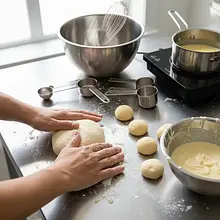
Now it's time to knead. You can do this by hand on a countertop or use a mixer with a dough hook. Knead the dough for about 5 minutes until it becomes more cohesive. Then, while continuing to knead, gradually add the melted and cooled butter in a small stream. Finally, add the spirit (if using). Knead the dough for another 10-15 minutes by hand or 8-10 minutes with a mixer. The finished dough should be smooth, elastic, shiny, and should easily come away from your hands and the sides of the bowl.

Ingredients: Masło 82%, Rectified spirit
The key is patience and thoroughly kneading the dough. It must be well-aerated. If the dough is too sticky, dust your hands with a little flour, but do not add too much to the dough so that the donuts do not turn out hard. Properly kneaded dough should slowly return to its shape when pressed with a finger.
4

Shape the dough into a ball, place it back in the bowl, lightly dust with flour, cover with a clean kitchen towel or plastic wrap, and set aside in a warm place for about 1-1.5 hours. The dough should double in size during this time.

To prevent the surface of the dough from drying out, you can brush the bowl with a thin layer of oil before placing the dough in it. The rising time depends on the ambient temperature – the dough will rise faster in a warmer place.

Pudding cream

5

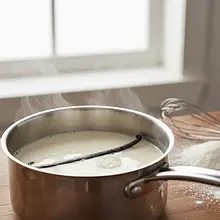
While the dough is rising, prepare the cream. In a saucepan with a thick bottom, pour in 400 ml of milk. If you are using a vanilla pod, split it lengthwise, scrape out the seeds, and add them along with the empty pod to the milk. Bring the milk to a boil. In a separate bowl, place the egg yolks, sugar, and cornstarch. Pour in the remaining 100 ml of cold milk and blend everything into a smooth, uniform mixture without lumps.

Ingredients: 3.2% milk for pudding, Fine sugar for pudding, Egg yolks for pudding, Cornstarch, Vanilla bean
Using a pot with a thick bottom is very important, as it prevents the pudding from burning. Thoroughly mixing the starch with cold milk and egg yolks will prevent lumps from forming in the finished cream.
6

When the milk in the pot comes to a boil, remove the empty vanilla pod. Reduce the heat to the minimum. Slowly pour about half of the hot milk into the egg yolk mixture in a thin stream, while constantly whisking vigorously. This process is called tempering and prevents the egg yolks from curdling. Then, pour the tempered mixture back into the pot with the remaining milk. Increase the heat and cook, continuously whisking, until the pudding thickens and the first bubbles appear. Cook for another minute. Remove the pot from the heat.

Do not stop stirring the pudding for a moment, especially when it starts to thicken, as it can easily stick to the bottom and burn. Use a whisk to break up any lumps that form.
7

Add the diced butter to the hot pudding. Stir vigorously until the butter completely melts and combines with the mixture, creating a smooth, glossy cream. Pour the finished cream into a bowl. Cover the surface with plastic wrap so that it touches the top of the pudding directly. This will prevent a skin from forming. Set the cream aside to cool completely.

Ingredients: Butter 82% for pudding
"Contact" foil is the best way to avoid an unappetizing skin on the surface of the pudding. Before filling the doughnuts, the cooled cream can be briefly blended to become perfectly smooth and fluffy again.

Shaping and proofing the doughnuts

8

Remove the risen dough onto a lightly floured surface or countertop. Knead it briefly to release the gas. Roll out the dough into a disc about 1.5 cm thick. Using a glass or a round cutter with a diameter of about 5-6 cm, cut out circles. Knead the leftover dough again, roll it out, and cut out more doughnuts. Place the formed doughnuts on a floured surface, leaving space between them. Cover them with a cloth and let them rise again for about 20-30 minutes. The doughnuts should become noticeably puffed and light.

Do not roll the dough too thin, as the doughnuts will not have enough to rise. Before the second rising, make sure the doughnuts have space to grow – do not place them too close to each other. A doughnut ready for frying should slowly return to shape when gently pressed with a finger.

Frying the donuts

9

In a wide, flat pot or a deep skillet, heat the oil. There should be enough oil for the doughnuts to float freely (about 1 liter). The ideal frying temperature is 175-180°C. If you don't have a candy thermometer, you can do a test: drop a small piece of dough into the oil. If it immediately floats to the surface and starts to brown, surrounded by small bubbles, the oil is ready. If it sinks to the bottom, the oil is too cold. If it burns right away, it is too hot.

Ingredients: Rapeseed oil for frying
Use a pot with a thick bottom that retains heat well. Too low a temperature will cause the donuts to absorb too much fat and become heavy. Too high a temperature will burn them on the outside while leaving them raw on the inside.
10

Carefully place the risen doughnuts into the heated oil, a few at a time, to avoid drastically lowering the temperature of the fat. Fry for about 1.5-2 minutes on each side until they achieve a beautiful golden-brown color. After frying the first side, a characteristic light ring should appear around the doughnut. Gently turn them using a fork or a skewer. Remove the fried doughnuts with a slotted spoon and place them on a plate lined with paper towels to drain excess fat.

Do not drop too many doughnuts at once. They should have space to float freely. Be careful not to poke the doughnuts while flipping them, as oil will get inside. Allow the doughnuts to cool completely before filling.

Stuffing and decoration

11

When the doughnuts are completely cool and the custard cream is at room temperature, you can start filling them. Transfer the cream to a piping bag fitted with a long, thin tip (a filling nozzle). Insert the tip into the side of the doughnut, trying to reach its center, and gently squeeze in a portion of the cream. You will feel the doughnut becoming heavier. Finally, generously dust all the doughnuts with powdered sugar, sifting it through a fine sieve.

Ingredients: Powdered sugar for decoration
Filling warm doughnuts will cause the cream to melt and flow out. If you don't have a piping bag, you can use a thick syringe (without a needle) or make a small incision in the doughnut and insert the cream with a small spoon, although this is more difficult. The amount of filling is up to you – aim for about 1-2 teaspoons per doughnut.

Fun Fact

💡

In Poland, Fat Thursday is the day when we eat millions of doughnuts. Statistically, each Pole consumes an average of 2.5 doughnuts on this day. This tradition dates back to pagan times when it was celebrated as a way to mark the end of winter and the arrival of spring.

Best for

Tips

🍽️ Serving

Mini doughnuts look best arranged in a pyramid on a large platter or tray. Before serving, you can dust them with a fresh sprinkle of powdered sugar. They pair perfectly with a cup of aromatic coffee, tea, or a glass of milk. You can also serve them with a fruit sauce, such as raspberry, to balance the sweetness.

🥡 Storage

Doughnuts taste best on the day they are made. If you have any left for the next day, store them in an airtight container at room temperature. Unfilled doughnuts can be stored longer. To refresh doughnuts, you can briefly place them in an oven preheated to 150°C.

📸 Ugotowane przez społeczność

Zaloguj się, aby dodać zdjęcie
Dodaj zdjęcie gotowej potrawy

Po zatwierdzeniu przez moderatora otrzymasz 10 punktów doświadczenia.

🍲

Nikt jeszcze nie dodał zdjęcia. Bądź pierwszy!

Comments (0)

Be the first to comment on this recipe!

Add a comment

You might also like

Recipe Categories

Desserts
Desserts in: Christmas Eve Dinner

Desserts are a sweet ending to a meal that brings joy to both children and adults. In this category, we present recipes for a variety of sweets - from simple creams and mousses, to elegant panna cottas, and exquisite fruit tarts. Our desserts include both classics of Polish cuisine - fruit jelly,...

See all recipes in this category

Homemade cakes and pastries are the heart of Polish culinary tradition - sweet memories from childhood. In our collection, you will find recipes for classic yeast cakes, shortcrust, sponge, and cheesecake. Apple pie, poppy seed cake, gingerbread, Easter babka, chocolate cake, and New York cheesec...

See all recipes in this category

Recipes for kids are tasty, healthy, and visually appealing dishes - for little picky eaters and food lovers. Colorful and fun dishes: animals made from vegetables, faces from food, and rainbow plates. Hidden vegetables: spinach in pancakes, carrots in sauce, and zucchini in batter. Energetic bre...

See all recipes in this category

Sylwester to wyjątkowy czas, kiedy żegnamy stary rok i witamy nowy z wielką radością i nadzieją. To niezwykła okazja, która łączy bliskich przy wspólnym stole, gdzie nie może zabraknąć pysznych potraw i napojów. Tradycyjnie celebrujemy ten wieczór różnorodnymi daniami, które symbolizują dostatek ...

See all recipes in this category
Desery
Desery in: Sylwester

Słodkie zakończenie sylwestrowej kolacji to must-have, które wprowadzi wszystkich w radosny nastrój na nowy rok.

See all recipes in this category
Reklama