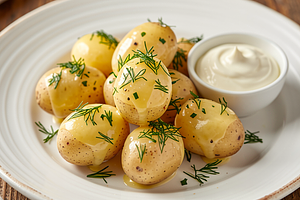
Polish fusion sushi: maki with beetroot gravlax salmon, cottage cheese, and pickled cucumber

Asian Fusion Cuisine Main dishes 120 min Medium 30 wyświetleń ~16.78 PLN * - (0)
Rate:
(0)
Start Cooking

Description

This is an original, winter reinterpretation of sushi that combines Japanese technique with Polish flavors: salmon gently cured and colored with beetroot (beetroot gravlax), creamy twaróg instead of mayonnaise, and crunchy pickled cucumber. The dish has a distinct, slightly salty-sweet-sour profile: the sweetness and acidity of the sushi rice, the earthiness of the beetroot, and the richness of the salmon, along with the freshness of chives and the tartness of the pickled cucumber. Appearance: the rolls cut open reveal the pink interior of the gravlax, a light cream-colored stripe of twaróg, and green accents of chives and cucumber; serve with soy sauce, pickled ginger, and a bit of wasabi. Perfect as an appetizer for a dinner with friends or a light main dish. The recipe provides step-by-step instructions, including preparing the rice, curing the salmon, and the technique for rolling maki.

Ingredients Used

Ingredients (16)

Servings:
4
  • Sushi rice 320 g
  • Water 400 ml
  • Rice vinegar 60 ml
  • Sugar 60 g
  • Nori (sheets) 24 g
  • Fresh salmon (skinless fillet, sashimi-grade) 400 g
  • Pickled cucumber 1.5 szt. (~150 g)
  • Semi-fat (creamy) cottage cheese 200 g
  • Soy sauce 80 ml
  • Beets (raw) 200 g
  • 🌿 Przyprawy
  • Salt 45 g
  • Dill 1.5 pęczki (~30 g)
  • Chives 0.1 pęczków (~10 g)
  • ✨ Opcjonalne
  • Wasabi (paste) 15 g
  • Marinated ginger (gari) 60 g
  • Sesame 20 g
💰 Szacowany koszt dania: ~16.78 PLN (4.19 PLN/porcję)
* Brak cen dla niektórych składników

💡 Kliknij na składnik aby oznaczyć jako użyty

Preparation steps

Beetroot Gravlax

1

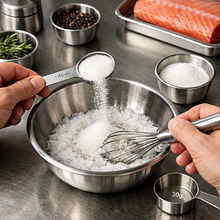
Prepare the curing mixture: in a bowl, mix 30 g of salt and 30 g of sugar (from the total amount) until combined. Wash, peel, and grate the beetroot (200 g) using a large grater or slice it into very thin pieces. On a cutting board, lay out plastic wrap, sprinkle a thin layer of the curing mixture, and place the salmon fillet skin-side down (if it has skin - remove it with a sharp knife or ask the seller). Evenly spread the grated beetroot on the salmon, sprinkle with the remaining curing mixture, and top with 30 g of fresh dill. Wrap tightly in plastic wrap and weigh down with a board and something heavy (e.g., a pot of water). Set aside in the refrigerator for 12-18 hours (optimally 14 hours).

Use a sharp knife to clean the fillet and tight plastic wrap. Curing changes the texture of the fish — after 12 hours, the salmon will be gently firm and not raw. If you are using a wider fillet, shorten the curing time to 10-12 hours. Before slicing, drain excess juice and gently rinse the salmon under cold water, then pat dry with paper towels.

Sushi rice

2

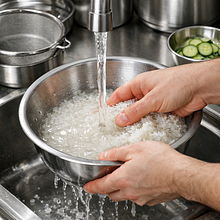
Rinse the rice (320 g) in a large bowl under cold water: fill the bowl with water, stir with your hand, and pour off the water; repeat until the water becomes almost clear (usually 4-6 rinses). Let the rice sit for 20 minutes to soak. In a pot, add the rice and 400 ml of water (ratio about 1:1.25). Cover with a tight lid, heat over medium heat until it starts to boil, then reduce the heat to the lowest setting and cook for 10-12 minutes without uncovering. After cooking, let it sit for 10 minutes, still covered.

Use a pot with a heavy lid or a special rice cooker. Do not stir the rice while cooking. The correct consistency: grains soft, but firm and slightly sticky; the top dry, but not overcooked.
3

Prepare the sushi vinegar: in a small saucepan, heat 60 ml of rice vinegar with 30 g of sugar and 5 g of salt, stirring until the sugar and salt dissolve (do not cook for long, just warm it up). When the rice is ready and slightly cooled (warm, not hot), transfer it to a wide, shallow bowl (preferably a wooden 'hangiri' or a wide dish), evenly drizzle the prepared vinegar over it, and gently mix with a wooden spoon using a fanning motion: slide and turn portions of rice without crushing the grains. Continue mixing and fanning for 2-3 minutes until the rice becomes slightly glossy and reaches body temperature.

Use a flat bowl to cool the rice quickly. Technique: do not stir vigorously — use a folding motion to avoid crushing the grains. If you don't have rice vinegar, use a mixture of apple cider vinegar with 1/3 teaspoon of honey.

Preparation of ingredients

4

Remove the cured salmon from the fridge, unwrap it, and rinse gently under cold water to remove excess curing mixture and beetroot, then pat dry with a paper towel. Next, using a sharp knife, slice the salmon into thin pieces at an angle — aim for slices about 3 mm thick (they should be thin but not transparent). Cut the pickled cucumber into thin sticks measuring about 5 mm x 5 mm x 8 cm; drain excess juice. Mash the cottage cheese (200 g) with a fork or briefly blend with an immersion blender until it reaches a thick cream consistency; season with a pinch of salt (about 1 g) and finely chopped chives (10 g).

Use a very sharp, long knife to cut the fish — slide the blade in one smooth motion, without sawing. Prepare the cottage cheese slightly cool, as it shapes better that way. If the cottage cheese is too dry, add 5-10 g of natural yogurt.

Rolling the dough

5

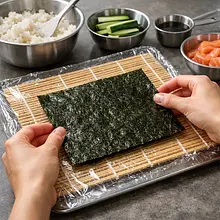
Prepare a bamboo mat lined with plastic wrap (to prevent sticking). Place a sheet of nori shiny side down on the mat. Wet your hands with water (to prevent sticking). Spread a thin layer of warm rice (about 80 g of rice per sheet) over 2/3 of the width of the sheet, leaving the top edge of the nori without rice for about 2 cm. In the center of the rice, place a strip of cream cheese (about 30 g), then add 3-4 slices of beet gravlax and 3-4 sticks of pickled cucumber, and sprinkle with finely chopped chives. If you are using sesame seeds, sprinkle them on the filling now.

The best is a bamboo mat measuring ~24x24 cm. Do not add too much filling — too much filling will make it impossible to roll the roll. Wet hands are key to keeping the work clean.
6

Start rolling from the bottom edge of the mat: lift the edge of the mat along with the nori and rice, rolling it over the filling to create a tight roll. Hold the filling with your fingers and squeeze the mat to form an even cylinder. After rolling, wet the end edge of the nori with a bit of water to seal the roll. Squeeze the mat for 10 seconds to shape the roll. If you want uramaki rolls (rice on the outside), brush the outer side of the roll with water and coat it in sesame before pressing the mat.

Practice makes perfect — the first roll may be loose; with the next ones, you'll roll more efficiently. Use a very sharp knife for cutting, and wipe the blade with a damp cloth before each cut.

Slicing and serving

7

Transfer the roll to a board and wait 1-2 minutes. With a damp, sharp knife, cut the roll into 6-8 equal pieces: first cut it in half, then cut each half into 3-4 pieces. Keep the knife damp, cleaning it after each cut. Arrange the rolls on a plate, serving small bowls of soy sauce, pickled ginger (if using), and wasabi alongside. Optionally, garnish with extra fresh dill or chives.

Cuban slicing: press the knife firmly against the board after passing through the roll, instead of 'sawing'. This way, the slices will be nice and won't fall apart.

Preparation of the rest of the gravlax (optional)

8

The remaining beet gravlax can be sliced thinly and served separately with bread or as an addition to a salad. To freeze: not recommended raw; better to store in the refrigerator for up to 48 hours.

If you want to prepare gravlax in advance, remove the excess salt before serving by lightly rinsing the fillet and patting it dry. Do not freeze after curing if you plan to eat it raw — the texture will change.

Fun Fact

💡

Gravlax comes from Scandinavia — it was traditionally prepared by curing fish in salt and sugar with dill. The combination of this technique with Japanese sushi is an example of culinary fusion: winter beet gives gravlax its color and an earthy note characteristic of Polish cuisine.

Best for

Tips

🍽️ Serving

Serve the rolls slightly chilled, not icy — ideally at a cool room temperature (about 10°C). For aesthetics, arrange the sliced pieces in a fan shape on a long plate. For dipping, use soy sauce mixed with a bit of wasabi separately (do not place wasabi directly on the rice). Serve pickled ginger on the side — it is eaten between pieces to cleanse the palate.

🥡 Storage

Sushi is best consumed on the same day. The rice will harden after a few hours in the fridge; store the rice, fish, and toppings separately for up to 24 hours in airtight containers in the fridge. Gravlax (cured salmon) can be stored tightly wrapped for up to 48 hours in the fridge. Refreezing prepared rolls is not recommended.

📸 Ugotowane przez społeczność

Zaloguj się, aby dodać zdjęcie
Dodaj zdjęcie gotowej potrawy

Po zatwierdzeniu przez moderatora otrzymasz 10 punktów doświadczenia.

🍲

Nikt jeszcze nie dodał zdjęcia. Bądź pierwszy!

Comments (0)

Be the first to comment on this recipe!

Add a comment

You might also like

Recipe Categories

Modern recipes that combine traditional flavors of Asia with other culinary cultures, offering unusual combinations and innovative dishes.

See all recipes in this category

Main courses are the heart of every meal - hearty, nutritious, and full of flavor. In this category, we present a rich selection of recipes for lunches and dinners that will satisfy even the most discerning palates. From classic Polish pork chops to aromatic chicken dishes, to exquisite steaks an...

See all recipes in this category
Reklama