Menu

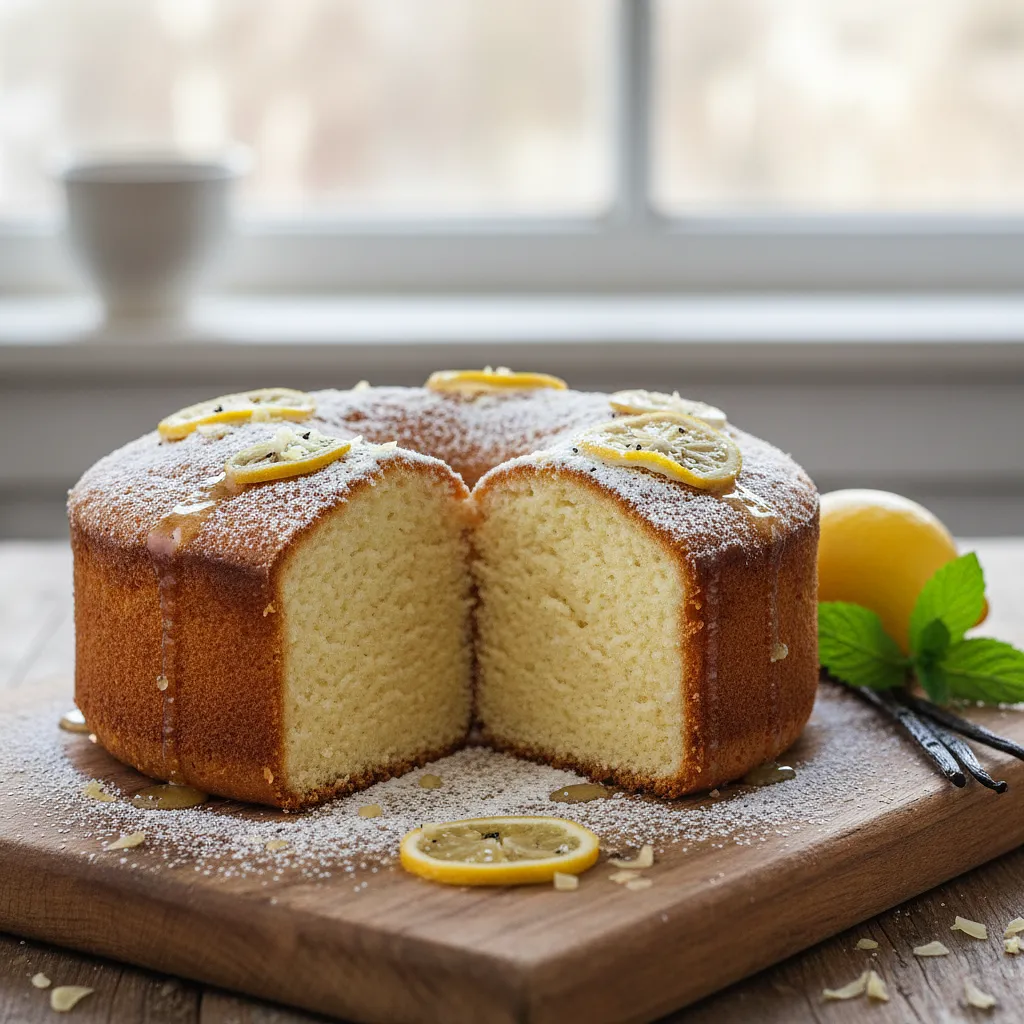
Fluffy Genoise Sponge Cake with a Hint of Vanilla and Lemon

Cakes and Bakes Desserts Dishes for Special Occasions 140 min Medium 4 wyświetleń ~11.88 PLN - (0)
Rate:
(0)

Description

Here is the secret to the perfectly fluffy and delicate sponge cake that rises high without a gram of baking powder! Genoise sponge, originating from Italian Genoa, is a classic of pastry making, and its magic lies in the proper aeration of eggs whipped warm. This technique creates an incredibly stable and dense foam that acts as a natural leavening agent. As a result, we get a cake with an even, fine-pored structure, elastic yet melting in the mouth. The subtle aroma of real vanilla and a refreshing hint of lemon zest give it a noble character. It is the perfect base for cakes, fruit desserts, and jellies, as well as a delicious dessert on its own, served simply with powdered sugar or fresh fruit. It looks impressive, with a golden-brown, even crust and a light yellow interior, and its taste is pure, buttery, and incomparable to sponge cakes made with baking powder.

Składniki (9)

Servings:
8
  • Eggs 5 szt.
  • Cukier drobny do wypieków 10 łyżek
  • Mąka pszenna tortowa typ 450 120 g
  • Potato flour 30 g
  • Butter 40 g
  • Vanilla bean 1 szt.
  • 🌿 Przyprawy
  • Salt 0.0 szczypt
  • ✨ Opcjonalne
  • Skórka otarta z cytryny 5 g
  • Powdered sugar 15 g
💰 Szacowany koszt dania: ~11.88 PLN (1.49 PLN/porcję)

💡 Kliknij na składnik aby oznaczyć jako użyty

Preparation steps

Preparing the pan and ingredients

1

Start by preparing a 24 cm round cake pan. Line the bottom of the pan with parchment paper. Do not grease the sides – this will allow the cake to 'climb' up the walls and rise evenly. Preheat the oven to 170°C with the top and bottom heating function, without fan.

Use a springform pan. Not greasing the sides is key to prevent the sponge from collapsing after baking. If you don't have parchment paper, you can grease the bottom with butter and dust it with flour, but leave the sides dry.
2

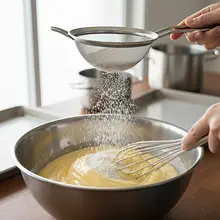
In a separate bowl, prepare the dry ingredients. Place the all-purpose flour and potato flour in a fine-mesh sieve. Sift them together at least twice. This step aerates the flours and helps prevent lumps, which is crucial for the delicate structure of the sponge cake.

Ingredients: Mąka pszenna tortowa typ 450, Potato flour
Use a sieve or a special flour sifter. Do not skip this step! It helps the flour combine more easily with the egg mixture without destroying its fluffy structure.
3

Prepare the wet and aromatic ingredients. In a small saucepan, melt the butter over the lowest heat and set aside to cool completely. Split the vanilla bean lengthwise and scrape out the seeds with the blunt side of a knife. If using, blanch the lemon, dry it, and grate the yellow part of the peel on a fine grater.

Ingredients: Butter, Vanilla bean, Skórka otarta z cytryny
The butter must be liquid but cool. Hot butter added to the egg mixture will cause it to deflate. You can put the used vanilla pod in a jar of sugar to make homemade vanilla sugar.

Whipping the egg mixture (Genoise Method)

4

Prepare a water bath. Pour water into a pot to a height of about 3-4 cm and bring it to a boil, then reduce the heat to the minimum so that the water only gently steams. Prepare a large metal or glass bowl that will rest securely on the pot without touching the bottom of the water.

The bowl must be perfectly clean and dry, without any trace of grease that makes it difficult to beat the eggs. A stainless steel bowl is best, as it conducts heat well.
5

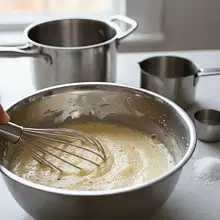
Crack whole eggs into a prepared bowl, add sugar, a pinch of salt, vanilla seeds, and optionally lemon zest. Place the bowl over a pot of steaming water. Using a hand mixer, start beating the mixture on low speed, gradually increasing to medium speed. Beat for about 8-10 minutes. The mixture should triple in volume, become very thick, light in color, and warm to the touch (about 40-45°C).

Ingredients: Eggs, Cukier drobny do wypieków, Salt, Vanilla bean, Skórka otarta z cytryny
Continuously move the mixer over the entire surface of the bowl to heat the mixture evenly. Do not overheat the mixture - if it gets too hot, the eggs may curdle. It should be pleasantly warm.
6

Remove the bowl from the water bath and place it on the countertop. Continue beating on high speed for another 8-10 minutes, until the mixture is completely cool and becomes even thicker. The finished mixture should be very fluffy, shiny, and when falling from the mixer beaters, it should create a distinct 'ribbon' on the surface that lasts for a few seconds.

This is the most important step! You need to achieve what's called the 'ribbon consistency'. If the mixture is too runny, the sponge will collapse. Patience is key - beat until completely cooled.

Combining ingredients and baking

7

Add the sifted flour to the whipped egg mixture in three batches. After each batch, very gently fold the mixture using a large silicone spatula. Make movements from the bottom, scooping the mixture from the bottom and sides of the bowl upwards, while also rotating the bowl. Mix only until the ingredients are combined.

Ingredients: Mąka pszenna tortowa typ 450, Potato flour
Use the folding technique. Do not use a mixer! Overmixing will destroy the air bubbles, and the sponge will be flat and hard. Work quickly but gently.
8

In a bowl with cooled, melted butter, add 2-3 tablespoons of the prepared sponge cake mixture and mix well. Pour this mixture back into the main bowl with the batter. Again, very gently fold the butter into the batter using the folding technique, making only a few movements until combined.

Ingredients: Butter
This process is called 'tempering' the butter. It prevents the heavy fat from sinking to the bottom of the bowl and ensures its even distribution in the light-as-a-feather batter.
9

Immediately pour the prepared batter into the prepared springform pan. Gently smooth the surface with a spatula. Place the pan in the preheated oven at 170°C and bake for about 30-35 minutes. Towards the end of baking, check with a toothpick – it should come out dry when inserted into the center of the cake.

Do not open the oven for the first 25 minutes of baking, as a sudden change in temperature may cause the sponge cake to collapse. The cake is ready when it is springy to the touch and slightly pulls away from the edges of the pan.

Cooling the sponge cake

10

After removing from the oven, immediately drop the springform pan with the sponge cake onto the countertop or floor from a height of about 30-40 cm. This thermal and mechanical shock will cause the air bubbles to rapidly contract, preventing the sponge cake from sinking as it cools.

It may seem strange, but this is a proven trick used by bakers that prevents the formation of a 'soggy bottom' and the sinking of the cake's center. Don't worry, nothing will happen to the sponge!
11

Set the sponge cake in the pan to cool completely on a rack. Only when it is cold, carefully run a thin knife along the edges of the pan to separate the cake. Unclip the ring and remove the sponge cake. Before serving, you can dust it with powdered sugar.

Ingredients: Powdered sugar
Cutting a warm sponge cake is very difficult and can crush it. It's best to cut it into layers the next day, when its structure has fully stabilized.

Fun Fact

💡

Genoise is one of the fundamental bakes in French pastry, even though its name comes from the Italian city of Genoa. It serves as the base for many famous cakes, such as Fraisier (with strawberries) or Opéra. Its uniqueness lies in the use of whole eggs, unlike the Savoy sponge, where the egg whites and yolks are whipped separately.

Best for

Tips

🍽️ Serving

This sponge cake is delicious on its own, simply dusted with powdered sugar and served with a cup of coffee. It can also be served with whipped cream and fresh seasonal fruits (strawberries, raspberries, blueberries). To use it as a base for a cake, it should be soaked with, for example, lemon tea syrup, sugar syrup, or a light liqueur, and then layered with cream.

🥡 Storage

The sponge cake is best stored at room temperature, tightly wrapped in plastic wrap, to prevent it from drying out - it will stay fresh for 2-3 days. It can also be frozen. For this, it should be tightly wrapped in a double layer of plastic wrap and placed in the freezer for up to 3 months. Thaw at room temperature, without removing from the wrap.

📸 Ugotowane przez społeczność

Zaloguj się, aby dodać zdjęcie
Dodaj zdjęcie gotowej potrawy

Po zatwierdzeniu przez moderatora otrzymasz 10 punktów doświadczenia.

🍲

Nikt jeszcze nie dodał zdjęcia. Bądź pierwszy!

Comments (0)

Be the first to comment on this recipe!

Add a comment

You might also like

Recipe Categories

Homemade cakes and pastries are the heart of Polish culinary tradition - sweet memories from childhood. In our collection, you will find recipes for classic yeast cakes, shortcrust, sponge, and cheesecake. Apple pie, poppy seed cake, gingerbread, Easter babka, chocolate cake, and New York cheesec...

See all recipes in this category
Desserts
Desserts in: New Year's Eve

A sweet ending to the New Year's Eve dinner is a must-have that will put everyone in a joyful mood for the new year.

See all recipes in this category

Dishes for special occasions are culinary masterpieces for birthdays, anniversaries, and holidays. Grilled beef steak with herb butter - restaurant quality at home. Beef Wellington - beef in puff pastry with duxelles. Roast duck with apples - a holiday tradition in a new edition. Pink salmon with...

See all recipes in this category
Reklama