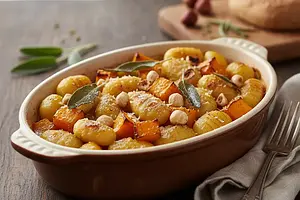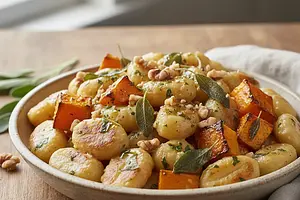
Peel the pumpkin: place the pumpkin on a cutting board, cut off the top and bottom with a sharp knife to create a stable base. Use a vegetable peeler or a sharp knife to remove the skin (if you are using hokkaido, the skin is edible - you can leave it on). Then, cut the pumpkin in half, scoop out the seeds with a spoon, and dice the flesh into cubes about 2 cm on each side. Set the diced pumpkin aside.
Description
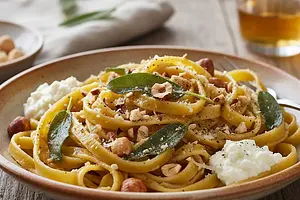
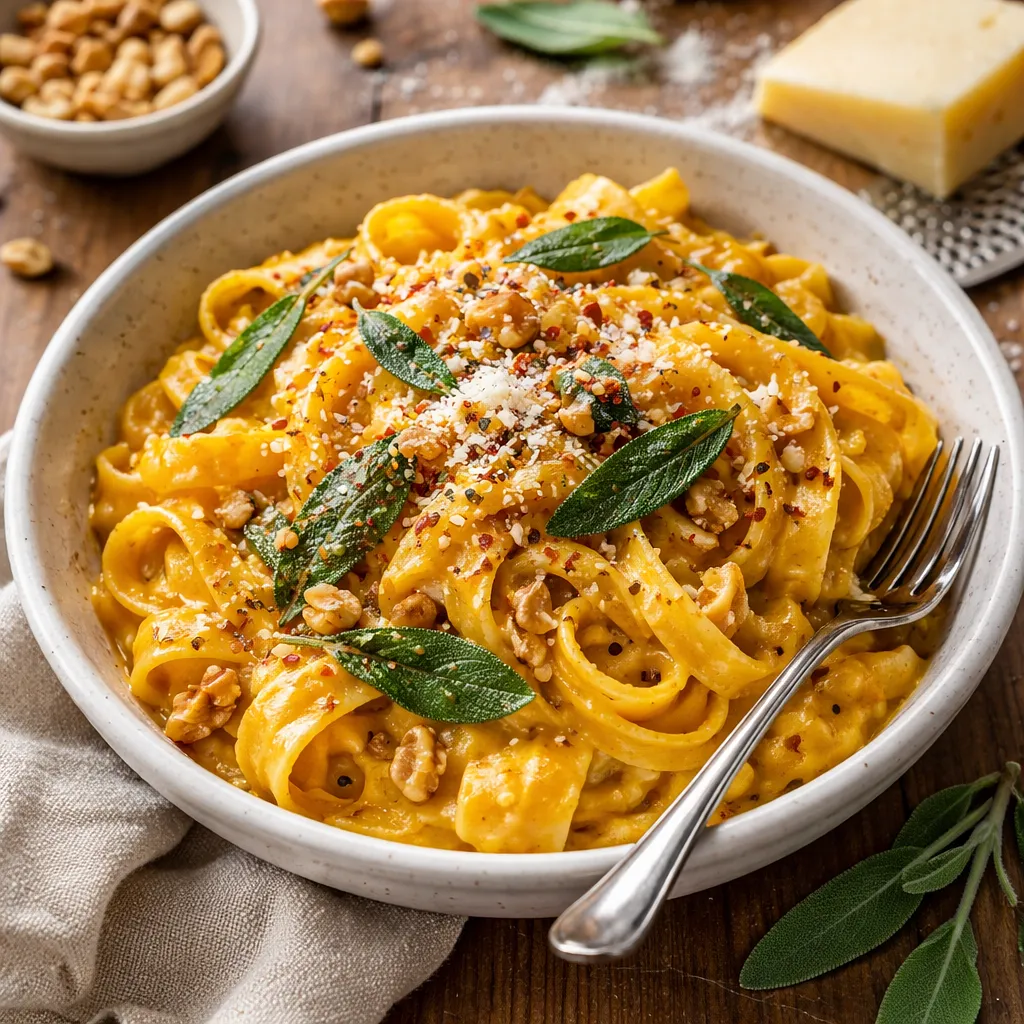
A quick, seasonal pasta dish that combines creamy butternut squash puree with the aroma of fresh sage and crunchy, toasted hazelnuts. This dish is perfect for the winter month of January — butternut squash is sweet, meaty, and gives the sauce a silky texture. It’s a proposal that is both comforting and elegant: the creamy texture of the sauce contrasts with the crunchiness of the nuts, while fresh sage adds a herbal, slightly bitter note. Serve hot as a main dish with a sprinkle of grated Parmigiano Reggiano (optional) and a glass of dry white wine. It looks impressive — the golden sauce wrapped around wide ribbons of pasta, with sage leaves and small pieces of nuts on top.
Ingredients Used
Ingredients (12)
- Butternut squash 600 g
- Onion 1 szt. (~150 g)
- Garlic 2 ząbki (~10 g)
- Vegetable broth 250 ml
- Butter 30 g
- Fresh sage 6 g
- Olive oil 30 ml
- Tagliatelle pasta 400 g
- 🌿 Przyprawy
- Salt 6 g
- Black pepper 4 szczypty (~2 g)
- ✨ Opcjonalne
- Roasted hazelnuts 40 g
- Parmesan 80 g
💡 Kliknij na składnik aby oznaczyć jako użyty
Preparation steps
Preparing the pumpkin
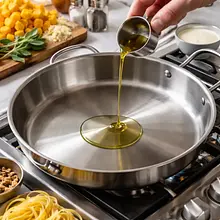
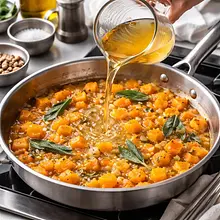
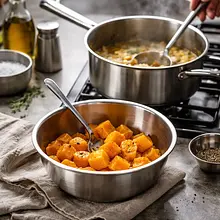
In a medium-sized wide saucepan or large skillet, heat 15 g of oil (1 tablespoon) over medium heat. Add the finely chopped onion and sauté for 4-5 minutes until soft and translucent. Add the diced pumpkin and sauté for another 6-7 minutes, stirring occasionally, until the pieces start to brown slightly.
Pour 250 ml of vegetable broth into the pan with the pumpkin, bring to a gentle boil, reduce the heat, and cook for 8-10 minutes until the pumpkin is soft — check with a fork: it should mash easily and not be fibrous. Season with 2 g of pepper and 3 g of salt (add less if the broth is salty).
Sauce
When the pumpkin is soft, set it aside for a minute to cool. Then blend the contents of the pan with an immersion blender directly in the pot or transfer in batches to a stand blender and blend until smooth. If the mixture is too thick, add 1-2 tablespoons of pasta cooking water (reserve it for later) or some broth. After blending, add 30 g of butter and mix thoroughly until combined — the sauce should be silky and shiny.
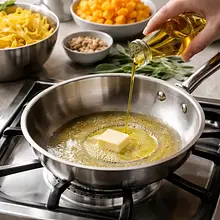
In a separate small pan, heat the remaining 15 g of oil (1 tablespoon) and 10 g of butter over medium heat. Add the sage leaves and fry for 1-2 minutes until the leaves become crispy and aromatic — they should be golden in color. Remove a few nice leaves for decoration. To the same pan, add the finely chopped garlic and sauté for only 20-30 seconds until fragrant — do not let the garlic brown, as it will become bitter.
Cooking pasta
In a large pot (min. 4–5 l), bring at least 4 liters of water to a boil. When the water is boiling vigorously, add 6 g of salt. Add 400 g of tagliatelle and cook according to the package instructions for 8-10 minutes until al dente (taste the pasta 1–2 minutes before the end of the time: it should have a slight bite in the center). Before draining, reserve 120 ml of the pasta cooking water.
Finishing and serving
Transfer the drained pasta directly to the pot with the pumpkin puree (or to a large flat skillet). Add the crispy sage from the skillet along with the fat and 2–3 tablespoons of the reserved pasta cooking water, vigorously mixing with a spatula for 1-2 minutes, until the pasta is evenly coated with the sauce and the sauce reaches the desired creamy consistency. If the sauce is too thick, add more pasta water 1 tablespoon at a time.
Season the dish to taste with salt and pepper. On the plates, arrange the pasta, sprinkle (optional) 80 g of grated Parmigiano Reggiano, and scatter 40 g of coarsely chopped, toasted hazelnuts on top. Garnish with a few fried sage leaves and drizzle with a little extra virgin olive oil.
Additions (optional)
If you want to roast the nuts yourself: heat a dry skillet over medium heat, add the hazelnuts, and shake the skillet for 3–5 minutes until fragrant and the skins start to crack. After cooling, wrap the nuts in a cloth and rub to remove some of the skins, then chop into coarse pieces.
Fun Fact
Butternut squash is popular in Italian and American cuisine during winter; its sweet flesh is a great substitute for heavier creams in pasta sauces, giving them creaminess without excessive fat.
Best for
Tips
Serve immediately after preparation — the pasta tastes best hot and creamy. Garnish with extra fresh sage leaves and a few drops of good extra virgin olive oil. For a more refined version, add lemon zest just before serving.
Store leftovers in an airtight container in the refrigerator for up to 2 days. When reheating, add 1–2 tablespoons of cooking water or broth and heat over low heat, stirring until the sauce is creamy again. Pasta does not tolerate long storage — it's best to prepare a fresh portion.
📸 Ugotowane przez społeczność
Zaloguj się, aby dodać zdjęcieDodaj zdjęcie gotowej potrawy
Po zatwierdzeniu przez moderatora otrzymasz 10 punktów doświadczenia.
Nikt jeszcze nie dodał zdjęcia. Bądź pierwszy!
Comments (0)
Be the first to comment on this recipe!
Add a comment