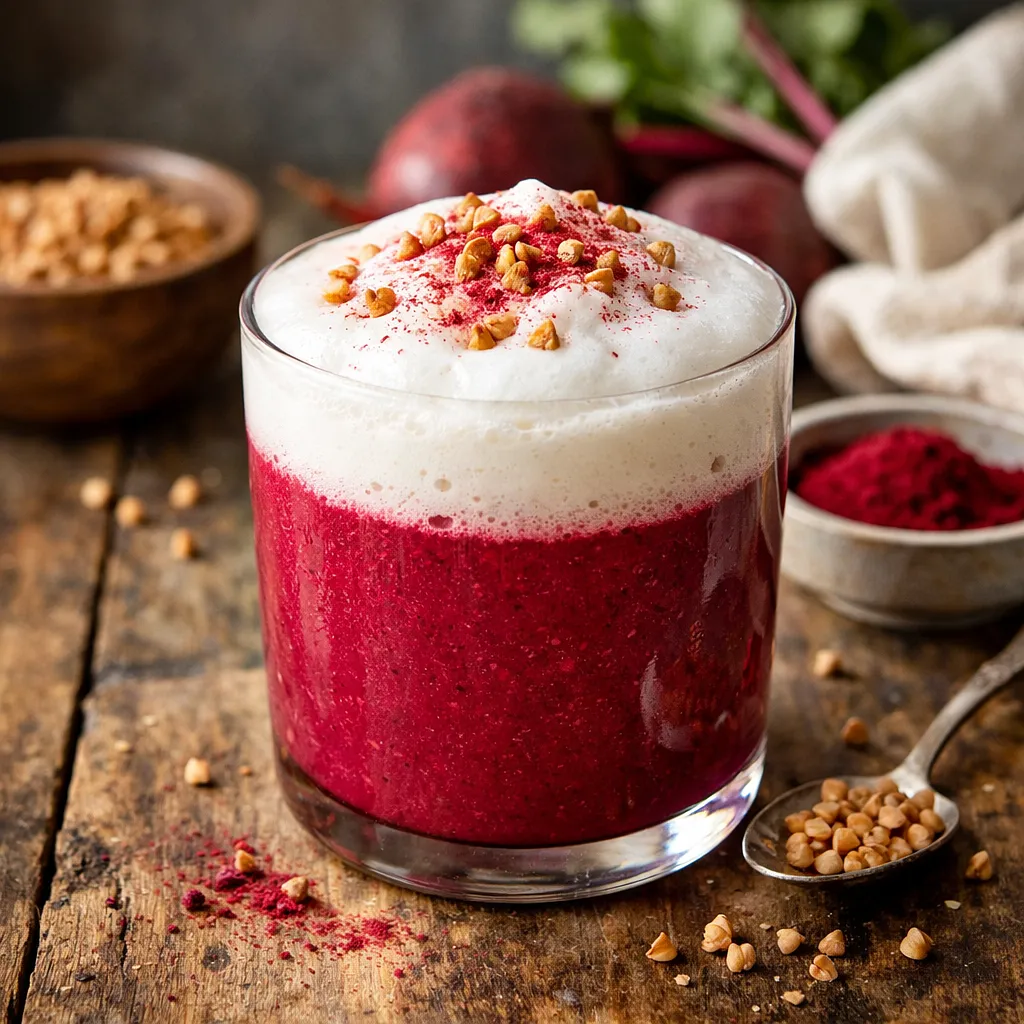
This is a winter street drink in the style of Polish street food — a thick, warming elixir made from roasted beets and toasted buckwheat, with a baked apple for sweetness and a hint of acidity from sauerkraut juice. It is finished with a cool, slightly sour foam made from buttermilk, which provides a contrast of temperatures and textures. The drink combines traditional ingredients available in winter in Poland (beet, buckwheat, apple, sauerkraut, buttermilk) with a modern, street-style serving — thick, creamy, with an intense color and earthy aroma with a nutty buckwheat accent. Perfect as a warming treat during a winter market, served in a takeaway cup; it pairs wonderfully with salted cheese on the side or a piece of baked apple. Aromatic, hearty, and unusual — it surprises with the contrast of sweetness and delicate acidity.
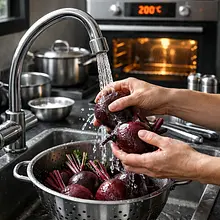
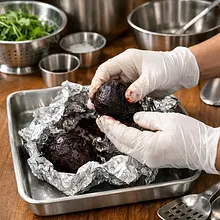
Preheat the oven to 200°C (top-bottom). Thoroughly wash the beets under running water, do not peel them yet — the skin will protect the flesh during baking. Wrap each beet tightly in aluminum foil (individually) and place on a baking sheet. Bake in the middle of the oven for 45–60 minutes: check by inserting a knife or skewer — it should go in smoothly, with no resistance. If the beets are large, they will need closer to 60 minutes.
Ingredients:
Beets (raw)
Use kitchen gloves to remove the hot beets. A common mistake: opening the oven too often prolongs the baking time. If you don't have foil, you can bake in a covered baking dish.
2
While the beets are roasting, cut the apples into quarters and remove the cores. Place them skin-side down on a baking sheet lined with parchment paper. Drizzle 20 g of honey evenly over the surface (use a brush) and bake for 20–25 minutes, until the apples are soft and slightly caramelized at the edges.
Ingredients:
Apple, Honey
If the apples are very juicy, shorten the baking time. Use a baking tray measuring about 30×20 cm. Additionally, you can add a teaspoon of butter to the apple halves (optional, it will improve caramelization).
Cooking buckwheat groats
3
Rinse the buckwheat in a sieve under cold water until the water runs clear. Heat a medium (dry) skillet and add 40 g of buckwheat, toasting for 2–3 minutes while stirring — check the aroma, it should be distinctly nutty. In a pot, bring 600 ml of water with 2 g of salt to a boil. Add the remaining buckwheat (120 g) to the boiling water, reduce the heat to low, cover, and cook for 12–15 minutes until the buckwheat absorbs the water and becomes soft. If it gets too thick, add a little water.
Ingredients:
Roasted buckwheat groats, Water, Salt
Use a pot with a thick bottom to prevent burning. A common mistake: lifting the lid too quickly — the groats may steam unevenly. Set aside some groats (about 40 g) for toasting separately for the topping.
Toasting the groats for the topping
4
In a dry pan, heat the remaining 40 g of buckwheat (reserved). Toast for 3–5 minutes over medium heat, constantly shaking the pan or stirring, until the buckwheat becomes very crispy and darker. Set aside to cool — this will be the crunchy topping.
Ingredients:
Roasted buckwheat groats
Use a non-stick pan. Be careful, as toasted groats can burn quickly — monitor the color and smell (it should have a nutty aroma).
Preparation of beet and buckwheat essence
5
Carefully remove the roasted beets from the foil (use gloves). When they are cool enough to touch (about 10 minutes), peel the skin off with a knife or by hand — it should come off easily. Cut the beets into smaller pieces. In a blender, place the chopped beets, the flesh of the roasted apples, the cooked groats (the entire soft groats from the pot), 500 ml of warm water, 30 g of honey, 4 g of cinnamon, 3 g of ground allspice, 2 g of black pepper, and 40 g of sauerkraut juice, along with 2 g of salt. Blend on high speed for 1–2 minutes until you achieve a smooth, thick mixture. If the blender struggles with the thick consistency, gradually add water (up to a maximum of 700 ml) until you reach a creamy, but not thin, soup-like consistency.
Ingredients:
Beets (raw), Apple, Roasted buckwheat groats, Water, Honey, Cinnamon, Allspice (berries), Black pepper, Sauerkraut juice, Salt
Use a jug blender with a minimum power of 800 W or an immersion blender with a tall container. A common mistake: adding too much water at once will make the drink too thin — it's better to thin it out gradually. Prevent overloading the blender by mixing in intervals.
Heating the essence
6
Pour the blended essence into a large pot and heat over low heat to a temperature of 70–80°C (even steaming, light smoke, do not allow to boil) for 6–8 minutes, stirring with a wooden spoon to prevent sticking. Taste and season with salt, pepper, or an additional 10 g of honey if you want it sweeter.
Ingredients:
Beets (raw), Honey, Black pepper, Salt
Use a kitchen thermometer if you have one; do not cook above 85°C to avoid losing flavors. You can check the thick consistency like this: when stirring, the mixture should flow from the spoon in thick, slow streams.
Preparation of buttermilk foam
7
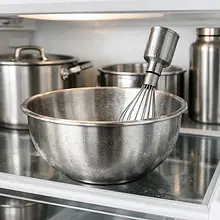
Chill the bowl and whisk or immersion blender attachment in the fridge for 5–10 minutes (a cold vessel will help create foam). Pour 200 ml of buttermilk into the bowl, add 20 g of honey. Whisk vigorously by hand for 1–2 minutes or use an immersion blender on high speed for 30–45 seconds, until the buttermilk forms a thick, creamy foam. The buttermilk will not froth like milk, but it should become creamy-thick and slightly fluffy.
Ingredients:
Buttermilk, Honey
Use a cold bowl (metal bowl) and cool buttermilk — this makes frothing easier. If you don't have an immersion blender, you can try a manual whisk or a milk frother. A common mistake: whipping too long — the buttermilk can separate; stop when the consistency is thick and creamy.
Assembly and serving
8
Pour the hot essence into warmed cups or thermal paper cups up to 3/4 full (about 230–250 ml per serving). Spoon about 50 ml of buttermilk foam on top (also rolling it for a nice mound). Sprinkle with 10–15 g of previously toasted buckwheat as a crunchy topping. Additionally, you can sprinkle with 20 g of crumbled cheese (optional) or a few chopped dried plums (optional) for a sweet-sour contrast. Serve immediately — the drink tastes best hot with the cool foam on top.
Use 300 ml paper cups for serving street-style. A common mistake: pouring too hot essence directly onto the foam — the foam will collapse; first pour the essence, then gently add the foam.
Final tips
9
Taste the drink and adjust the balance of sweetness and acidity: if it's too low in acidity, add 5–10 g of sauerkraut juice; if it's too sweet, add a pinch of pepper or salt. If you want a vegan version, replace the buttermilk with coconut yogurt (it will change the flavor and consistency) and omit the honey.
Ingredients:
Sauerkraut juice, Honey, Black pepper, Buttermilk
Always taste after heating – flavors change with temperature. If serving outside, have thermal cups and a separate container with an additional drink (e.g., honey) for the customer.
Fun Fact
💡
Beetroot was a popular vegetable in peasant cuisine in Poland, and roasted buckwheat adds a distinctive nutty touch — the combination of these two ingredients transformed into a drink is a modern reinterpretation of the winter flavors of fairs and inns.
Serve in thermal mugs with a paper sleeve; serve with a small wooden spoon for scooping the foam and any additional toppings. For a street food effect, add a slice of baked apple to the rim of the mug and a small lid with a hole for the aroma of steam.
🥡Storage
Store the essence separately in the refrigerator for up to 48 hours in a closed container (max. 4°C). Prepare the buttermilk foam just before serving — do not store whipped foam for longer than 2 hours. To reheat the essence, use a small pot over low heat, heating to 70–80°C and do not bring to a boil.
Comments (0)
Be the first to comment on this recipe!
Add a comment