Menu

Cold Jellied Pork Hocks

Pikantne Christmas Eve Dinner Appetizers 480 min Medium 15 wyświetleń ~64.04 PLN - (0)
Rate:
(0)

Description

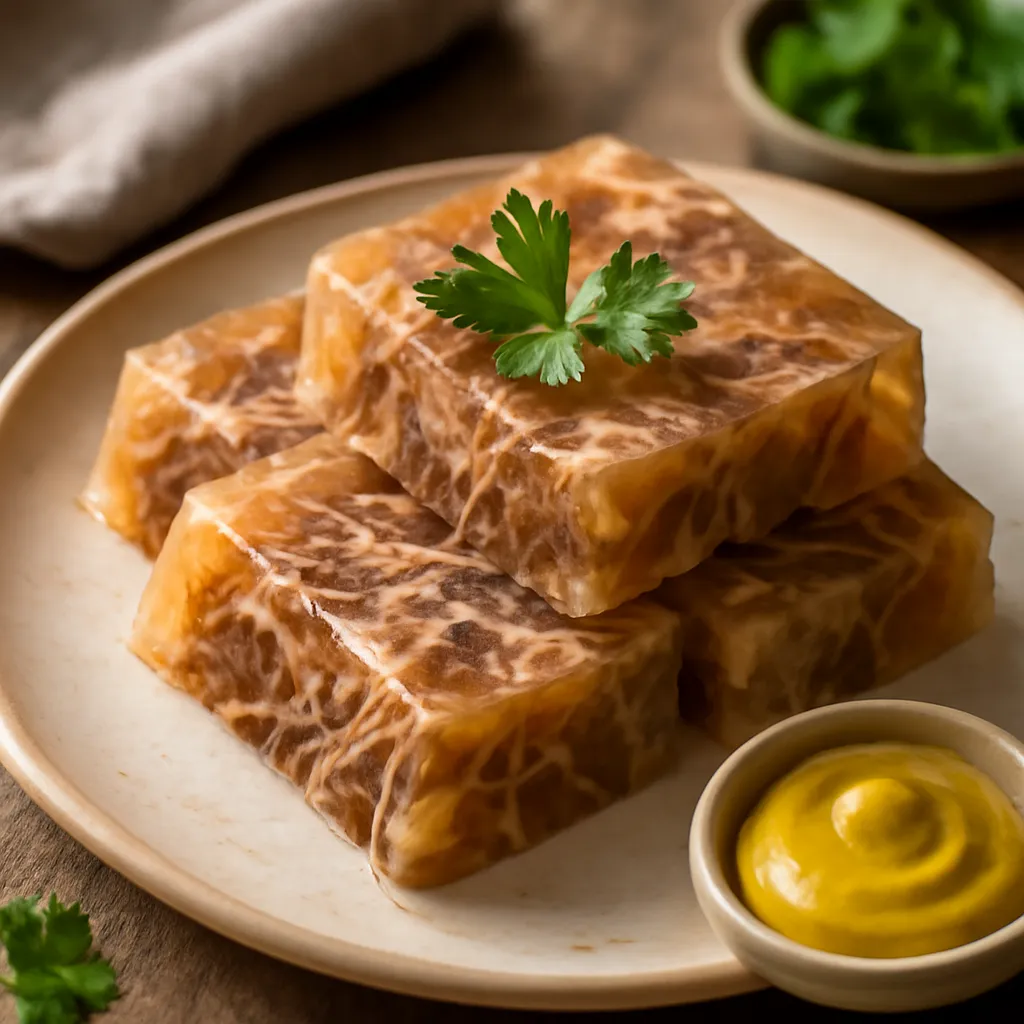
Traditional cold jellied pig's feet are a Polish appetizer for cooler weather - exceptionally popular during Christmas Eve and festive tables. They are prepared from a defatted meat and bone broth (mainly from pig's feet and hocks), vegetables, and spices, which after long cooking create a natural jelly. The dish has a rich, meaty-bone flavor, soft, tender meat that falls off the bone, and a clear yellowish jelly. It is served chilled, most often with slices of hard-boiled eggs, parsley, and horseradish or vinegar to balance the flavor. Visually impressive: the transparent jelly with pieces of meat, carrot, and egg looks elegant on the holiday table. Another advantage is good shelf life in the fridge - after cooling, it can be sliced and served as an appetizer.

Składniki (16)

Servings:
8
  • Pork hocks 2000 g
  • Raw pork knuckle 1000 g
  • Water 3500 ml
  • Carrot 2.5 szt.
  • Onion 2 szt.
  • Celeriac 150 g
  • Leek (white part) 1.3 szt.
  • Garlic 3 ząbki
  • Hard-boiled eggs 3 szt.
  • Fresh parsley 1 pęczek
  • 🌿 Przyprawy
  • Bay leaf 6.7 szt.
  • Allspice (pimento) 3 g
  • Black pepper (whole) 6 g
  • Table salt 12 g
  • ✨ Opcjonalne
  • Gelatin (powder, optional) 20 g
  • Grated horseradish (optional, for serving) 50 g
💰 Szacowany koszt dania: ~64.04 PLN (8.01 PLN/porcję)

💡 Kliknij na składnik aby oznaczyć jako użyty

Preparation steps

Preparation of ingredients

1

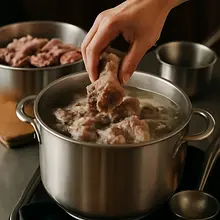
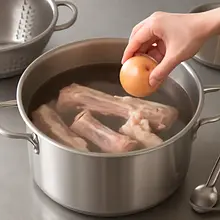
Prepare the meat: rinse the shanks and pork knuckle thoroughly under cold running water. If there are hairs, singe them over the fire or remove them with a knife. Cut larger pieces of the pork knuckle into 2-3 parts to fit more easily in the pot and cook faster.

Ingredients: Pork hocks, Raw pork knuckle
Use a large cutting board and a heavy kitchen knife. If you have a gas stove, you can char the meat over the flame (be careful with the fat). A common mistake: not washing the meat results in a cloudy, dirty broth.
Blanching

2

Place the meat in a very large pot and cover it with cold water (about 3.5 l). Bring to a boil over high heat. When the water starts to boil vigorously, cook for 5 minutes to wash away impurities. Then drain the water, rinse the meat under running water, and wash the pot.

Ingredients: Pork hocks, Raw pork knuckle, Water
Use a pot with a capacity of at least 6 liters. Blanching removes foam and improves the clarity of the broth. Do not skip this step.

Broth

3

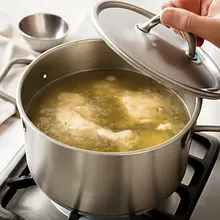
Place the rinsed meat back into the pot, pour in 3.5 liters of fresh, cold water. Add the whole onion, carrot, celery, leek, garlic, bay leaves, allspice, and peppercorns. Set the pot over medium heat and bring to a gentle boil.

Ingredients: Pork hocks, Raw pork knuckle, Water, Carrot, Onion, Celeriac, Leek (white part), Garlic, Bay leaf, Allspice (pimento), Black pepper (whole)
Use a slotted spoon or a sieve to remove the foam at the beginning of cooking. Do not stir vigorously — a gentle simmer (small bubbles) results in a clearer broth.
4

Reduce the heat to very low so that the broth simmers gently. Cook with the lid slightly ajar for 3 to 3.5 hours. Every 20-30 minutes, skim off the foam and degrease the surface using a spoon. After about 2 hours, the meat should start to pull away from the bone.

Ingredients: Pork hocks, Raw pork knuckle, Carrot, Onion, Celeriac, Leek (white part)
Use a slightly ajar lid and a slotted spoon to collect the fat. Cooking time depends on the size of the meat — cook until the meat easily comes off the bone and when a small amount of the broth thickens after cooling.

Draining and Degreasing

5

After cooking, turn off the heat. Prepare a large sieve lined with cheesecloth or a very fine strainer. Pour the broth through the sieve into another pot, separating the meat and vegetables. Let the meat cool, separate it from the bones, and chop it into smaller pieces. Remove all bones and thick pieces of fat.

Ingredients: Pork hocks, Raw pork knuckle, Carrot, Onion
Use kitchen gloves to handle hot pots. Don't stretch the cheesecloth too much — folded cheesecloth filters better. A common mistake: crushing bones for the jelly — remove all small fragments.

Reduction and seasoning

6

Transfer the strained broth back to a clean pot and cook over medium heat until the volume is reduced by about 15-25% (this takes 15-30 minutes). After reducing, taste and season with salt (about 12 g for the entire broth, but season individually). If the broth is too greasy, use a spoon to remove the fatty layer.

Ingredients: Table salt
Taste the broth with a spoon — it's best when it's still hot. Remember that the jelly tastes a bit stronger after cooling, so don't oversalt.

Possible stiffening with gelatin

7

If the test cup of the broth does not set enough after cooling, prepare the gelatin according to the manufacturer's instructions: sprinkle 20 g of gelatin into 100 ml of cold water, let it sit for 5 minutes, then gently heat (do not boil) until the gelatin dissolves. Pour the dissolved gelatin into the hot broth and mix thoroughly.

Ingredients: Gelatin (powder, optional)
Use a small saucepan to dissolve the gelatin and a kitchen thermometer — the gelatin should not boil (above 60-70°C it loses its properties). This is an optional step — traditionally, we rely on natural gelatin from meat.

Preparing the pan and arranging

8

Choose a mold/container: one large dish for setting (e.g. loaf pan, terrine) or several smaller bowls. Place pieces of cut meat at the bottom, slices of cooked carrot, and slices of eggs. Sprinkle with finely chopped parsley. You can arrange the ingredients aesthetically — for example, place an egg in the center as a decoration.

Ingredients: Hard-boiled eggs, Carrot, Fresh parsley, Pork hocks
Use a silicone mold or a metal one lined with plastic wrap for easier removal. If you make portions in bowls, it's easier to serve them later. Additionally, you can add horseradish for spiciness when serving.

Pouring the broth

9

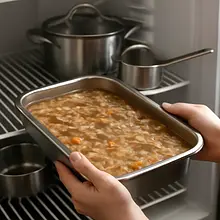
Slowly pour the hot (not boiling) broth into the molds with the arranged meat and decorations, ensuring to fill the spaces completely. If foam or fat rises to the surface, try to skim it off with a spoon before cooling. Leave to cool slightly (10-15 minutes), then cover and place in the refrigerator.

Ingredients: Water
Use a ladle and pour slowly to avoid disturbing the carefully arranged decorations. Do not place a very hot pot in the fridge — rapid cooling can reduce the quality of the jelly.

Cooling

10

Chill in the refrigerator for at least 6-8 hours, preferably overnight. The jelly should be completely set and firm; after setting, remove the molds from the refrigerator and turn them out onto a plate or cut them in the containers.

Ingredients: Fresh parsley, Hard-boiled eggs
Place the mold in the coldest part of the refrigerator, on a flat surface. If you are using a large mold, tilt it gently after removing it from the refrigerator to make slicing easier.

Slicing and serving

11

Remove the set jelly from the mold. When cutting, use a long, thin knife dipped in hot water and wipe it with a towel before each cut to get clean slices. Serve chilled with grated horseradish or apple cider vinegar on the side.

Ingredients: Grated horseradish (optional, for serving)
The best is sliced into pieces 1-1.5 cm thick. Use a chef's knife and warm water for clean cuts. Additionally, grated horseradish can be added to enhance the flavor.

Additional tips

12

If you plan to prepare cold legs for Christmas Eve a few days in advance, make the broth and concentrated jelly no more than 2-3 days before serving. Store in the refrigerator covered with plastic wrap, and before serving, take them out for 15-20 minutes so they are not icy on the palate.

Avoid freezing the finished jelly — the structure of the gelatin may change. A common mistake: speeding up the cooling process in a very cold freezer causes the jelly to become cloudy.

Fun Fact

💡

The tradition of making jellies from meat and bones dates back to times when nothing from the carcass was wasted. Natural gelatin from bones and skin was a way to preserve meat before the invention of refrigeration.

Best for

Tips

🍽️ Serving

Serve chilled slices on large platters with quartered eggs, fresh parsley, and bowls of horseradish or vinegar on the side. It pairs well with dark bread and pickled cucumber.

🥡 Storage

Store in the refrigerator in an airtight container for up to 3 days (without the addition of fresh horseradish). If you added a lot of fat, scrape off the excess before serving. Freezing the finished jelly is not recommended — it loses its texture.

📸 Ugotowane przez społeczność

Zaloguj się, aby dodać zdjęcie
Dodaj zdjęcie gotowej potrawy

Po zatwierdzeniu przez moderatora otrzymasz 10 punktów doświadczenia.

🍲

Nikt jeszcze nie dodał zdjęcia. Bądź pierwszy!

Comments (0)

Be the first to comment on this recipe!

Add a comment

You might also like

Recipe Categories

Christmas Eve is the most important evening of the year - a time for tradition, family, and special dishes. Our collection of Christmas Eve recipes includes all 12 traditional dishes: from red borscht with dumplings to poppy seed cake and kutia. Recipes for carp in various versions: fried, baked,...

See all recipes in this category
Appetizers
Appetizers in: Christmas Eve Dinner

Appetizers open the meal and prepare the palate for the following dishes. In this category, we present elegant and tasty appetizers for every occasion. Our recipes include carpaccio, tartare, bruschetta, antipasti, and skewers. You will find both cold and warm appetizers here. We pay special atte...

See all recipes in this category
Reklama