Recipe for: Winter zero waste tonic: buttermilk-beet kvass with roasted buckwheat

Drinks Regional Cuisine of Poland 90 min Medium 10 wyświetleń ~22.80 PLN - (0)
Rate:
(0)
Start Cooking

Description

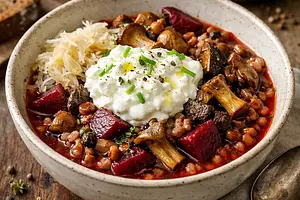
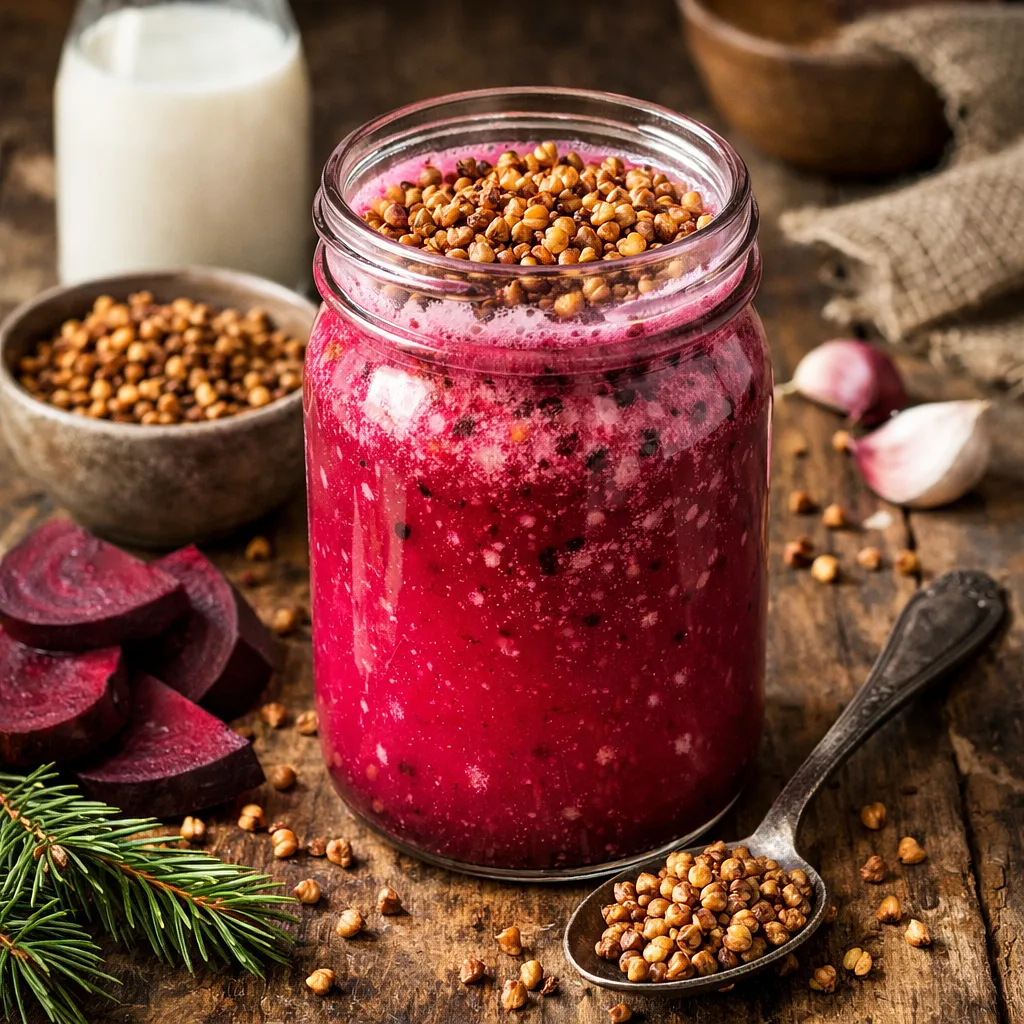
A creative, winter drink in a zero waste style combining naturally sour buttermilk with the deep, earthy aroma of beetroot (prepared as homemade kvass from peels and cores), the subtle sweetness of dried plums, and a crunchy touch of roasted buckwheat. This drink is both warming and refreshing — perfect as an unusual aperitif, a warming drink after a walk in the frost, or a light, probiotic snack. The zero waste aspect involves using vegetable and fruit peels and cores to prepare the kvass, which provides depth of flavor and natural cultures; buttermilk softens the acidity and adds protein, while roasted buckwheat gives texture and aroma. The drink combines traditional Polish seasonal ingredients with a modern approach — serve hot (winter tonic) or chilled as a refreshing option. Aesthetically: a deep red liquid with a buttermilk foam and a golden-brown buckwheat sprinkle, served in a tumbler glass with a slice of baked apple or a bit of cottage cheese as decoration.

Ingredients Used

Ingredients (9)

Servings:
4
  • Water 800 ml
  • Beets (peels and ends) 600 g
  • Apples (peels and cores) 200 g
  • Buttermilk 500 g
  • Toasted buckwheat groats 100 g
  • Dried plums 10 szt. (~80 g)
  • 🌿 Przyprawy
  • Salt 1 g
  • ✨ Opcjonalne
  • Honey 30 ml
  • Semi-fat cottage cheese 100 g
💰 Szacowany koszt dania: ~22.80 PLN (5.70 PLN/porcję)

💡 Kliknij na składnik aby oznaczyć jako użyty

Preparation steps

Preparing the sourdough (optional fermentation)

1

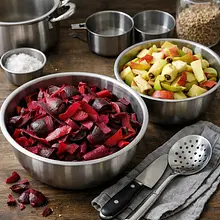
Gather the peels and ends of beets (600 g) and the peels and cores of apples (200 g). Make sure they are thoroughly washed and free of mold. In a large, 2-liter jar, layer the beets and apples. Pour in 800 ml of filtered water so that all the pieces are covered (leave about 3 cm of space from the top of the jar). Add a pinch of salt (1 g) and, if you want a faster active process, 30 g of honey dissolved in 50 ml of warm water. Close the jar loosely with a lid (not airtight) or cover it with cheesecloth and secure it with a rubber band.

Ingredients: Beets (peels and ends), Apples (peels and cores), Water, Salt, Honey
Use a large glass jar (2–3 l). Do not use metal tools for mixing with acid — use wood or plastic. A common mistake: sealing the jar too tightly — it can cause excessive pressure. If you don't have peels, you can use diced beets and apples.
2

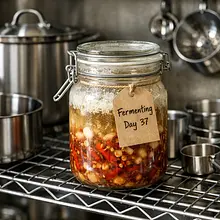
Place the jar in a warm spot (18–22°C), away from direct light, for 3–7 days. Check daily: if foam appears, that's normal — gas and bubbles are produced during fermentation. After 3 days, start tasting with a small spoon — the sourdough should be sour, slightly fizzy, and aromatic. When the taste is satisfactory (usually 4–7 days), strain the liquid through a fine sieve into a clean bottle.

Ingredients: Beets (peels and ends), Apples (peels and cores)
Use a kitchen thermometer if you want to monitor the temperature. A common mistake: throwing away the sourdough when a small, dry mold appears on the surface — for mold on solid pieces, discard the contents; a little foam and cloudiness are normal. Fermentation provides the deepest flavor and probiotics.

Quick method (beetroot concentrate)

3

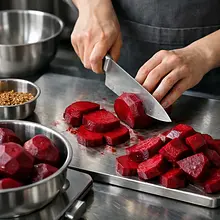
If you don't want to wait for fermentation: cut 600 g of peeled beets into thick slices. Place them in a pot with 800 ml of water and add 80 g of dried plums and 1 g of salt. Bring to a boil over medium heat, reduce the heat, and cook covered for 25–30 minutes, until the beets are tender (a knife inserted into the slices goes in easily). Set aside to cool. Strain through a sieve, reserving the broth — this is a quick beet concentrate.

Ingredients: Beets (peels and ends), Water, Dried plums, Salt
Use a wide pot with a capacity of at least 2 l. If you want a more intense color, blend the beets before cooking. A common mistake: cooking for too short a time - the broth will be pale and lacking in flavor.

Toasting the groats

4

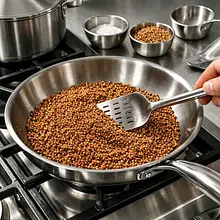
In a medium skillet without fat, heat 100 g of roasted buckwheat. Toast for 6–8 minutes over medium heat, shaking the skillet every few seconds, until the buckwheat turns golden-brown and starts to release a nutty aroma. Transfer to a plate to cool — after cooling, you can grind part of it in a grinder into a fine sprinkle, while leaving some in a crunchy form.

Ingredients: Toasted buckwheat groats
Use a non-stick pan Ø24-28 cm. Do not use oil — toasting should be dry. Common mistake: burning — lower the heat if the groats are burning instead of browning evenly.

Drink assembly (sourdough version)

5

If you are using sourdough: in a jug, mix 300 ml of strained beetroot sourdough with 500 ml of buttermilk. Add 80 g of finely chopped or crushed dried plums (you can soak them in hot water beforehand to soften), season with a pinch of salt (0.5 g) and optionally 30 g of honey if you want a sweeter taste. Stir with a spoon for about 20–30 seconds until the ingredients are combined and a light foam appears on the surface.

Ingredients: Water, Buttermilk, Dried plums, Salt, Honey, Beets (peels and ends)
Use a 1 l pitcher and a wooden spoon for mixing. If the drink is to be heated, gently warm it to 40–45°C — the buttermilk should not curdle. A common mistake: adding too much starter (the taste will become too sharp) — start with a smaller amount and adjust to taste.

Drink assembly (quick version)

6

If you are using beetroot cooking concentrate: cool the broth to room temperature. Mix 300 ml of concentrate with 500 ml of buttermilk in a jug. Add 80 g of chopped dried plums and optionally 30 g of honey. Taste and season with salt (0.5 g) or more sourness/spirits for intensity — remember that buttermilk will mellow the flavor.

Ingredients: Buttermilk, Dried plums, Honey, Salt, Beets (peels and ends)
The quick method gives a less complex but immediate result. If the concentrate is very hot, wait for it to cool down so as not to curdle the buttermilk.

Serving and finishing

7

Fill the glasses (about 200–250 ml per serving) and sprinkle each with a teaspoon of toasted buckwheat — some ground for garnish, some whole for crunch. If using cottage cheese: crumble 10–15 g of cottage cheese on each serving with a teaspoon for a delicate, salty contrast. Additionally, you can decorate with a slice of baked apple (sliced and baked for 10 minutes at 180°C with a bit of honey). Serve immediately.

Ingredients: Toasted buckwheat groats, Semi-fat cottage cheese, Honey
Use a dessert spoon to scoop the cottage cheese. A common mistake: sprinkling the groats immediately after pouring — if the drink is very hot, the groats may soften — add them just before serving for crunch.

Alternative serving - hot drink

8

To prepare a warming version: slowly heat the ready blended drink in a pot to 50–55°C (do not bring to a boil). Serve in thermal mugs with a tablespoon of toasted buckwheat as a topping and an optional piece of cottage cheese. The warm version is more soothing, but remember not to heat above 60°C, as the buttermilk may curdle.

Ingredients: Buttermilk, Toasted buckwheat groats, Semi-fat cottage cheese
Use a heavy-bottomed pot and a kitchen thermometer. A common mistake: too high a temperature — the drink will curdle and change its consistency.

Zero waste variations and tips

9

If you have extra scraps (e.g. apple peels, carrot tops, celery leaves), add them to the jar with the sourdough for a variety of flavors. You can also keep the strained solid parts of the beets as a filling for dumplings or to bake with potatoes — we throw nothing away.

Ingredients: Beets (peels and ends), Apples (peels and cores)
Store solid sourdough leftovers in the fridge and use within 2 days as an addition to dishes. A common mistake: adding moldy fruit to the sourdough - throw away such leftovers.

Fun Fact

💡

In traditional Polish cuisine, vegetable ferments were commonly used for preserving and enhancing the flavor of dishes — using peels to prepare a drink is a modern reference to this zero waste practice.

Best for

Tips

🍽️ Serving

Serve chilled in low glasses with a spoonful of roasted groats on top; for the warm version, serve in heatproof mugs. For guests, prepare two versions — with fermented sourdough (deeper flavor) and a quick one (ready to go). You can mix the cottage cheese on top with a bit of honey to create a creamy 'cloud'.

🥡 Storage

Store the prepared drink in an airtight container in the refrigerator for up to 48 hours. The sourdough continues to ferment in the fridge, so the flavor will gradually change. Keep the roasted groats in an airtight can at room temperature for up to 2 weeks; store the cottage cheese separately in the refrigerator and add it just before serving.

📸 Ugotowane przez społeczność

Zaloguj się, aby dodać zdjęcie
Dodaj zdjęcie gotowej potrawy

Po zatwierdzeniu przez moderatora otrzymasz 10 punktów doświadczenia.

🍲

Nikt jeszcze nie dodał zdjęcia. Bądź pierwszy!

Comments (0)

Be the first to comment on this recipe!

Add a comment

You might also like

Recipe Categories

Drinks
Drinks in: Valentine's Day

Romantic drinks that will enhance the atmosphere and highlight the flavors of the dishes, perfect for a Valentine's Day dinner.

See all recipes in this category

Traditional recipes from various regions of Poland that showcase the richness of local flavors and ingredients.

See all recipes in this category
Reklama