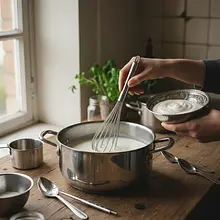
Start by preparing the gelatin. Pour 20 grams of gelatin into a small bowl. Add about 100 ml of cold water (you can take it from the prepared 500 ml of apple juice). Mix thoroughly with a small teaspoon to avoid lumps, and set aside for about 10 minutes. During this time, the gelatin will absorb the water and swell, becoming spongy. This process is called "blooming" and is crucial for achieving a smooth jelly.
Description
Here’s a recipe that playfully and appetizingly introduces the topic of bacteria! Instead of frightening with invisible threats, we will create edible, absolutely safe, and delicious "bacterial cultures" in jelly Petri dishes. This dish is a wonderful educational dessert for children, allowing them to practically see what colonies of microorganisms might look like, but in a fully edible version. The base is a delicate, fruity jelly that imitates agar medium, while the "bacteria" are blobs of thick, probiotic Greek yogurt. Fresh fruits complete the dish, adding color, vitamins, and flavor. It’s a dessert that not only looks great but is also light, refreshing, and full of nutritional value – perfect for an afternoon snack, a little scientist's birthday party, or as a creative culinary project for the weekend.
Składniki (9)
- Thick Greek yogurt 10% 400 g
- 100% clear apple juice 500 ml
- Pork gelatin 20 g
- wildflower honey 30 g
- Strawberries 100 g
- Blueberries 50 g
- Kiwi 1.3 szt.
- ✨ Opcjonalne
- Colorful sugar sprinkles 0.7 łyżka
- Edible glitter 2 szczypty
💡 Kliknij na składnik aby oznaczyć jako użyty
Preparation steps
Preparation of 'Petri Dish' (Jelly)
Pour the remaining 400 ml of apple juice into a small saucepan. Heat over medium heat until the juice is very hot, but do not bring it to a boil. When gentle steam begins to rise from the surface, remove the saucepan from the heat. Add the swollen gelatin to the hot juice. Whisk vigorously with a whisk for about 1-2 minutes, until all the gelatin is completely dissolved and the liquid is perfectly clear.
Prepare four flat, round dishes – small glass bowls, ramekins, or even saucers from cups with a diameter of about 10-12 cm will work perfectly. Carefully pour the prepared jelly liquid evenly into all the dishes, creating a layer about 1-1.5 cm thick. Set the dishes on the counter to cool slightly for 15-20 minutes, and then place them in the refrigerator for at least 2 hours, or preferably until fully set.
Cultivation of 'Safe Bacteria' (Yogurt Drops and Fruits)
While the jelly sets, prepare the fruits. Rinse the strawberries and blueberries thoroughly under running water, then dry them on a paper towel. Remove the stems from the strawberries and slice them thinly or chop them into small cubes. Peel the kiwi (you can use a knife or a vegetable peeler) and also slice it, then cut each slice into quarters. The goal is to create small, colorful pieces that will resemble "food."
In a medium-sized bowl, place 400 grams of thick Greek yogurt. Add two tablespoons of honey to it. Using a small whisk or spoon, mix the ingredients for about a minute, making vigorous circular motions until you achieve a uniform, smooth, and creamy mixture without any lumps. Taste it, and if you prefer a sweeter flavor, you can add a little more honey.
Take the set jelly out of the fridge. Now it's time for the artistic part – "inoculating the medium." Arrange the prepared fruit pieces on the surface of each jelly. Place them in fancy patterns, creating a colorful background for our "bacteria." You can create clusters, lines, or scatter them randomly, as if they were growing naturally on the medium.
Now the most important moment: creating the "bacterial colonies." You can do this in two ways. The first: use two small teaspoons to scoop portions of yogurt and gently place them on the jelly, creating blobs of various sizes. The second, more precise method: transfer the yogurt mixture to a piping bag with a round tip (or to a ziplock bag with a corner cut off) and squeeze dots, spirals, and irregular shapes onto the jelly that will look like real bacterial colonies under a microscope.
Finally, add the finishing touches to your culinary experiment. If you are using optional ingredients, gently sprinkle the yogurt dollops and fruits with colorful sugar sprinkles and a pinch of edible glitter. This will add texture and a magical, "laboratory" look to the dessert. Serve the dessert immediately after preparation, while it is still pleasantly chilled.
Fun Fact
The yogurt we use to create our "bacteria" is full of real, live probiotic bacterial cultures, such as Lactobacillus and Bifidobacterium. These microorganisms are responsible for fermenting the milk and giving yogurt its characteristic taste and texture. They are extremely beneficial for our health!
Best for
Tips
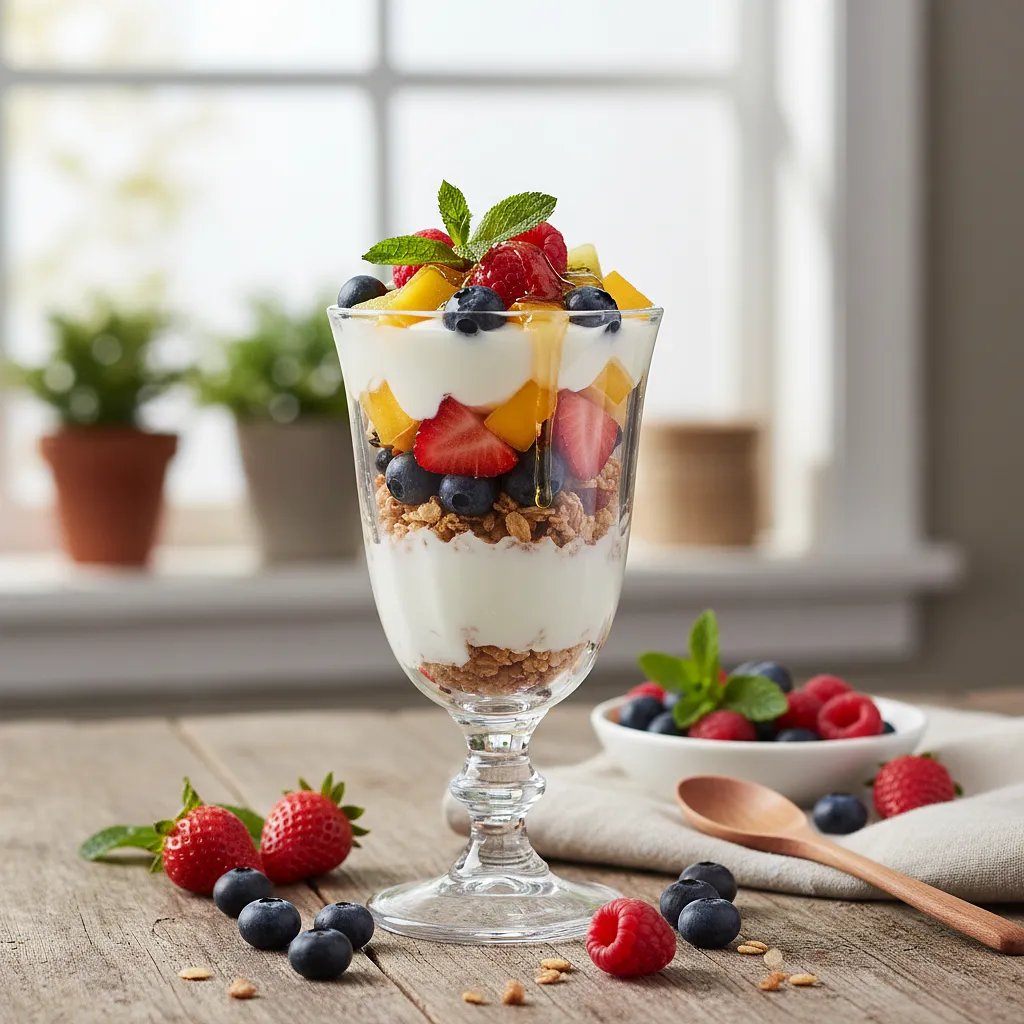
Serve the dessert in transparent dishes to showcase all the layers. You can include a small card that says "Bacterial Culture: Lactobacillus delbrueckii" to enhance the scientific effect. Serve with small teaspoons to easily scoop all the ingredients at once.
The dessert tastes best when freshly made. However, if you have any portions left, you can store them in the refrigerator, covered with plastic wrap, for up to 24 hours. Keep in mind that after a longer time, the jelly may start to release water, and the yogurt may lose its perfect consistency.
📸 Ugotowane przez społeczność
Zaloguj się, aby dodać zdjęcieDodaj zdjęcie gotowej potrawy
Po zatwierdzeniu przez moderatora otrzymasz 10 punktów doświadczenia.
Nikt jeszcze nie dodał zdjęcia. Bądź pierwszy!
Comments (0)
Be the first to comment on this recipe!
Add a comment