Sponge cake with caramel filling

Desserts Cakes and Bakes 90 min Medium 38 wyświetleń ~14.66 PLN - (0)
Rate:
(0)
Start Cooking

Description

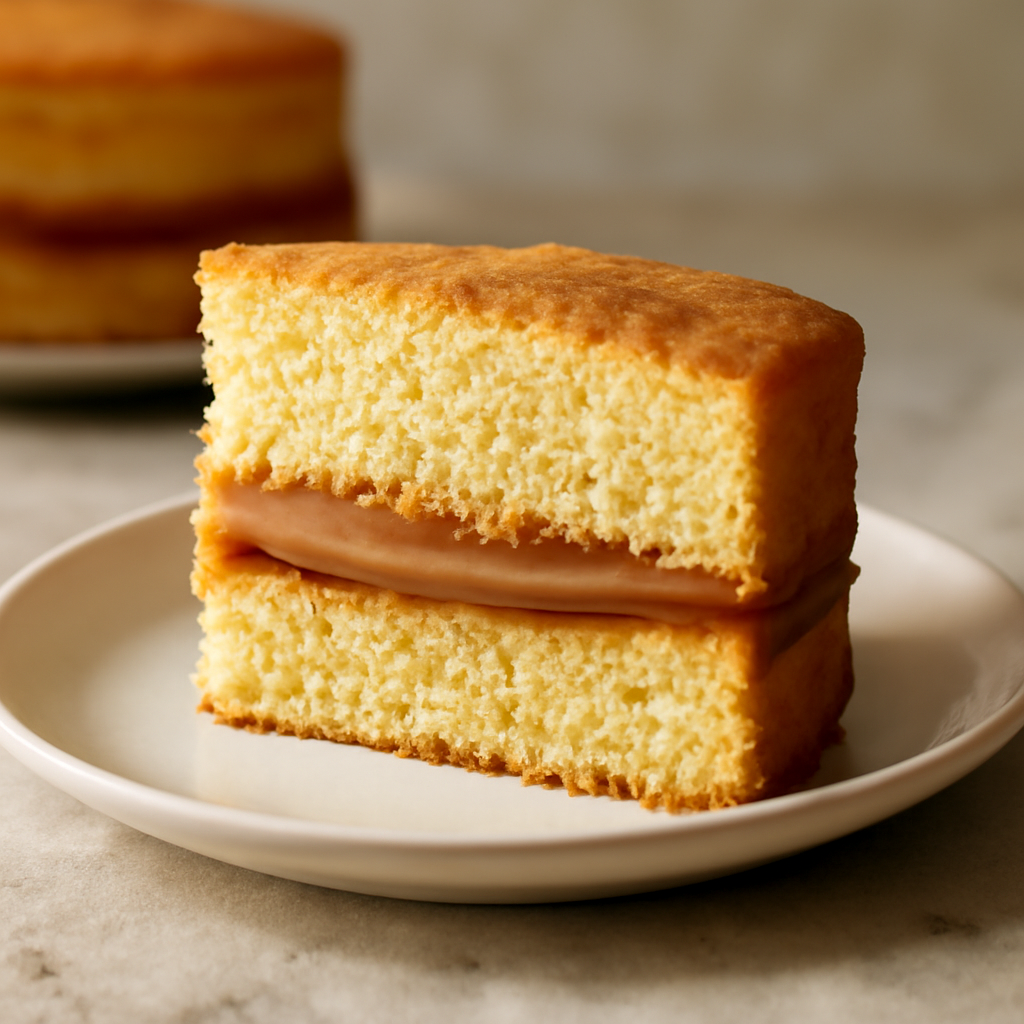
A delicate, light sponge cake layered with thick, buttery caramel — a modern yet close-to-Polish-tradition reinterpretation of a classic dessert. The sponge is fluffy and subtle, while the caramel adds depth of flavor and a pleasant stickiness; the whole can be served with a bit of cream or apple wedges for contrast. This cake is perfect as a dessert for Sunday dinner, a small gathering, or an elegant afternoon tea. Visually, it attracts with the golden sheen of the caramel and a simple, rustic form — it looks beautiful on a white plate dusted with a light sprinkle of powdered sugar.

Ingredients Used

Ingredients (8)

Servings:
4
  • Chicken egg 4 szt. (~240 g)
  • Wheat flour 120 g
  • 30% cream (heavy cream) 200 ml
  • Sugar 150 g
  • Butter 80 g
  • 🌿 Przyprawy
  • Salt 1 g
  • ✨ Opcjonalne
  • Powdered sugar 20 g
  • Vanilla extract 5 g
💰 Szacowany koszt dania: ~14.66 PLN (3.66 PLN/porcję)

💡 Kliknij na składnik aby oznaczyć jako użyty

Preparation steps

Preparation

1

Preheat the oven to 170°C (top-bottom; for convection 160°C). Prepare a springform pan with a diameter of 18–20 cm: line the bottom with a circle of baking paper, grease the sides with a thin layer of butter, and optionally dust with flour (pressing out the excess). Take the eggs out of the fridge about 30 minutes in advance to reach room temperature — this will make whipping easier.

Ingredients: Chicken egg, Butter
Use an 18–20 cm springform pan (preferably 20 cm if you want a taller sponge). Cut the parchment paper with scissors to fit the bottom. The temperature of the eggs affects the volume of the foam — cold eggs will whip up worse.
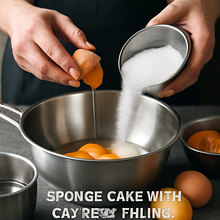
Sponge Cake

2

In a large, dry, degreased bowl, crack all the eggs and add 120 g of sugar for the sponge cake along with a pinch of salt. If you are using vanilla extract, add it now. Start mixing with a spiral whisk first on low speed for 20–30 seconds, then increase the speed to medium-high and beat for 8–10 minutes until the mixture becomes pale, very fluffy, and at least doubles in volume — the mixture should form a 'ribbon' that falls from the whisk (meaning it leaves a clear trace for a few seconds when lifted).

Ingredients: Chicken egg, Salt, Vanilla extract
Use a stand mixer or a hand mixer with a whisk. The bowl should be dry and preferably metal or glass (plastic can retain grease). Ribbon test: dip the whisk at an angle and lift it; the mixture should gently flow and leave a trail. If not, mix for another 1–2 minutes.
3

Sift the all-purpose flour through a sieve directly over the egg mixture, dividing it into three portions. Using a wide rubber spatula or wooden spoon, gently combine the flour with the mixture using the 'folding' technique: insert the spatula into the center of the bowl, roll the dough from the bottom over the top, turning the bowl 90°, and repeat quickly and gently. Avoid mixing in circular motions to prevent deflating the mixture. Work briefly — combining all portions of flour should take 2–3 minutes. The mixture is ready when there are no visible white streaks of flour and it has a uniform, light consistency.

Ingredients: Wheat flour
Use a wide-tipped rubber spatula. If the mixture deflates while folding, do not mix it more — it's better to add the flour more quickly. Overmixing will result in a heavy, less fluffy sponge cake.
4

Gently pour the batter into the prepared pan, spread it evenly with a spatula, and lightly tap the bottom of the pan on the counter to remove larger air bubbles. Place in the preheated oven and bake for 25–30 minutes at 170°C (if using a convection oven, set to 160°C). The cake is ready when the top is golden, springy to the touch, and a skewer inserted comes out dry or with a few moist crumbs, but no raw batter.

Ingredients: Chicken egg, Wheat flour
Do not open the oven for the first 20 minutes, as the sponge cake will fall. If the oven heats unevenly, turn the pan halfway through the time. Use a wooden skewer or toothpick to check for doneness.
5

After baking, remove the pan from the oven and let it sit for 10 minutes, then gently separate the sides with a knife and remove the springform ring. Turn the sponge cake upside down onto a cooling rack and leave it to cool completely (about 30–40 minutes). Before cutting, make sure the sponge cake is completely cold — if warm, it will crumble.

Ingredients: Chicken egg
Cooling on a rack prevents steaming and sogginess of the bottom. If you plan to slice the sponge cake horizontally, hold it with your hand and cut it with a long, serrated knife using a sawing motion; a cool sponge cake is easier to cut.

Caramel

6

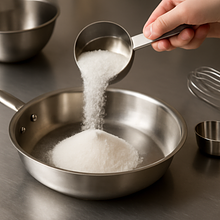
In a medium, wide saucepan/grill pan with a thick bottom, evenly sprinkle 150 g of sugar for caramel. Set over medium heat and allow the sugar to dissolve: do not stir with a spoon, but gently shake the pan every few seconds to ensure it melts evenly. At first, the sugar will become clumpy, then it will start to clarify — when most of it is liquid and reaches a golden-amber color (about 5–8 minutes), immediately move on to the next step. Be careful, as caramel can quickly go from golden to bitter.

Ingredients: Sugar
Use a wide, shallow dish — it makes it easier to control the color. Do not leave it unattended. The color of the caramel is the best indicator — look for a deep, golden-amber hue. If the foam ignites or starts to darken very quickly, remove the saucepan from the heat immediately.
7

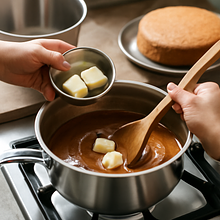
Remove the saucepan from the heat and carefully add the cold butter, piece by piece (40 g), vigorously stirring with a wooden spoon or silicone spatula until the fat melts and forms an emulsified, smooth mixture. Once the butter is combined, gently heat the cream (200 ml) — it should be just warm, not hot — and pour it in a thin stream into the caramel, stirring constantly. Note: the mixture will steam heavily and may bubble. After adding all the cream, place the saucepan over low heat and cook for 2–3 minutes, stirring, until the mixture thickens slightly. Finally, add a pinch of salt and mix well.

Ingredients: 30% cream (heavy cream), Butter
Prepare the previously chilled butter cut into pieces and the warmed cream to avoid a sudden sizzling. If the caramel separates, remove it from the heat and stir vigorously — usually, a brief, sharp mixing helps.

Assembly

8

Let the caramel cool for about 10–15 minutes until it is warm but thicker (it should flow from the spoon in a thick ribbon). If the caramel has become too hard, briefly heat it over steam or on low heat, stirring.

Ingredients: Sugar, 30% cream (heavy cream), Butter
The caramel should be warm, but not hot, so it doesn't soften the sponge during assembly. Test the consistency with a spoon — it should have a pouring but thick structure.
9

Once the sponge cake has completely cooled, carefully cut it horizontally into two equal layers using a long serrated knife. Hold the knife horizontally and make gentle sawing motions to avoid tearing the structure. If the sponge cake cracks, chill it in the refrigerator for another 10–15 minutes before cutting.

Ingredients: Chicken egg
You can use thread to cut the cake: tie the thread at the desired height and pull simultaneously from both ends to achieve an even cross-section. A chilled sponge cake is much easier to cut.
10

Spread about half of the warm caramel (approx. 120–140 g, depending on thickness) over the bottom layer of the sponge cake, smoothing it evenly with a wide spatula. Place the top layer on and drizzle the remaining caramel over the top. You can reserve a few teaspoons of caramel for decorative "drops" when serving.

Ingredients: Sugar, 30% cream (heavy cream), Butter
Use a wide offset spatula for an even layer. If the caramel is too runny and drips down the sides, place the cake in the fridge for 15–30 minutes to slightly set before further decorating.

Decoration and serving

11

Optionally, sprinkle the cake with sifted powdered sugar just before serving for visual contrast. Cut into 4 equal portions with a sharp knife (preferably warm — rinse it with hot water and dry it before cutting), serve on plates with a teaspoon of cream or a portion of seasonal fruits (e.g., thin slices of apple or pear).

Ingredients: Powdered sugar
If you are using powdered sugar (optional ingredient), sprinkle it on the cake just before serving, as the sugar will dissolve quickly upon contact with the moist caramel. A warm knife makes cutting easier and gives nice slices.

Cooling and Serving

12

Place the assembled cake in the refrigerator for at least 1 hour so that the caramel thickens slightly and the layers 'bind' together. Take it out 10–15 minutes before serving so that the caramel is not too hard and the flavor is more pronounced.

Ingredients: Sugar, 30% cream (heavy cream)
Chilling makes slicing easier and improves the texture of the creamy filling. The dough can be stored in the refrigerator covered, but it is best consumed within 2–3 days.

Fun Fact

💡

Caramel as an addition to cakes has a long history – it was initially made in confectioneries using simple sugar and butter. In Polish cuisine, caramel often appeared as a topping for cheesecakes and homemade desserts, gaining popularity due to its versatility.

Best for

Tips

🍽️ Serving

Serve slightly chilled for a creamy caramel consistency. You can add fresh slices of apple or pear to the plate for acidity, or a tablespoon of sour cream/mascarpone for contrast. A warm knife makes cutting easier and gives aesthetically pleasing slices.

🥡 Storage

Store in the refrigerator covered with plastic wrap or in a container for 2–3 days. To restore some softness to the caramel after cooling, take the cake out 10–20 minutes before serving or gently warm a piece in the microwave for 6–8 seconds.

📸 Ugotowane przez społeczność

Zaloguj się, aby dodać zdjęcie
Dodaj zdjęcie gotowej potrawy

Po zatwierdzeniu przez moderatora otrzymasz 10 punktów doświadczenia.

🍲

Nikt jeszcze nie dodał zdjęcia. Bądź pierwszy!

Comments (0)

Be the first to comment on this recipe!

Add a comment

You might also like

Recipe Categories

Desserts are a sweet ending to every meal - from simple puddings to exquisite creamy cakes. Our collection includes recipes for homemade ice cream, chocolate mousses, panna cotta, tiramisu, crème brûlée, and lemon tart. Summer fruit desserts: jellies, sorbets, parfaits, and fruit salads with whip...

See all recipes in this category

Homemade cakes and pastries are the heart of Polish culinary tradition - sweet memories from childhood. In our collection, you will find recipes for classic yeast cakes, shortcrust, sponge, and cheesecake. Apple pie, poppy seed cake, gingerbread, Easter babka, chocolate cake, and New York cheesec...

See all recipes in this category
Reklama