Prepare all the ingredients and tools. Weigh the butter, flour, and powdered sugar. Crack the egg into a small bowl and lightly beat it with a fork to combine it more easily with the butter. Preheat the oven: 170°C (top-bottom) or 160°C (fan). Line the baking tray with parchment paper or use a silicone mat. Prepare a mixer with a whisk attachment or a large bowl and a wooden spoon and spatula.
Description
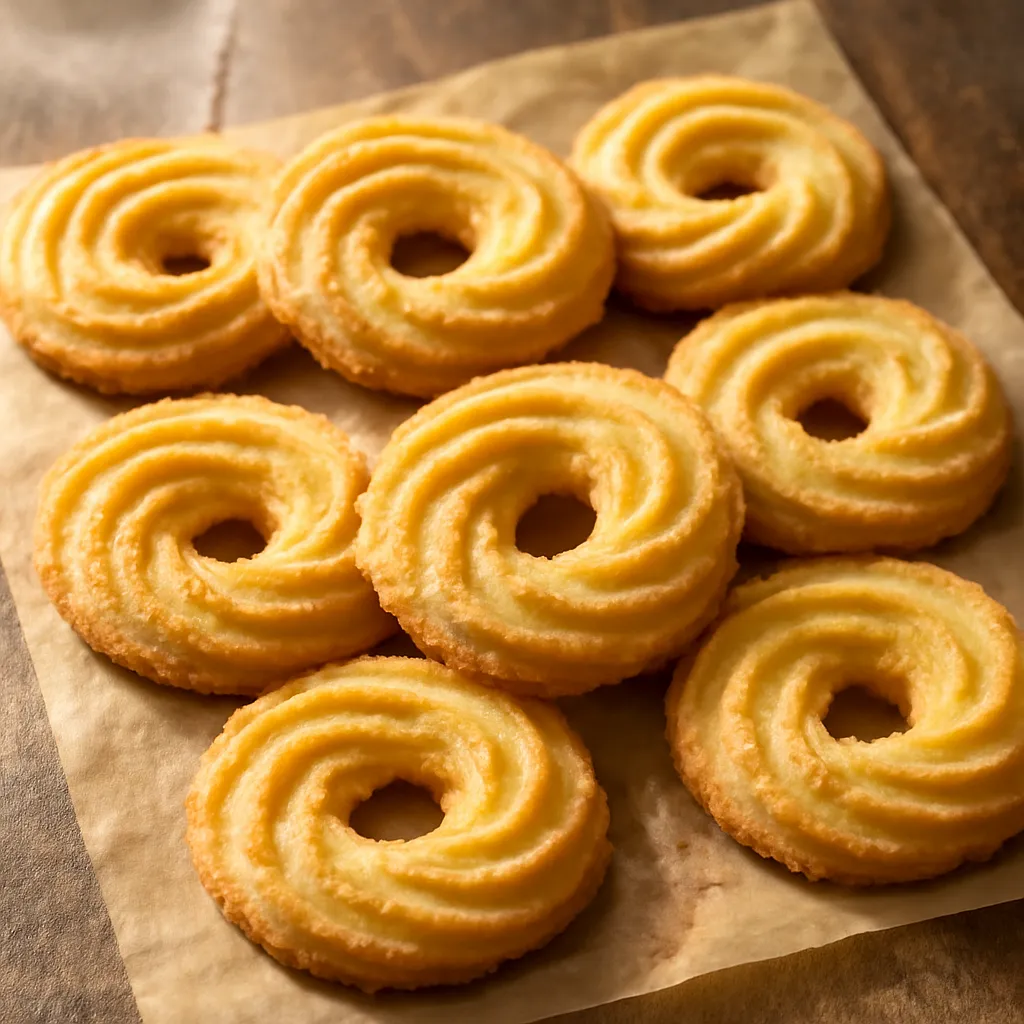
Classic butter cookies are delicate, crumbly cookies with a rich buttery aroma and subtle sweetness. They come from the tradition of European baking, where the simplicity of ingredients (butter, flour, sugar) yields an exceptional result — golden, buttery shortbread cookies perfect for parties, sweet buffets, and special occasions like New Year's Eve. They look elegant on their own — evenly shaped, slightly crumbly at the edges, and when dusted with powdered sugar, they appear very festive. They pair wonderfully with coffee, tea, and for New Year's Eve, they can be served on a platter alongside mini desserts and fruits. The recipe is simple, requiring only a few basic tools and a little time to chill the dough, allowing the cookies to maintain their shape during baking.
Składniki (7)
- Butter 200 g
- Powdered sugar 100 g
- Wheat flour 300 g
- Egg 1 szt.
- 🌿 Przyprawy
- Salt 0.0 szczypt
- ✨ Opcjonalne
- Vanilla extract (optional) 1 łyżeczka
- Powdered sugar for dusting (optional) 20 g
💡 Kliknij na składnik aby oznaczyć jako użyty
Preparation steps
Preparation
Preparing the dough
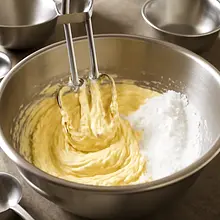
Cream the butter with powdered sugar: place the butter (200 g) in a large bowl, add the powdered sugar (100 g). Use a hand mixer or stand mixer on medium speed and beat for 3–4 minutes until the mixture becomes lighter, fluffy, and creamy. Scrape the mixture from the sides of the bowl with a spatula and continue beating for another 30 seconds. The mixture should be smooth and slightly fluffy — when you lift the mixer attachment, the mixture should flow in a thick, even stream.
Add the beaten egg (60 g) to the whipped butter in three portions: pour in a little at a time and mix briefly after each addition, for 20–30 seconds, until the ingredients are combined. If you are using vanilla extract (optional 5 g), add it along with the first portion of the egg.
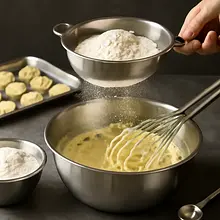
Sift the flour (300 g) with the salt (1 g) into a separate bowl. Add it to the butter mixture in two portions. First, add half of the flour and mix on low speed with a mixer or with a wooden spoon — mix only until no dry flour is visible (about 20–30 seconds). Add the second half and combine briefly (15–30 seconds), finishing mixing with a spatula so that the dough is uniform. The dough should be firm, not overly sticky to the hands, and able to be gathered into a ball.
Cooling
Shape the dough into a disk or rectangular block about 2–3 cm thick, wrap it tightly in plastic wrap, and place it in the refrigerator for 30–60 minutes. The dough should firm up enough to be easily rolled out or cut without crumbling.
Shaping the cookies
Remove the chilled dough and divide it into equal portions. For 24 cookies, each piece should weigh about 25 g. You can shape the cookies in two ways: 1) Roll: form two logs from the dough with a diameter of about 3–4 cm, wrap in plastic wrap, and chill for 15 minutes, then slice into thin rounds about 4–5 mm thick. 2) Rolling: roll out the dough between two sheets of baking paper to a thickness of 4–5 mm and cut out shapes with a cookie cutter. Place the cookies on a baking sheet lined with paper, leaving a space of 2–3 cm between them.
Baking
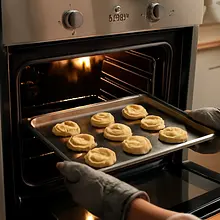
Place the baking sheet with cookies in the preheated oven. Bake at 170°C (top-bottom) or 160°C (fan) for 12–14 minutes. After 8 minutes, rotate the baking sheet halfway to ensure the cookies brown evenly. The cookies are ready when the edges are slightly browned, and the center remains matte — they will continue to harden after being removed from the oven.
Cooling and Decoration
Remove the baking sheet from the oven and let it sit for 3–5 minutes for the cookies to firm up slightly. Then transfer the cookies to a wire rack to cool completely (about 10–15 minutes) to prevent the bottoms from becoming soggy. Once the cookies are cool, sift a little powdered sugar (optional) through a fine sieve for a delicate dusting.
Serving
Arrange the cookies on a platter in one or several layers, next to a small bowl with additional sprinkles or fruits. For the New Year's table, you can add decorative elements: mint leaves, lemon slices, or small chocolate balls. Serve the cookies at room temperature.
Fun Fact
Shortbread cookies have their roots in Scotland — they were traditionally baked with simple ingredients: butter, sugar, and flour. In their original form, they were simple, hard discs that over time transformed into the delicate, crumbly cookies known today all around the world.
Best for
Tips
Serve the cookies on a light platter with a bowl of powdered sugar beside it. They pair perfectly with black coffee, Earl Grey tea, or champagne for New Year's Eve. You can prepare different variations: sprinkle some cookies with powdered sugar, and dip the bottoms of others in chocolate and chill.
Store the cookies in an airtight container at room temperature for up to 5 days. To maintain freshness and crunchiness, separate each layer with parchment paper. They can be prepared 1–2 days in advance; avoid storing in the refrigerator (loss of aroma). For the freezer: arrange the cookies in a single layer on a baking sheet, freeze for 1 hour, then transfer to an airtight bag — they can be stored for up to 1 month; thaw at room temperature for 30–60 minutes.
📸 Ugotowane przez społeczność
Zaloguj się, aby dodać zdjęcieDodaj zdjęcie gotowej potrawy
Po zatwierdzeniu przez moderatora otrzymasz 10 punktów doświadczenia.
Nikt jeszcze nie dodał zdjęcia. Bądź pierwszy!
Comments (0)
Be the first to comment on this recipe!
Add a comment