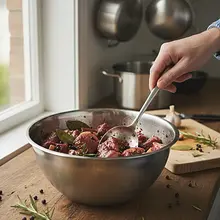
Wash the meat under cold running water and dry it thoroughly with paper towels. This is crucial for the meat to brown well. Then, rub it with salt and freshly ground pepper on all sides.
Description
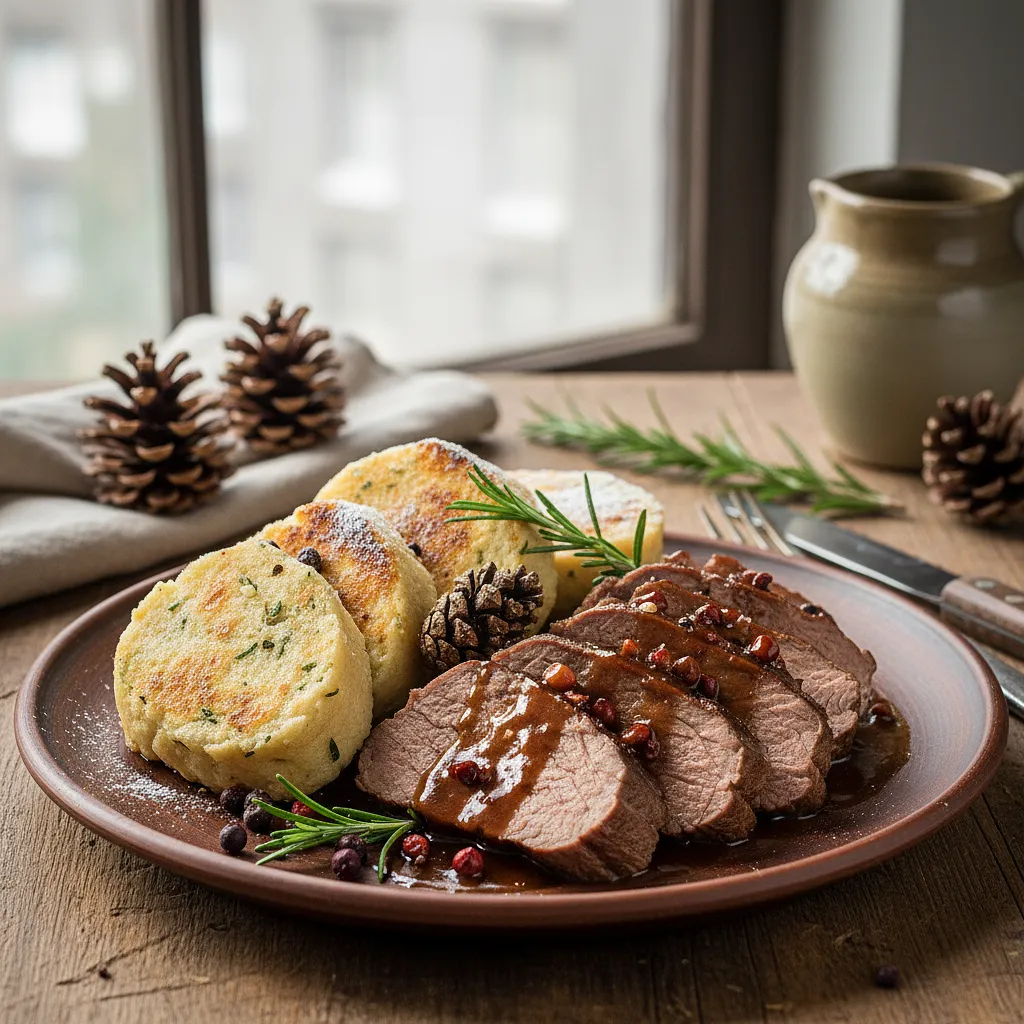
This is the quintessence of Czech hunting cuisine, a dish full of deep, autumn flavors that warms and delights. Long-marinated and then slowly braised wild boar becomes incredibly tender and juicy, and its intense flavor perfectly balances the sweet-sour, aromatic pine cone sauce, prepared with wild rose fruit jam. The secret to the velvety consistency of the sauce is the traditional Czech method of thickening it with grated gingerbread. As a side, we serve fluffy and light Karlovy Vary dumplings, which differ from the classic yeast dumplings in that they are made with stale bread, eggs, and fresh herbs, giving them a unique texture and flavor. The dish presents itself extremely elegantly, making it perfect for a festive lunch or special occasion, and its rich bouquet of flavors lingers in the memory for a long time.
Składniki (24)
- Shoulder or leg of wild boar 800 g
- Carrot 2.5 szt.
- Parsley root 1 szt.
- Celeriac 100 g
- Onion 2 szt.
- Dry red wine 300 ml
- Smalec wieprzowy 45 g
- Wild rose jam 150 g
- Beef or game broth 500 ml
- Gingerbread 30 g
- Stale wheat rolls (kaisers) 4 szt.
- Eggs 2 szt.
- Milk 3.2% 200 ml
- Fine wheat flour 100 g
- Masło 82% 45 g
- Lemon juice 15 ml
- 🌿 Przyprawy
- Parsley 1 pęczek
- Salt 8 g
- Pieprz czarny świeżo mielony 3 szczypty
- Jagody jałowca 5 szt.
- Allspice 2 g
- Bay leaf 3.3 szt.
- ✨ Opcjonalne
- Nutmeg 2 szczypty
- Cranberry jam 50 g
💡 Kliknij na składnik aby oznaczyć jako użyty
Preparation steps
Marinating the meat (the day before)
Prepare the root vegetables. Peel the carrot, parsley root, and celery using a vegetable peeler and cut them into large cubes (about 2x2 cm). Peel the onion and cut it into wedges. Lightly crush the juniper berries and allspice with the flat side of a knife to release their aroma.
In a container (glass, ceramic, or stainless steel) that can hold the meat, place the chopped vegetables, crushed spices, and bay leaf. Lay the meat on top of the vegetables. Pour 250 ml of red wine over everything. Cover the container with plastic wrap and place it in the refrigerator for at least 12, preferably 24 hours. Halfway through the marinating time, turn the meat to the other side.
Braised Wild Boar
The next day, remove the meat from the marinade and pat it dry with paper towels. Keep the marinade (vegetables and liquid). In a large, heavy pot (preferably cast iron), heat 2 tablespoons of lard over medium-high heat. When the fat is hot, carefully add the meat and sear it on all sides until golden brown, which will take about 10-12 minutes. Transfer the browned meat to a plate.
Reduce the heat to medium. Add the vegetables from the marinade to the same pot (draining them from the wine, which you should keep). Sauté the vegetables for 8-10 minutes, stirring occasionally with a wooden spoon, until they are lightly caramelized and softened. Scrape up all the tasty browned bits from the bottom of the pot.
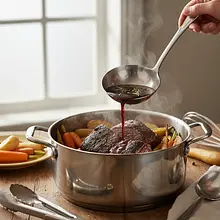
Place the browned meat back into the pot, layering it on top of the vegetables. Pour in the reserved wine from the marinade and the entire broth. The liquid should reach about 2/3 of the height of the meat. Bring everything to a boil, then reduce the heat to the minimum, cover the pot, and simmer the meat for 2.5 to 3 hours, until it is perfectly tender and falls apart under the pressure of a fork.
Preparation of the pine cone sauce
When the meat is tender, carefully remove it from the pot, wrap it in aluminum foil, and set it in a warm place to rest. Strain the entire contents of the pot (vegetables and liquid) through a fine sieve into a clean saucepan, pressing all the sauce out of the vegetables with the back of a spoon.
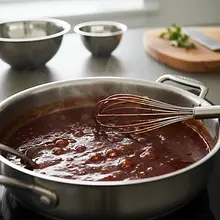
Place a saucepan with the strained broth over medium heat. Add the rose hip jam, the remaining 50 ml of wine, and the grated gingerbread. Mix everything thoroughly with a whisk until the jam and gingerbread are completely dissolved.
Cook the sauce over low heat for about 10-15 minutes, until it thickens slightly and the flavors meld together. Finally, remove the sauce from the heat, add a tablespoon of cold butter, and stir vigorously until it melts - this will give the sauce a velvety texture and shine. Season to taste with salt, pepper, and lemon juice to balance the sweetness.
Karlowarsky dumplings
While the meat is simmering, prepare the dumplings. Cut the stale bread into cubes about 1.5 cm on each side. Sauté one third of the cubed bread in a pan with 2 tablespoons of melted butter until golden brown, creating crispy croutons. Leave the remaining bread cubes unsautéed. Transfer all the cubes to a large bowl.
Separate the yolks from the whites. Place the whites in a clean, dry bowl and set aside for later. In a second, smaller bowl, whisk the yolks with the milk, salt, freshly ground pepper, and optionally a pinch of grated nutmeg. Finely chop the parsley.
In a large bowl with the bread cubes, add the chopped parsley and semolina flour. Mix to coat the bread with the flour. Then pour in the milk mixture with the egg yolks and gently stir everything together with a large spoon, just until the ingredients are combined. Set aside for 10 minutes to allow the bread to absorb the liquid.
In a clean bowl, beat the egg whites with a pinch of salt until stiff peaks form. The meringue is ready when it doesn't fall out of the bowl when turned upside down. Gently add the beaten egg whites to the mixture with the breadcrumbs in two batches. Carefully and slowly fold everything together using a large spoon or spatula, making upward motions to minimize the deflation of the meringue.
Lay a large piece of plastic wrap on the countertop and lightly grease it with oil. Place half of the mixture on the wrap, shaping it into a log about 6-7 cm in diameter. Tightly wrap the mixture in the plastic, forming a neat roll. Tie the ends of the wrap tightly with kitchen twine or twist them like a candy. Repeat with the second half of the mixture.
In a large, wide pot, bring salted water to a boil. Reduce the heat so that the water is just gently simmering. Carefully place both rolls of dumplings into the water. Cook covered for 20-25 minutes, turning them halfway through cooking to the other side.
After cooking, carefully remove the dumplings from the water using a slotted spoon. Place them on a board and immediately, while still hot, unwrap them from the foil. Poke them in several places with a toothpick to let the steam escape. Cut into slices about 2 cm thick.
Serving
Slice the resting meat into pieces about 1 cm thick against the grain. On warmed plates, arrange a few slices of dumpling next to the slices of meat. Generously drizzle with hot pine cone sauce. Serve immediately, optionally with a spoonful of cranberry jam on the side.
Fun Fact
In traditional Czech and Old Polish cuisine, gingerbread (perník) was commonly used as a thickener for dark, rich sauces, especially for game and beef. Its spicy notes paired perfectly with the intense flavor of the meat, while the sugar helped with caramelization and building depth of flavor.
Best for
Tips
Serve the dish on deep, heated plates. The classic Czech presentation often includes a dollop of whipped cream (unsweetened) or crème fraîche on the sauce, which softens its intensity, along with a slice of lemon. A strong, dark Czech beer (tmavé pivo) or a bottle of dry, full-bodied red wine, such as one from the Moravian region, pairs perfectly for drinking.
Store meat and sauce separately in tightly sealed containers in the refrigerator for up to 3 days. The sauce can be reheated over low heat, adding a little water if necessary. The meat is best reheated in the sauce or steamed. Dumplings are best fresh after cooking. If there are any leftovers, they can be refreshed by steaming or sautéing in butter.
📸 Ugotowane przez społeczność
Zaloguj się, aby dodać zdjęcieDodaj zdjęcie gotowej potrawy
Po zatwierdzeniu przez moderatora otrzymasz 10 punktów doświadczenia.
Nikt jeszcze nie dodał zdjęcia. Bądź pierwszy!
Comments (0)
Be the first to comment on this recipe!
Add a comment