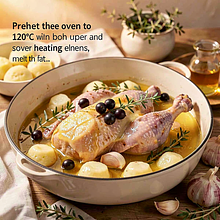
Pat the duck legs dry with a paper towel. Place them skin side up on a cutting board. Evenly sprinkle a thin layer of salt on each piece (total salt: 20 g), rub with crushed garlic cloves (use 4 out of 6 cloves — we will keep the rest for the sauce) and sprinkle with half of the thyme. Massage the salt and spices into the skin and meat with gentle, circular motions of your fingers for about 1–2 minutes per piece, so that the salt begins to draw out moisture.
Description
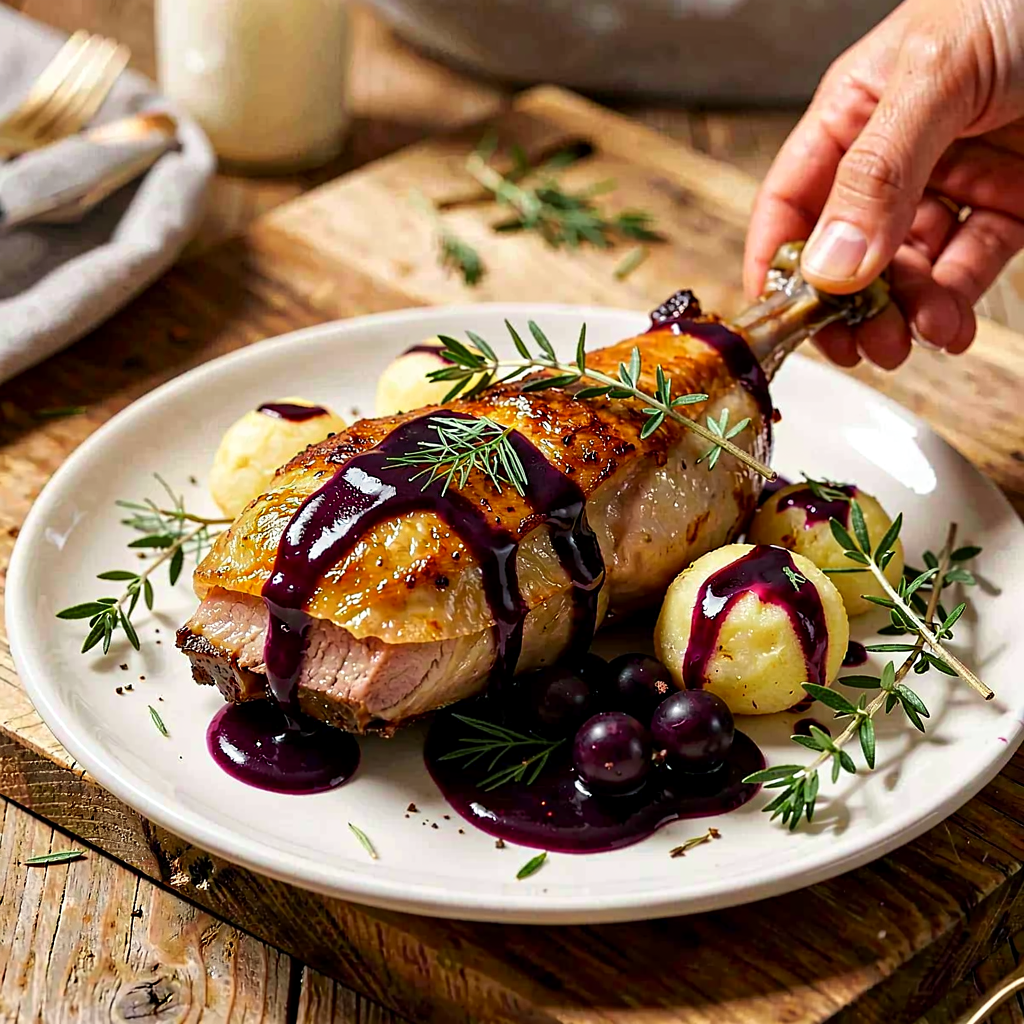
An elegant, summer dish in modern fusion style: slowly cooked (confit) duck with a crispy skin served with an intense, slightly tangy sauce made from fresh black currants and delicate dumplings made from young potatoes. The dish combines the classic French confit technique with Polish summer fruits and simple, seasonal ingredients. Perfect for special occasions — it looks stunning on the plate (deep color of the sauce, golden duck skin, rustic dumplings), tastes with a rich sweet-tart contrast, and has a variety of textures: tender meat, crispy skin, and velvety sauce. Serve with lamb's lettuce or a light salad of young leaves, a touch of fresh dill, and thin slices of grilled zucchini or pickled cucumber for freshness.
Ingredients Used
Ingredients (15)
- Duck leg 2.9 pcs (~880 g)
- Duck fat 700 g
- Garlic 6 clove (~30 g)
- Black currant 300 g
- Sugar 50 g
- Red wine 150 ml
- Onion 1 pcs (~150 g)
- Butter 50 g
- Potatoes 4 pcs (~600 g)
- Wheat flour 200 g
- Chicken egg 1 pcs (~60 g)
- 🌿 Spices
- Salt 20 g
- Thyme 30 g
- Black pepper 4 pinch (~2 g)
- ✨ Optional
- Dill 0.5 bunch (~10 g)
💡 Click an ingredient to mark it as used
Preparation steps
Marinating and salting
Cover the dish with plastic wrap and place it in the refrigerator for at least 8–12 hours (preferably overnight). After this time, the meat will be slightly firmer and moisture will appear on the surface, indicating an effective brining process.
Preparation for confit
Remove the thighs from the fridge, rinse them under cold water to wash off excess salt. Pat them very dry with a paper towel (this is important — dry skin will become crispy later). Finely chop the remaining 2 cloves of garlic; set aside the rest of the unused thyme.
Confit Cooking
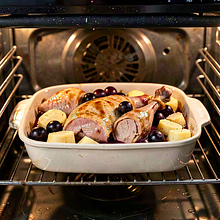
Preheat the oven to 120°C (top and bottom heating). In a wide heatproof dish, melt the duck fat over low heat — it should become liquid but not hot. Arrange the thighs skin side up in a single, even layer and pour the fat over them so that they are completely covered (if there is not enough fat, melt some more). Add chopped garlic and a few sprigs of thyme between the thighs.
Place the dish in the oven and confit for 2.5–3 hours. The meat is ready when it easily pulls away from the bone and the skin is soft (you should be able to slide a fork between the meat and the bone — it should move without resistance). Remove the dish and let it cool in the fat to room temperature (about 30–60 min).
Preparing the sauce
In a medium saucepan, add the chopped onion (150 g) and sauté in 10 g of butter (about 1 minute) over medium heat for 3–4 minutes until it becomes translucent and slightly golden. Add the remaining garlic (chopped) and cook for another 30 seconds, being careful not to burn it.
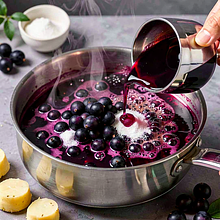
Add black currants (300 g) and sugar (50 g) to a saucepan. Stir, pour in red wine (150 ml), and bring to a gentle boil. Reduce the heat and simmer for 12–15 minutes, until the fruit breaks down and the sauce reduces by about 1/3 and thickens.
Finishing the sauce
When the sauce reaches the consistency of a lightly oiled glaze, remove the saucepan from the heat and vigorously stir in 30 g of cold butter into the sauce — this will give it shine and soften the acidity. Season with salt and pepper to taste (start with a pinch of pepper and 1 g of salt). Taste and adjust the sugar or vinegar if you want a more balanced flavor.
Preparation of potato dumplings
Wash the potatoes and cook in salted water until soft (about 20–25 minutes after the water boils). Check with a fork — it should go in easily. Drain and let steam for 2–3 minutes, then pass through a ricer or mash thoroughly into a smooth puree. Leave to cool slightly (not hot, but warm).
To the still warm potatoes, add the beaten egg (60 g) and gradually sprinkle in the flour (200 g). Start with 150 g of flour and add more until the dough is smooth, slightly sticky, but manageable. Transfer to a floured work surface and gently shape into a roll about 2 cm in diameter. Do not knead for too long — 1–2 minutes by hand is enough.
Shaping the dumplings
Cutting the roll into 2 cm pieces, shape each piece into a small dumpling: flatten the piece with your hand, place a small piece of butter (optionally about 2–3 g) inside, and pinch the edges to form a small crescent or pouch. Alternatively, you can shape classic potato dumplings — tear off pieces and gently press with a fork to create grooves.
Cooking dumplings
In a large pot, bring salted water to a boil. Add the dumplings in batches (not too many at once) — cook for 2–3 minutes from the moment they float to the surface, and then for another minute. Remove with a slotted spoon and transfer to a plate.
Finishing the dumplings
In a medium skillet, heat 10 g of butter. Add the cooked dumplings and fry for 2–3 minutes on each side until golden brown — they should have a slightly crispy outer layer and a soft interior. Sprinkle with finely chopped dill (optional) just before serving.
Final preparation of the duck
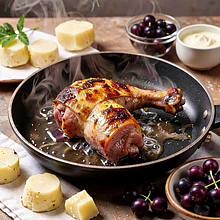
To achieve a crispy skin, remove the thighs from the fat and drain excess fat with a paper towel. Heat a grill pan or cast iron skillet over high heat. Place the thighs skin side down and press gently — cook for 3–5 minutes until the skin becomes golden and crispy. Flip for 30 seconds to warm the bottom.
Serving
On a heated plate, arrange 3–4 young potato dumplings, placing a duck leg skin-side up next to them. Drizzle gently with 2–3 tablespoons of blackcurrant sauce (about 40–60 g of sauce per serving). Garnish with fresh dill and a sprig of thyme. Serve immediately to keep the skin crispy.
Fun Fact
The confit technique originates from France, where meat was traditionally preserved by immersing it in fat. In Poland, similar fatty methods were used to preserve pork — here we combine both heritages by adding local fruits.
Best for
Tips
Serve the thighs immediately after crisping the skin. A tablespoon of sour cream or diluted Greek yogurt also pairs well with the sauce if you prefer a milder flavor. As a side, I suggest a salad of lamb's lettuce and grilled zucchini or asparagus lightly drizzled with lemon.
Store the sauce in an airtight container in the refrigerator for up to 3 days; before serving, heat it gently and add butter to restore its shine. The confit duck can be stored submerged in fat in the refrigerator for up to 3 days — the fat protects the meat. Dumplings are best eaten immediately; they can be chilled for up to 24 hours and then pan-fried again in butter.
📸 Cooked by the community
Log in to add a photoAdd a photo of the finished dish
After moderator approval, you will receive 10 experience points.
No one has added a photo yet. Be the first!
Comments (0)
Be the first to comment on this recipe!
Add a comment