Menu

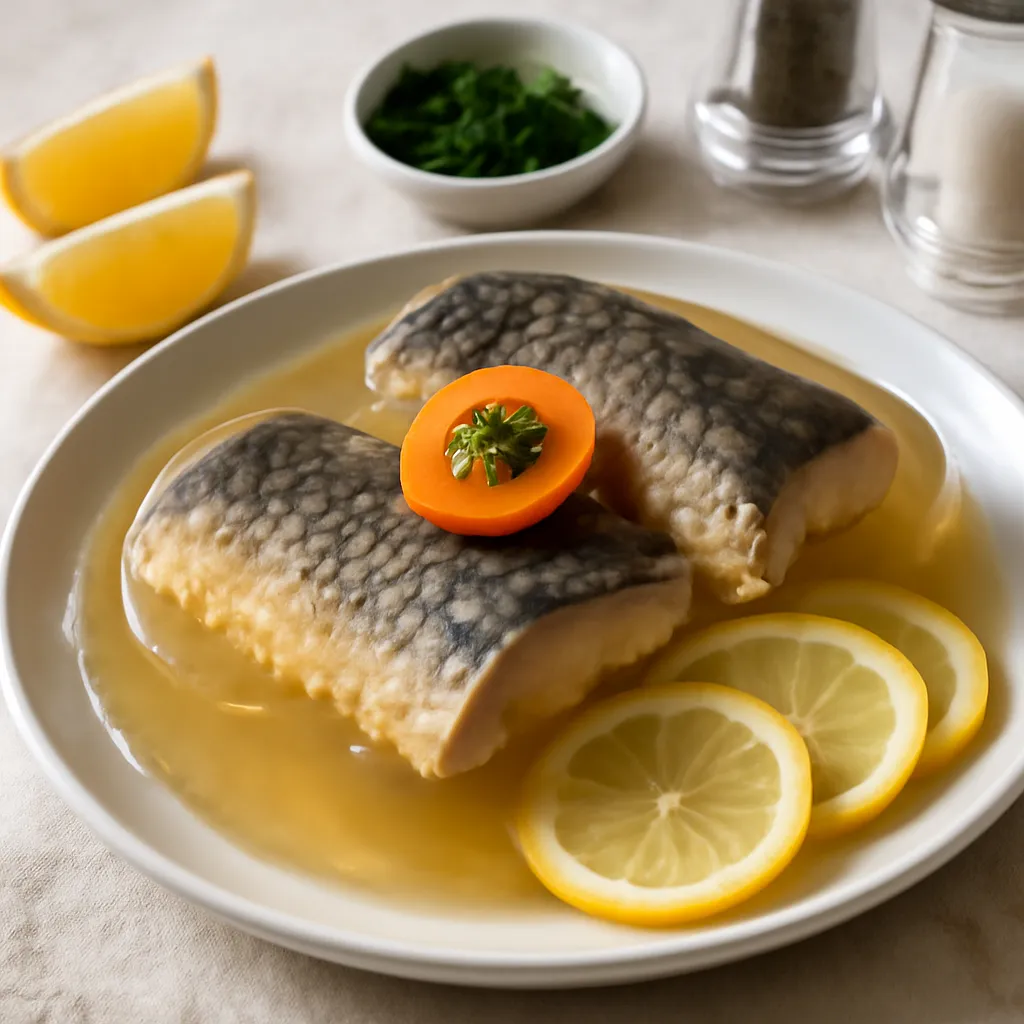
Carp in jelly

Christmas Eve Dinner Main Dishes 360 min Medium 15 wyświetleń ~86.92 PLN - (0)
Rate:
(0)

Description

Traditional carp in jelly is a classic Christmas dish in many Polish homes — delicate fillets of carp arranged in a clear, aromatic vegetable-fish jelly. It originates from the tradition of using a collagen-rich broth made from fish heads, skin, and bones, which naturally sets when cooled or with the help of a small amount of gelatin. The dish has a subtle, slightly sour taste thanks to the addition of lemon, a pleasant aroma from allspice and bay leaves, and a decorative appearance — red carrots, green parsley, and slices of hard-boiled eggs beautifully contrast with the clear jelly. Serve chilled as one of the dishes on the Christmas table, with fresh bread or as an elegant appetizer on the festive table.

Składniki (14)

Servings:
6
  • Carp 1600 g
  • Water 2000 ml
  • Carrot 2.5 szt.
  • Parsley root 1 szt.
  • Celery root 100 g
  • Onion 1 szt.
  • Lemon juice 50 ml
  • 🌿 Przyprawy
  • Bay leaf 10 szt.
  • Allspice 6 g
  • Whole pepper 5 g
  • Salt 10 g
  • ✨ Opcjonalne
  • Gelatin 15 g
  • Parsley 0.7 pęczek
  • Egg 3 szt.
💰 Szacowany koszt dania: ~86.92 PLN (14.49 PLN/porcję)

💡 Kliknij na składnik aby oznaczyć jako użyty

Preparation steps

Preparing the fish

1

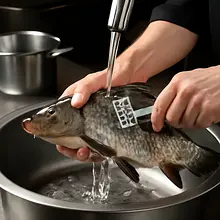
Check the fish: if you bought a whole carp, wash it under cold running water. Remove the scales by holding the fish with one hand and using a knife to scrape from the tail towards the head at a slight angle (scraping outward). Cut open the belly from the anus to the gills and remove the entrails — gently discard the hidden dark blood membrane. Cut off the gills (they are bitter) and detach the head from the body if you want to cook parts separately for the broth (keep the head and bones for the broth). Cut the body into 6-8 portions (each about 200-250 g of meat) — make vertical cuts across the spine. Rinse the pieces gently and pat dry with paper towels.

Ingredients: Carp
Use a sharp filleting knife and secure the board with a non-slip mat. Disposable gloves can make cleaning easier. If you don't feel confident, ask the seller to clean the fish.
Preparation of vegetables and spices

2

Peel the carrot, parsley root, and celery. Cut the carrot into slices 3-5 mm thick (it looks nice in the jelly). Leave the parsley and celery in larger pieces (about 3-4 cm) so they can be easily removed from the broth. Cut the onion in half and place the halves on a hot, dry skillet — char them with the dark (not burning) side until browned (about 2-3 minutes on each side). The roasted onion will give a nice color to the broth.

Ingredients: Carrot, Parsley root, Celery root, Onion
Use a sharp knife and cutting board. For browning the onion, a cast iron or stainless steel pan heated to medium-high temperature is best. Do not leave the browning onion unattended.

Preparing the broth

3

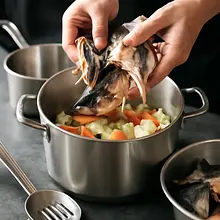
In a large pot (capacity 4-6 l), place the fish heads, bones, and skin (if any), along with the prepared vegetables, charred onion, bay leaves, allspice, and whole peppercorns. Pour in 2000 ml of cold water — starting with cold water helps achieve a clear broth. Add 6 g of salt (some salt will be added later). Bring to a boil over high heat (about 8-12 minutes) and during the first 10 minutes, regularly skim off the foam that forms with a slotted spoon to keep the broth clear. Once boiling, reduce the heat to a very gentle simmer (small bubbles) and cook for 30-40 minutes — the broth should not boil vigorously, as it will become cloudy.

Ingredients: Carp, Water, Carrot, Parsley root, Celery root, Onion, Bay leaf, Allspice, Whole pepper, Salt
Use a pot with a wide base so that the broth has contact with a larger surface area and cooks evenly. Regularly skim off the foam — this is key to clarity. Do not boil too vigorously.

Cooking Carp

4

Remove the fish parts needed for the broth (bones, head) after 30-40 minutes of cooking the broth. Strain the broth through a fine sieve lined with cheesecloth into another pot. Bring this broth to a gentle boil. Place the portions of carp (fillets/pieces) into a separate, wide pot with hot but not boiling broth — poach for 6-8 minutes (time depends on the thickness of the pieces) until the meat becomes opaque and easily separates from the bones. Gently remove with a slotted spoon and set aside on a plate to cool slightly; reserve the thick broth for the jelly.

Ingredients: Carp, Water
For cooking pieces of carp, it's best to use a wide, flat pot so that the pieces do not stack on top of each other. Lift a piece with a fork — it should flake apart and not be rubbery. Do not cook for too long (no more than 10 minutes), as the meat will become dry.

Seasoning and clarifying the broth

5

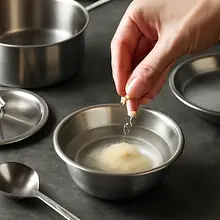
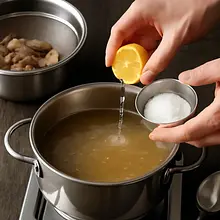
After straining the broth, season to taste: add the remaining salt (a total of about 10 g) and lemon juice (50 ml) gradually — taste as you go. If the broth does not naturally gel (check by placing a teaspoon of hot broth in a bowl and chilling it in the fridge for 10-15 minutes), consider using gelatin. If the broth is slightly gelled after cooling — gelatin is not needed.

Ingredients: Salt, Lemon juice
Try the broth after it has cooled; remember that cold jelly tastes more intense. Add lemon juice gradually — too much will make the jelly too acidic. For the density test, use a small amount of broth in a metal teaspoon and chill it.

Preparing gelatin (optional)

6

If the broth does not gel naturally, soak 15 g of gelatin in 60 ml of cold water for 5-10 minutes (this is called blooming). After blooming, dissolve the gelatin in a small saucepan over very low heat or in a water bath — do not let it boil (about 1-2 minutes), until it becomes clear and liquid. Then, add the dissolved gelatin to the hot, filtered broth and mix thoroughly.

Ingredients: Gelatin, Water
Use a small saucepan and a whisk. The gelatin must not boil (boiling causes a loss of gelling properties). If you don't have gelatin, you can reduce the broth longer to about 1200 ml to achieve natural gelling.

Preparing the pan and decoration

7

Choose a mold (loaf pan, bowl, or deep platter) with a capacity of about 2-3 liters. Line the bottom and sides with nice slices of carrot and pieces of cooked celery, as well as half-slices of hard-boiled egg (if using). Arrange the pieces of carp evenly, skin side down or in a way that creates an aesthetic effect when removed. You can tuck in sprigs of parsley between the pieces (optional).

Ingredients: Carrot, Celery root, Egg, Parsley, Carp
Use a mold with smooth sides (metal or glass), it will be easier to remove the jelly. If you are using a plastic mold, make sure it is suitable for cold dishes.

Pouring and cooling

8

Pour the hot, but not boiling, broth with gelatin (if used) or concentrated broth carefully through a sieve directly onto the arranged pieces of carp in the mold. To prevent air bubbles and splashing, pour the broth slowly, using a spoon turned in the direction of pouring (pour onto the spoon, and it will disperse the stream). Leave to cool at room temperature for 30-60 minutes, then place in the refrigerator and chill for at least 6-8 hours (preferably overnight) until the jelly is completely set.

Ingredients: Water, Carp, Gelatin
Do not cover the mold immediately — first, let it cool at room temperature. Preliminary cooling prevents rapid condensation of steam, which could make the jelly cloudy.

Removing from the mold and serving

9

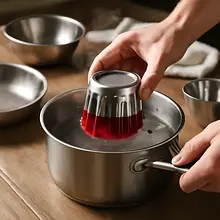
To remove the jelly, dip the mold in warm (not hot) water for a few seconds, just enough for the edges to warm slightly — do not soak for longer than 10 seconds. After removing, run a thin knife around the edge, turn the mold over a plate, and gently shake. If the jelly does not come out, repeat the brief dip. Garnish with fresh parsley and slices of hard-boiled egg. Cut into portions and serve cold.

Ingredients: Parsley, Egg, Carp
To remove, it's best to use a flat plate on which you will immediately serve the jelly. Do not use boiling water — it will melt the jelly and lose its clarity.

Storage

10

Store the carp in jelly in the refrigerator covered with plastic wrap or in an airtight container. It tastes best chilled within 2-3 days. If the jelly seems too firm after a few days, you can drizzle a portion with a bit of warm broth before serving to slightly soften it.

Ingredients: Carp
Do not freeze the jelly — the texture will be ruined after thawing. Keep the refrigerator temperature around 2-4°C.

Fun Fact

💡

In traditional Polish cuisine, carp was a symbol of abundance on the Christmas Eve table; in the past, this fish was raised in manor ponds, and carp jelly was a way to use the whole fish, including the heads and bones, which give the broth a natural gelatinous texture.

Best for

Tips

🍽️ Serving

Carp in jelly tastes best when chilled. When cutting portions, use a sharp, thin knife soaked in hot water to achieve even slices. Serve with fresh bread or rolls and add Silesian mustard or horseradish on the side for those who prefer a bolder flavor.

🥡 Storage

Store in the refrigerator covered with plastic wrap or in an airtight container for 2-3 days. Do not freeze. If the jelly is very firm after cooling, before serving, drizzle a portion with a small amount of warm (not hot) broth to soften the texture.

📸 Ugotowane przez społeczność

Zaloguj się, aby dodać zdjęcie
Dodaj zdjęcie gotowej potrawy

Po zatwierdzeniu przez moderatora otrzymasz 10 punktów doświadczenia.

🍲

Nikt jeszcze nie dodał zdjęcia. Bądź pierwszy!

Comments (0)

Be the first to comment on this recipe!

Add a comment

You might also like

Recipe Categories

Christmas Eve is the most important evening of the year - a time for tradition, family, and special dishes. Our collection of Christmas Eve recipes includes all 12 traditional dishes: from red borscht with dumplings to poppy seed cake and kutia. Recipes for carp in various versions: fried, baked,...

See all recipes in this category
Main Dishes
Main Dishes in: Christmas Eve Dinner

Main courses are the heart of every meal - hearty, delicious, and full of nutrients. Meats: beef, pork, poultry, and lamb in various versions. Fish and seafood: baked, fried, grilled, and stewed. Vegetarian dishes: tofu, tempeh, legumes as the main protein. Casseroles: pasta, potato, vegetable wi...

See all recipes in this category
Reklama