Preheat the oven to 200°C (fan). Thoroughly wash the pumpkin, cut it in half, and use a spoon to remove the seeds and fibrous flesh. Place the pumpkin halves on a baking sheet lined with parchment paper, skin side up. Put them in the oven and bake for about 30-40 minutes. The pumpkin is ready when a fork easily pierces the flesh and the skin is slightly wrinkled.
Description
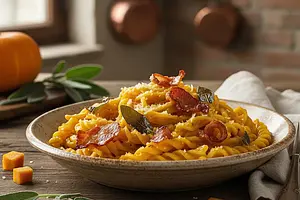
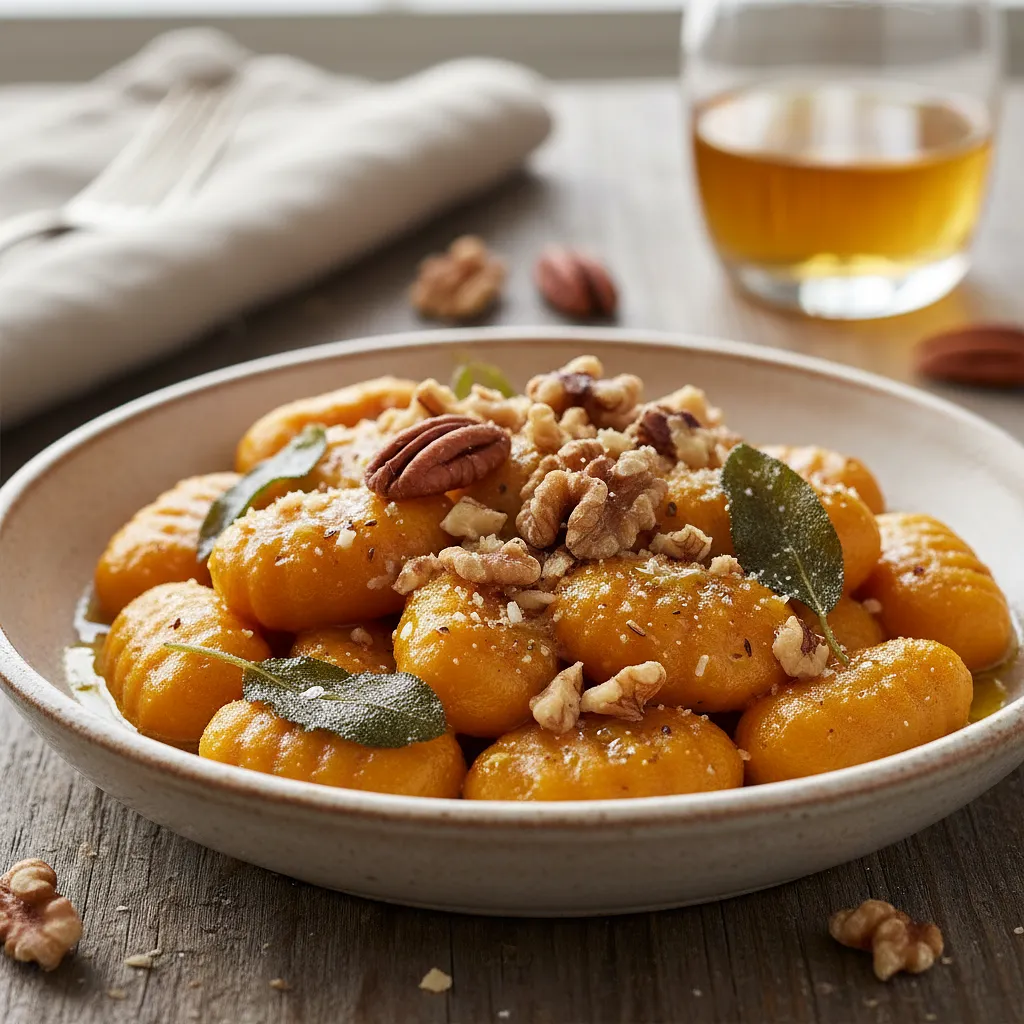
This is a unique dish that is the essence of autumn on a plate. Gnocchi, or small Italian dumplings, in this version gain a beautiful golden color and a subtly sweet flavor thanks to the addition of Hokkaido pumpkin purée. Their fluffy and soft texture perfectly contrasts with the velvety, nutty taste of browned butter, in which crispy aromatic sage leaves are fried. The dish is completed with toasted walnuts, adding crunch, and freshly grated Parmesan, which introduces a salty, deep umami note. The dish is not only incredibly tasty but also visually impressive, making it an ideal choice for an elegant dinner, a family lunch, or a gathering with friends when you want to serve something unique yet hearty and comforting.
Składniki (11)
- Hokkaido pumpkin 1000 g
- Starchy potatoes (type c) 500 g
- Type 00 wheat flour 200 g
- Egg (size L) 1 szt.
- Butter (min. 82% fat) 100 g
- Fresh sage 0.5 pęczek
- Walnuts 50 g
- Ser parmezan (parmigiano reggiano) 50 g
- 🌿 Przyprawy
- Sól drobnoziarnista 1 łyżeczka
- ✨ Opcjonalne
- Ground nutmeg 1 łyżeczka
- Pieprz czarny świeżo mielony 2 szczypty
💡 Kliknij na składnik aby oznaczyć jako użyty
Preparation steps
Preparation of the purée
While the pumpkin is baking, prepare the potatoes. Scrub them thoroughly, but do not peel. Place them in a pot, cover with cold water so that they are completely submerged, and add a generous pinch of salt. Cook until tender, which will take about 20-25 minutes from the moment it starts boiling. Check for doneness by piercing a potato with a fork - it should slide in and out smoothly.
Remove the baked pumpkin from the oven and set aside for 10-15 minutes to cool slightly. Then, using a spoon, scoop out all the flesh into a bowl. Drain the cooked potatoes and peel them while they are still hot (be careful not to burn yourself!). Pass the hot potatoes through a potato ricer directly into the bowl with the pumpkin. Mix thoroughly and spread the mixture on a large tray or plate to cool completely as quickly as possible. The mixture must be cold before adding the flour.
Dough for gnocchi
On a clean, dry surface or countertop, sprinkle about 150g of flour, forming a wide mound. Make a large well in the center. Transfer the completely cooled pumpkin and potato mixture into the well. Crack an egg, add salt, and if using, a pinch of nutmeg. Using a fork or your fingertips, gently beat the egg and start gradually incorporating the vegetable mixture into the center, then slowly fold in the flour from the edges.
When the ingredients start to come together, begin to gently knead the dough. Use mainly the palms of your hands, pushing the dough away from you and folding it in half. Knead the dough only until it is smooth and uniform, but still very soft and slightly sticky. This process should not take longer than 3-4 minutes. If the dough sticks strongly to your hands, add a little more flour (from the remaining 50g), but do so sparingly.
Shaping the gnocchi
Form a ball from the dough, then divide it into 4 equal parts using a dough scraper or knife. On a lightly floured surface, gently roll each part with your hands to create a long roll with a diameter of about 2 cm. Try not to press too hard to avoid compacting the dough.
Using a knife or scraper, cut each roll into small pieces about 2-2.5 cm long, creating small 'pillows'. Place the finished gnocchi on a tray or board generously sprinkled with flour, leaving small gaps between them so they don't stick together.
To give the gnocchi their characteristic shape, take a fork and place it tines down on the countertop. Gently roll each dumpling over the tines of the fork while lightly pressing it with your thumb. Grooves will form on one side, and a small indentation on the other. This step is optional, but it helps the sauce adhere better to the dumplings.
Cooking and sauce
In a large, wide pot, bring at least 4 liters of water to a boil. When the water boils, add a generous tablespoon of salt (the water should be as salty as the sea). Prepare a large sauce pan and serving plates.
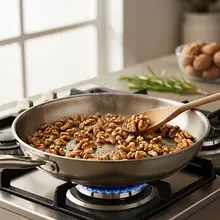
In a dry, medium skillet, toast the walnuts over medium heat for 2-3 minutes, stirring frequently, until they become fragrant and lightly browned. Remove them from the skillet and set aside. In the same skillet, melt the butter over medium heat. Once the butter has melted and starts to foam, add the whole sage leaves. Heat, gently stirring, for about 3-4 minutes. The butter will begin to brown and release a rich, nutty aroma, and the sage leaves will become crispy. Remove the skillet from the heat as soon as the butter reaches an amber color.
When the sauce is ready, drop the first batch of gnocchi (about 1/4 of the total) into boiling, salted water. Gently stir to prevent them from sticking to the bottom. Cook for about 2-3 minutes. The gnocchi are ready when they float to the surface. From this point, cook them for another 30-60 seconds. Use a slotted spoon to remove them and immediately transfer them to the pan with warm sage sauce. Repeat the process with the remaining batches of gnocchi.
Once all the gnocchi are in the pan, gently heat everything over low heat, shaking the pan so that each dumpling is coated in the sauce. Divide the gnocchi onto plates. Sprinkle each serving with toasted walnuts, freshly grated Parmesan, and, if you like, freshly ground black pepper. Serve immediately.
Fun Fact
The word 'gnocchi' in Italian means 'lumps' or 'knots'. Although today they are mainly associated with potatoes, their history is much older. The original versions were made with flour, breadcrumbs, or semolina, and potato gnocchi became popular in Europe only after potatoes were brought from America in the 16th century.
Best for
Tips
Serve immediately while the gnocchi are hot and fluffy. To balance the richness of the dish, serve it with a simple arugula salad dressed with a vinaigrette made from lemon juice. A glass of chilled, dry white wine, such as Pinot Grigio or Sauvignon Blanc, pairs perfectly.
Gnocchi taste best fresh after cooking. If you want to prepare them in advance, you can freeze the raw dumplings. Arrange them in a single layer on a floured tray, place in the freezer for 1-2 hours, and then transfer to a ziplock bag. Cook from frozen by dropping them straight into boiling water (they will need an additional 1-2 minutes of cooking time).
📸 Ugotowane przez społeczność
Zaloguj się, aby dodać zdjęcieDodaj zdjęcie gotowej potrawy
Po zatwierdzeniu przez moderatora otrzymasz 10 punktów doświadczenia.
Nikt jeszcze nie dodał zdjęcia. Bądź pierwszy!
Comments (0)
Be the first to comment on this recipe!
Add a comment