Preheat the oven to 200°C (top and bottom heat). Carefully cut the butternut squash in half lengthwise. Use a sharp, large knife and a stable cutting board. Scoop out the seeds and fibrous flesh from the center with a spoon. Place the squash halves on a baking sheet lined with parchment paper, skin side down. Drizzle the flesh with half of the olive oil (about 15g), then sprinkle with salt and pepper.
Description
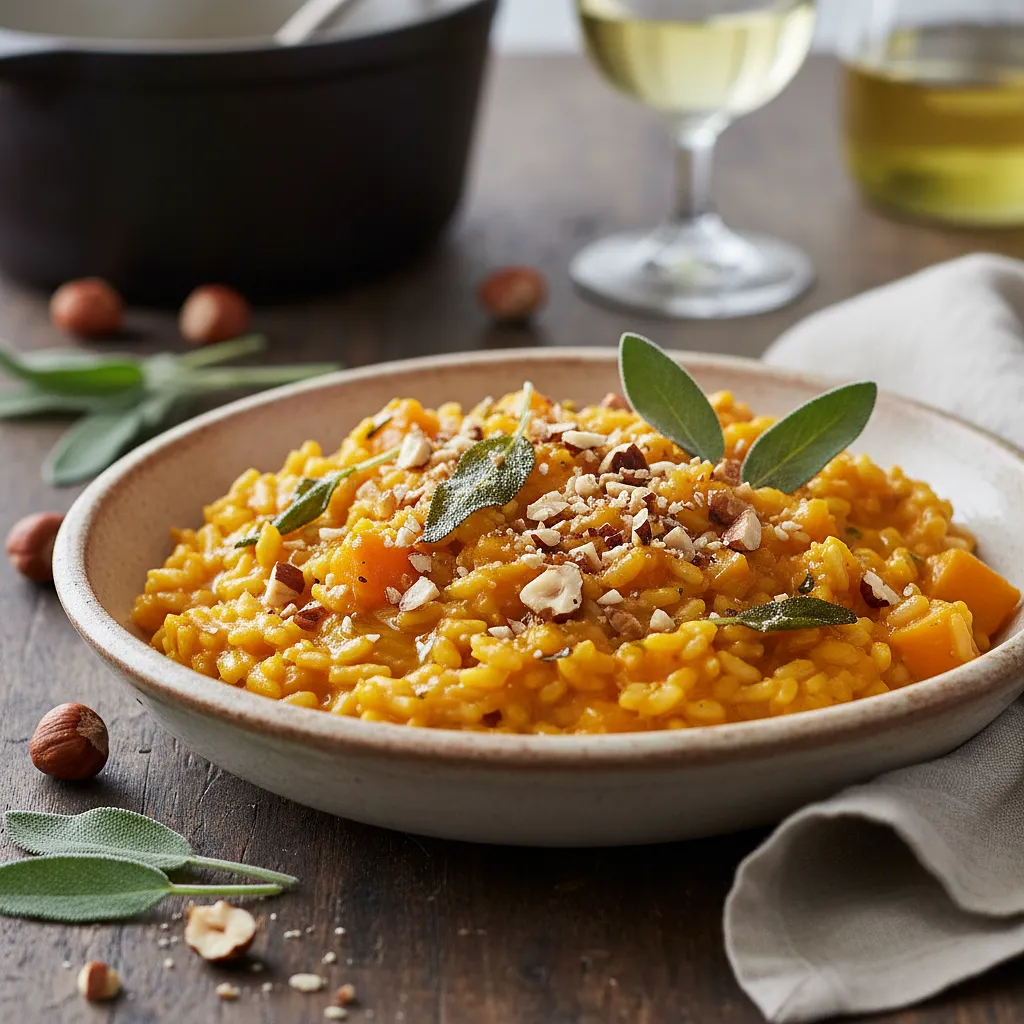
This dish is the essence of autumn captured in a single plate. Velvety, creamy risotto, with its deep, sweet flavor coming from roasted butternut squash, is perfectly balanced by the earthy, slightly peppery aroma of fresh sage. Each bite is a combination of perfectly cooked 'al dente' rice with melting squash purée, enriched by the salty, nutty taste of Parmesan. Crunchy, golden toasted hazelnuts provide an excellent textural contrast. The risotto has a beautiful, warm orange color that pleases the eye even before the first taste. It is the perfect dish for cooler evenings, warming and satisfying, while also being an elegant option for lunch or dinner, even for guests. It can serve as a standalone vegetarian dish or a side to roasted poultry.
Składniki (14)
- Arborio rice 300 g
- butternut squash 800 g
- Vegetable broth 1200 ml
- Onion 1 szt.
- Białe wytrawne wino 100 ml
- Parmesan cheese 50 g
- Butter 45 g
- Extra virgin olive oil 0.2 łyżek
- Fresh sage 0.5 pęczek
- Garlic 2 ząbki
- 🌿 Przyprawy
- Salt 0.2 szczypt
- Pieprz czarny świeżo mielony 2 szczypty
- ✨ Opcjonalne
- Hazelnuts 40 g
- Nutmeg 2 szczypty
💡 Kliknij na składnik aby oznaczyć jako użyty
Preparation steps
Preparing the pumpkin
Place the baking tray with the pumpkin in the preheated oven. Bake for about 30-40 minutes. The baking time depends on the size of the pumpkin. To check if it's ready, pierce the flesh with a fork – it should go in very easily, with no resistance. Remove the pumpkin from the oven and set aside to cool slightly.
When the pumpkin has cooled enough to be safely touched, use a large spoon to scoop out all the baked flesh, separating it from the skin. Transfer the flesh to a bowl and mash it thoroughly with a fork until smooth. You can also use an immersion blender for an even creamier consistency. Set the purée aside.
Preparation of toppings
While the pumpkin is baking, prepare the rest of the ingredients. If you are using hazelnuts, place them in a dry, small skillet. Toast over medium heat, shaking the skillet frequently, for 3-5 minutes, until they become golden and start to smell fragrant. Transfer the hot nuts to a clean kitchen towel, wrap it up, and rub vigorously to remove as many of the brown skins as possible. Coarsely chop the nuts and set aside.
Peel the onion and chop it into very small cubes (known as brunoise). Peel the garlic and finely chop it. Wash and dry the sage leaves. Set aside 6-8 of the prettiest leaves for decoration, and finely chop the rest. Grate the Parmesan cheese using the small holes of a grater.
Cooking risotto
Pour the entire vegetable broth into a medium pot and place it on a low burner. Heat until hot, then maintain a gentle simmer throughout the cooking of the risotto.
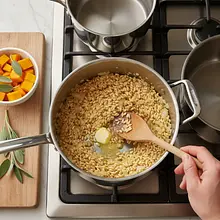
In a large, wide pot or deep skillet with a thick bottom, heat the remaining olive oil (15g) and half of the butter (about 25g) over medium heat. When the butter has melted, add the diced onion. Sauté, stirring with a wooden spoon, for about 5-7 minutes, until the onion becomes soft and translucent, but not browned. Add the chopped garlic and chopped sage, and sauté for another minute until fragrant.
Add Arborio rice to the pot with the onion. Increase the heat slightly and stir vigorously for about 2 minutes. Each grain of rice should be coated in fat and become slightly translucent at the edges, with a white, opaque center (the so-called 'pearl'). This process is called 'tostatura'.
Pour the white wine into the pot. Stir constantly, scraping any browned bits from the bottom, until the wine has completely evaporated and the strong smell of alcohol is gone. This should take about 1-2 minutes.
Reduce the heat to medium-low. Using a ladle, pour the first portion of hot broth over the rice – just enough to barely cover the rice. Stir slowly and almost continuously until the rice absorbs all the liquid. Only then add another ladle of broth. Repeat this process patiently.
After about 10 minutes of cooking, when you have used up about half of the broth, add the previously prepared pumpkin purée to the rice. Mix thoroughly to combine it with the rice. Continue adding broth, ladle by ladle, while stirring, for another 8-10 minutes.
Finishing and Serving
After about 18-20 minutes of total cooking time, taste the rice. It should be soft on the outside but have a slight bite in the center (al dente). The consistency of the entire dish should be fluid and creamy, 'flowing' off the spoon, not thick and dense. If the rice is still hard, add a bit more broth and continue cooking, tasting every minute.
Remove the pot from the heat. Add the remaining butter (about 20g) cut into small pieces and grated Parmesan cheese. Season to taste with salt, freshly ground pepper, and, if using, freshly grated nutmeg. Stir vigorously for about 30 seconds until the butter and cheese are completely melted, creating a silky emulsion. This process is called 'mantecatura'.
Cover the pot with a lid and let the risotto rest for 1-2 minutes. This will allow the flavors to meld and the consistency to stabilize.
Spoon the risotto into deep plates, preferably warmed. Decorate each portion by sprinkling it with toasted hazelnuts, reserved leaves of fresh sage, and an extra pinch of grated Parmesan. Serve immediately.
Fun Fact
The technique of vigorously incorporating fat (butter, cheese) at the very end of cooking risotto is called 'mantecatura'. This word comes from the Spanish 'manteca' (butter) and is the secret to the characteristic creamy and 'wavy' (in Italian 'all'onda') consistency of the dish.
Best for
Tips
Serve the risotto immediately after preparation, in deep, warmed plates. It can be drizzled with a bit of high-quality olive oil or hazelnut oil for added aroma. It pairs perfectly with a glass of the same white wine used for cooking, such as chilled Pinot Grigio.
Risotto tastes best when fresh. Leftovers can be stored in an airtight container in the fridge for up to 2 days. To reheat, add a little broth, water, or milk to the pan and warm over low heat, gently stirring until it regains its creamy consistency. You can also shape the risotto leftovers and fry delicious Sicilian rice balls - arancini.
📸 Ugotowane przez społeczność
Zaloguj się, aby dodać zdjęcieDodaj zdjęcie gotowej potrawy
Po zatwierdzeniu przez moderatora otrzymasz 10 punktów doświadczenia.
Nikt jeszcze nie dodał zdjęcia. Bądź pierwszy!
Comments (0)
Be the first to comment on this recipe!
Add a comment