Menu

Crispy Half-Puff Pastries with Cabbage and Mushrooms

Christmas Appetizers Cakes and Bakes Appetizers 210 min Medium 13 wyświetleń ~35.76 PLN - (0)
Rate:
(0)

Description

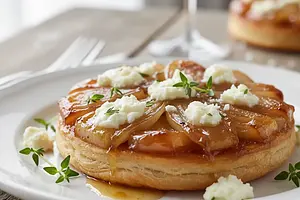
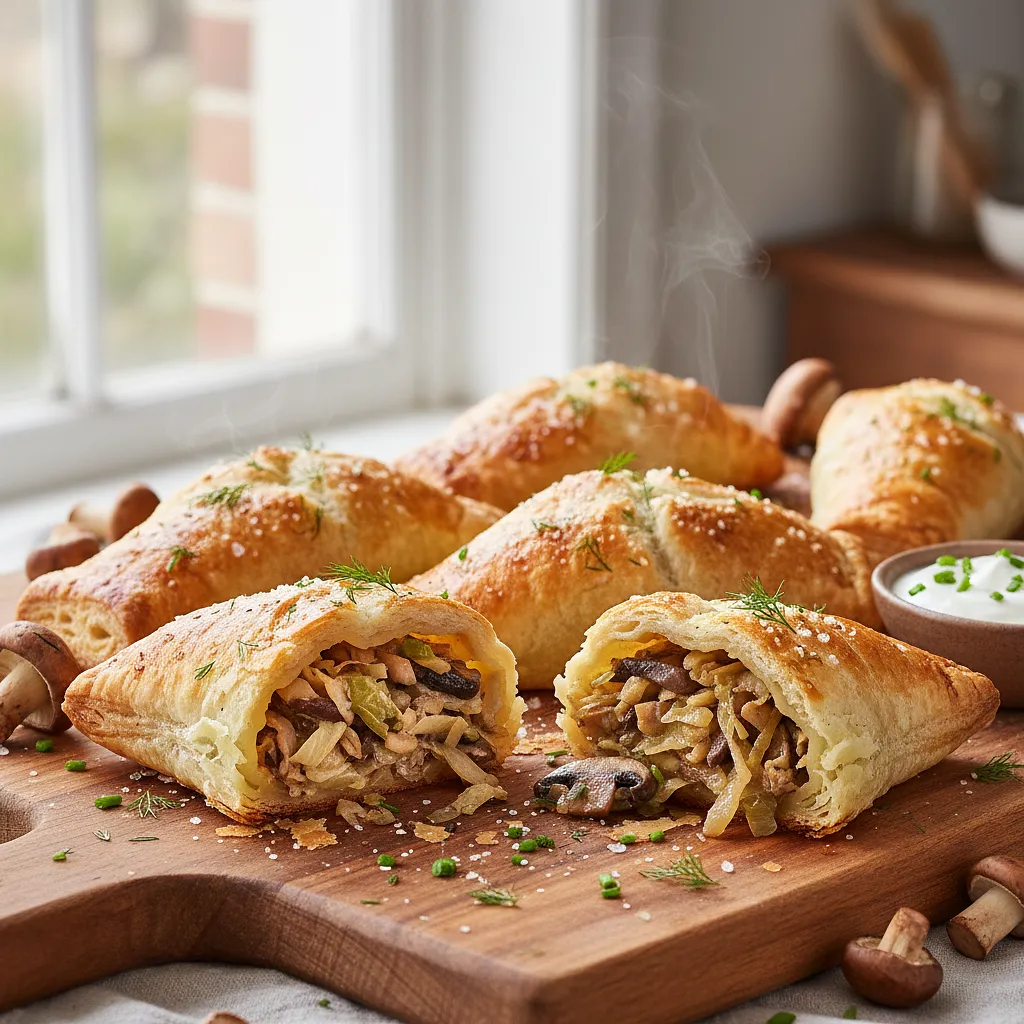
Cabbage and mushroom pastries are an absolute classic of Polish cuisine, an inseparable element of the Christmas Eve table, traditionally served with clear, rich red borscht. This recipe is a tribute to tradition in a modern, refined version. The secret is the half-puff pastry, which, thanks to the technique of cutting cold fat into the flour and gentle folding, achieves an extraordinary, flaky structure. It is wonderfully buttery, crispy, and melts in your mouth, while being much simpler to prepare than classic puff pastry. The filling is the essence of flavor – intensely mushroomy thanks to dried porcini, with perfectly balanced acidity from sauerkraut, complemented by the sweetness of slowly sautéed onions. The whole is seasoned with marjoram, which adds herbal depth. Visually, the pastries look incredibly appetizing – small, neat rectangles with a golden-brown, glossy crust from the egg yolk, often sprinkled with caraway seeds or black cumin. This dish creates the atmosphere of holidays and family gatherings.

Składniki (14)

Servings:
6
  • Mąka pszenna tortowa typ 450 500 g
  • Butter 200 g
  • Gęsta kwaśna śmietana 18% 75 g
  • Egg yolk 2.2 szt.
  • Sauerkraut 500 g
  • Dried porcini mushrooms 30 g
  • Mushrooms 250 g
  • Onion 2 szt.
  • Rapeseed oil 30 g
  • Milk 3.2% 15 ml
  • 🌿 Przyprawy
  • Salt 8 g
  • Dried marjoram 2 łyżeczki
  • Pieprz czarny świeżo mielony 2 szczypty
  • ✨ Opcjonalne
  • Whole caraway seeds 1 łyżeczka
💰 Szacowany koszt dania: ~35.76 PLN (5.96 PLN/porcję)

💡 Kliknij na składnik aby oznaczyć jako użyty

Preparation steps

Preparation of the Filling

1

Start by preparing the mushrooms. Place the dried porcini in a small bowl and cover them with about 200 ml of boiling water, ensuring they are completely submerged. Set aside for at least 30 minutes to soften and release their aroma. Keep the soaking water, as it is a valuable essence of flavor!

Ingredients: Dried porcini mushrooms
Use a glass or ceramic bowl. After soaking, the mushrooms will increase in volume. Do not pour out the soaking water – you will add it later to the filling to enhance the flavor.
2

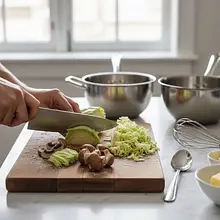
Drain the sauerkraut of excess juice. If it is very sour, you can rinse it in a sieve under cold water. Keep the juice – it can be used to season borscht. Finely chop the drained sauerkraut on a cutting board. Transfer to a pot, cover with water halfway up, add a pinch of salt, and cook on low heat covered for about 30-40 minutes, until soft. Finally, drain thoroughly in a sieve.

Ingredients: Sauerkraut, Salt
Use a sharp chef's knife to chop the cabbage. The finer it is chopped, the denser the filling will be. Do not cook the cabbage for too long, so it doesn't lose all its texture.
3

In the meantime, prepare the rest of the filling ingredients. Peel the onion and chop it into small cubes. Clean the mushrooms with a damp cloth (do not wash under water, as they will soak up moisture) and grate them on a coarse grater. Drain the soaked porcini mushrooms (remember to keep the water!) and chop them very finely.

Ingredients: Onion, Mushrooms, Dried porcini mushrooms
Use a very sharp knife to chop the onion to minimize tearing. If you don't want to grate the mushrooms, you can finely chop them instead – this will give you pieces of varying sizes in the filling.
4

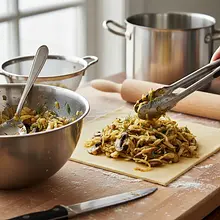
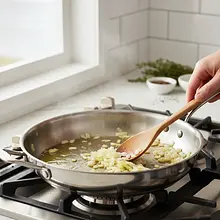
In a large skillet, heat the oil. Add the chopped onion and sauté over medium heat for 6-8 minutes, stirring occasionally, until it becomes translucent and lightly browned. Add the grated mushrooms, increase the heat, and sauté for another 5-7 minutes, until all the water evaporates and the mushrooms start to brown. Add the chopped porcini mushrooms and sauté for another 2 minutes. Finally, combine the contents of the skillet with the cooked cabbage. Pour in the reserved mushroom soaking water, add marjoram crushed in your hands, freshly ground pepper, and salt to taste. Mix and simmer everything over low heat uncovered for 5-10 minutes, until the flavors meld and the filling thickens. Set aside to cool completely.

Ingredients: Rapeseed oil, Onion, Mushrooms, Dried porcini mushrooms, Sauerkraut, Dried marjoram, Pieprz czarny świeżo mielony, Salt
The best option is a large, deep pan, such as a wok or sauté pan. The filling must be completely cold before being placed on the dough; otherwise, it will melt the butter and the pastries will not flake.

Half-Puff Pastry

5

Prepare the dough. Sift the flour onto a large work surface or into a large bowl. Add salt and mix. Take the very cold butter out of the fridge and cut it into small cubes (about 1x1 cm). Scatter the butter cubes over the flour.

Ingredients: Mąka pszenna tortowa typ 450, Salt, Butter
Sifting the flour is key to the lightness of the dough. Use a sieve or a special sifter. The butter must be as hard as a rock – you can even put it in the freezer for 15 minutes before cutting.
6

Now the most important step: chopping. Using a large knife or a special pastry cutter, vigorously chop the butter with the flour. Make quick, decisive movements, incorporating the flour into the butter. Chop until small lumps of butter surrounded by flour form, resembling wet sand with small pebbles. The lumps of butter should be the size of pea grains.

Ingredients: Mąka pszenna tortowa typ 450, Butter
Do not touch the dough with your hands to avoid warming the butter! The goal is for the pieces of butter to remain whole in the dough. As they melt during baking, they will create steam and layer the dough. If you don't have a pastry cutter, you can use two knives.
7

Make a well in the center of the mound. Crack one egg yolk into it and add the thick cream. Now, very quickly, using a knife or a cold spoon, start to fold the dry ingredients into the center, mixing them with the wet ones. When the ingredients begin to combine, set aside the tools and knead the dough with your hands into a uniform, but still slightly lumpy ball. Do not knead for long – just until the ingredients are combined.

Ingredients: Egg yolk, Gęsta kwaśna śmietana 18%
Work very quickly! The shorter the dough is in contact with the warmth of your hands, the better the result. The dough does not need to be perfectly smooth. Visible pieces of butter are desirable.
8

Flatten the formed ball of dough slightly, wrap it tightly in plastic wrap, and place it in the refrigerator for at least 60 minutes. Chilling the dough is absolutely crucial for the butter to harden again and for the gluten in the flour to rest.

Don't skip this step! Warm dough will stick, tear when rolling, and won't flake. You can prepare the dough a day in advance and leave it in the fridge overnight.

Shaping and Baking

9

Preheat the oven to 200°C (fan) or 220°C (top-bottom). Take the chilled dough out of the fridge. Lightly dust the work surface with flour. Divide the dough into two equal parts. Put one part back in the fridge and roll out the other part into a rectangle about 3 mm thick and measuring approximately 30x40 cm.

Work with one portion of dough at a time, keeping the rest cool. This will help the dough maintain the right temperature. Use a rolling pin, lightly dusting it with flour to prevent sticking.
10

On the rolled-out dough, along the longer side, place half of the completely cooled filling, forming a roll with a diameter of about 3-4 cm. Leave about 2 cm of margin from the edge. Now roll up the dough: first cover the filling with the shorter part of the dough, press lightly along the filling, and then roll everything to the end, creating a long, neat roll. Press the seam with your fingers to seal it.

Make sure the filling is spread evenly. Roll the dough quite tightly so there is no air inside. You can moisten the edge of the dough with a little water to help it stick better.
11

Prepare two large baking trays and line them with parchment paper. Using a sharp knife, cut the roll into pieces about 4-5 cm wide. Gently flatten each pastry with your hand and place them on the prepared tray, leaving small gaps between them. Repeat the entire procedure with the second portion of dough and the remaining filling.

Use a very sharp, thin knife. A dull knife will crush the layers of the dough. Cut in one decisive motion. Place the pastries seam side down.
12

In a small bowl, whisk the remaining egg yolk with one tablespoon of milk using a fork. Using a kitchen brush, brush the top of each pastry with the prepared glaze. If using, sprinkle the pastries with a little caraway.

Ingredients: Egg yolk, Milk 3.2%, Whole caraway seeds
Use a silicone brush – it's easy to clean. Brush thoroughly, but try to prevent the glaze from dripping down the sides onto the baking tray, as it can burn and stick the pastry to the paper, making it difficult to layer.
13

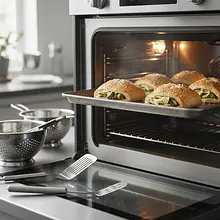
Place the tray with the pastries in the preheated oven. Bake for about 15-20 minutes, until the pastries rise beautifully, puff up, and take on a deep golden-brown color. Remove the baked pastries from the oven and let them cool for a moment on the tray, then transfer them to a rack to cool completely.

Every oven bakes differently, so keep an eye on the pastries towards the end of baking. They should be distinctly golden brown. Cooling on a rack prevents the bottom from steaming and keeps it crispy.

Fun Fact

💡

Pasty, also known as kulebiaks in the baked whole version, have their roots in Russian cuisine. They arrived in Poland in the 19th century and quickly adapted to our tables, becoming an inseparable element of Christmas Eve, served as an accompaniment to the meatless red borscht.

Best for

Tips

🍽️ Serving

The pastries taste best when warm, served just after baking. Traditionally, they are served alongside a cup of hot, clear red borscht. They can be gently dipped in the soup or enjoyed while sipping the borscht. They also make an excellent standalone snack.

🥡 Storage

Baked pastries can be stored in an airtight container at room temperature for up to 2 days or in the refrigerator for up to 4 days. To regain their crispness, they should be heated for 5-7 minutes in an oven preheated to 180°C. Avoid reheating in the microwave, as it will make them rubbery. They can also be frozen – both raw and baked.

📸 Ugotowane przez społeczność

Zaloguj się, aby dodać zdjęcie
Dodaj zdjęcie gotowej potrawy

Po zatwierdzeniu przez moderatora otrzymasz 10 punktów doświadczenia.

🍲

Nikt jeszcze nie dodał zdjęcia. Bądź pierwszy!

Comments (0)

Be the first to comment on this recipe!

Add a comment

You might also like

Recipe Categories

Christmas appetizers are an elegant start to the holiday dinner - delicate, exquisite, and beautifully presented. Herring in various versions: in oil, in cream, with apple and onion, in mustard sauce. Fish spreads, salmon mousse, and tartlets with caviar. Beetroot carpaccio, vegetable salad, and ...

See all recipes in this category

Homemade cakes and pastries are the heart of Polish culinary tradition - sweet memories from childhood. In our collection, you will find recipes for classic yeast cakes, shortcrust, sponge, and cheesecake. Apple pie, poppy seed cake, gingerbread, Easter babka, chocolate cake, and New York cheesec...

See all recipes in this category
Appetizers
Appetizers in: Christmas Eve Dinner

Appetizers open the meal and prepare the palate for the following dishes. In this category, we present elegant and tasty appetizers for every occasion. Our recipes include carpaccio, tartare, bruschetta, antipasti, and skewers. You will find both cold and warm appetizers here. We pay special atte...

See all recipes in this category

Christmas Eve dishes are the heart of Polish holiday tradition - 12 meatless dishes on the table. Fried, baked, jellied, and Jewish-style carp - the main star of Christmas Eve. Dumplings with cabbage and mushrooms - handmade according to grandma's recipes. Small mushroom-filled pockets for borsch...

See all recipes in this category
Reklama