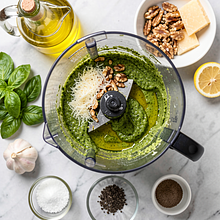
Prepare the ingredients for the pesto: tear the basil leaves from the stems (discard the stems or use them for broth). Weigh the walnuts (50 g), peel and crush or chop the garlic (10 g). Grate the Parmesan cheese on a fine grater. Measure the olive oil (30 g) and lemon juice (15 ml).
Description
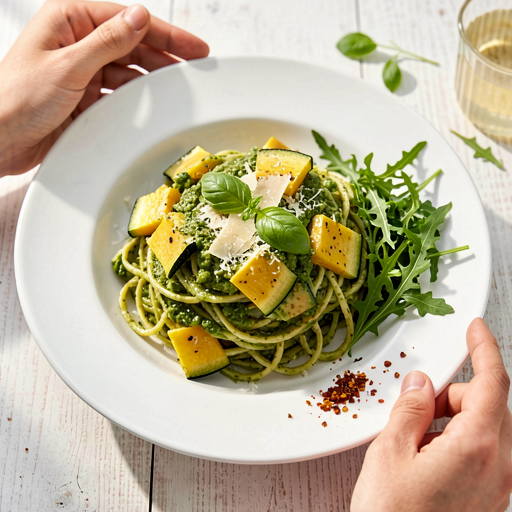
Light, summer pasta with pieces of sautéed zucchini and aromatic homemade basil pesto. The dish combines the Mediterranean character of pesto with the Polish simplicity of summer ingredients: fresh zucchini, fragrant basil, walnuts, and a splash of lemon juice for freshness. Serve as a quick main course or a light dinner — it looks impressive with its green colors and grated cheese. With a balanced texture (creamy pesto, firm pasta, slightly golden zucchini), the dish is filling but not heavy. It can easily be modified to a vegan version (omit the cheese, add more nuts, and a bit of nutritional yeast) or enriched with arugula and chili flakes for heat.
Ingredients Used
Ingredients (12)
- Pasta 400 g
- Zucchini 1.6 pcs (~400 g)
- Olive oil 30 ml
- Walnuts 50 g
- Parmesan cheese 60 g
- Garlic 2 clove (~10 g)
- Lemon juice 15 g
- 🌿 Spices
- Basil 30 g
- Salt 0.1 pinch (~4 g)
- Black pepper 4 pinch (~2 g)
- ✨ Optional
- Arugula 80 g
- Chili flakes 2 pinch (~2 g)
💡 Click an ingredient to mark it as used
Preparation steps
Pesto
Toast the walnuts in a dry skillet for 2-3 minutes over medium heat, shaking the pan continuously until you smell a stronger aroma and the skins are lightly browned. Be careful — the nuts can burn quickly. After toasting, transfer to a plate and let cool for 2-3 minutes.
Transfer to a blender or food processor: cooled nuts, basil leaves, garlic, 2/3 of the Parmesan cheese (leave the remaining part for sprinkling), lemon juice, and 2 tablespoons of olive oil (30 g is 2 tablespoons). Blend briefly in pulses to break down the ingredients. Then blend continuously, gradually adding the rest of the olive oil, until you achieve a smooth but still slightly grainy paste. If the pesto is too thick, add 1–2 tablespoons of pasta cooking water (you will prepare it later). Season with 1/2 teaspoon of salt and 1 pinch of pepper, taste, and adjust the amount of salt and lemon if necessary.
Main Dishes
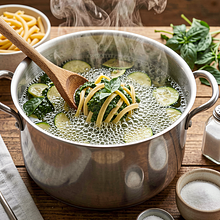
Place a large pot with water (at least 3–4 liters) on the stove. Bring to a boil and add 10 g of salt (about 1 tablespoon) — the water should be distinctly salty (like seawater). Add the pasta (400 g) and cook according to the package instructions minus 1 minute for al dente texture (usually 8–10 minutes). Stir occasionally with a wooden spoon to prevent the pasta from sticking. 30 seconds before the end of cooking, drain 120–150 ml of the cooking water and set it aside for the sauce.
While the pasta is cooking, prepare the zucchini: wash it and cut off the ends. Slice it into half-moons about 0.5 cm thick (if the skin is tender, do not peel). Heat a large skillet over medium heat, add 1 tablespoon of olive oil (15 g). Add the zucchini in a single layer and sauté for 4–6 minutes without stirring too often, until the bottom is lightly browned. Then stir and sauté for another 2–3 minutes, until the zucchini is tender but not mushy. Season with a little salt and pepper.
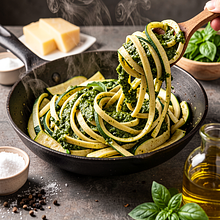
When the pasta is cooked and drained (you left 120–150 ml of water), transfer it to the pan with zucchini using tongs or a strainer. Add 3-4 tablespoons of pesto (about 80–100 g) and 2-3 tablespoons of the reserved pasta cooking water. Stir vigorously for 1–2 minutes over medium heat so that the pesto coats the pasta and a creamy sauce forms. If the sauce is too thick, add more cooking water, 1 tablespoon at a time, until you reach the desired consistency. Taste and season with salt, pepper, and possibly lemon juice.
Transfer the pasta with pesto to warmed plates. Sprinkle with the remaining grated Parmesan (about 20 g). If you like, add a handful of fresh arugula (80 g) on top and lightly sprinkle with chili flakes (optional). Drizzle with a little extra virgin olive oil and serve immediately.
Fun Fact
Pesto originates from Liguria in Italy (especially from Genoa). In Poland, using local nuts and lemon juice in the summer is a simple way to give this sauce freshness and a regional character.
Best for
Tips
Serve immediately after preparation, while the sauce is still creamy. You can add slices of grilled lemon or thinly sliced cherry tomatoes to the plate for color. For wine, I recommend a light white or sparkling.
Store pesto in an airtight jar in the fridge for up to 3 days, covered with a thin layer of oil to prevent discoloration. Keep cooked pasta in the fridge for up to 24 hours; when reheating, add 1-2 tablespoons of water or oil and heat in a pan over low heat to avoid drying out the sauce.
📸 Cooked by the community
Log in to add a photoAdd a photo of the finished dish
After moderator approval, you will receive 10 experience points.
No one has added a photo yet. Be the first!
Comments (0)
Be the first to comment on this recipe!
Add a comment