Prepare all the tools and ingredients: a cutting board, a sharp knife, a spoon for scooping, a large mixing bowl, a fork or masher, a lemon squeezer (optional blender or food processor if you want a smooth consistency). Wash the basil leaves under running cold water and gently dry them with a paper towel or salad spinner. Check the ripeness of the avocado: it should yield slightly to gentle pressure from your thumb (it should not be very soft like mush).
Description
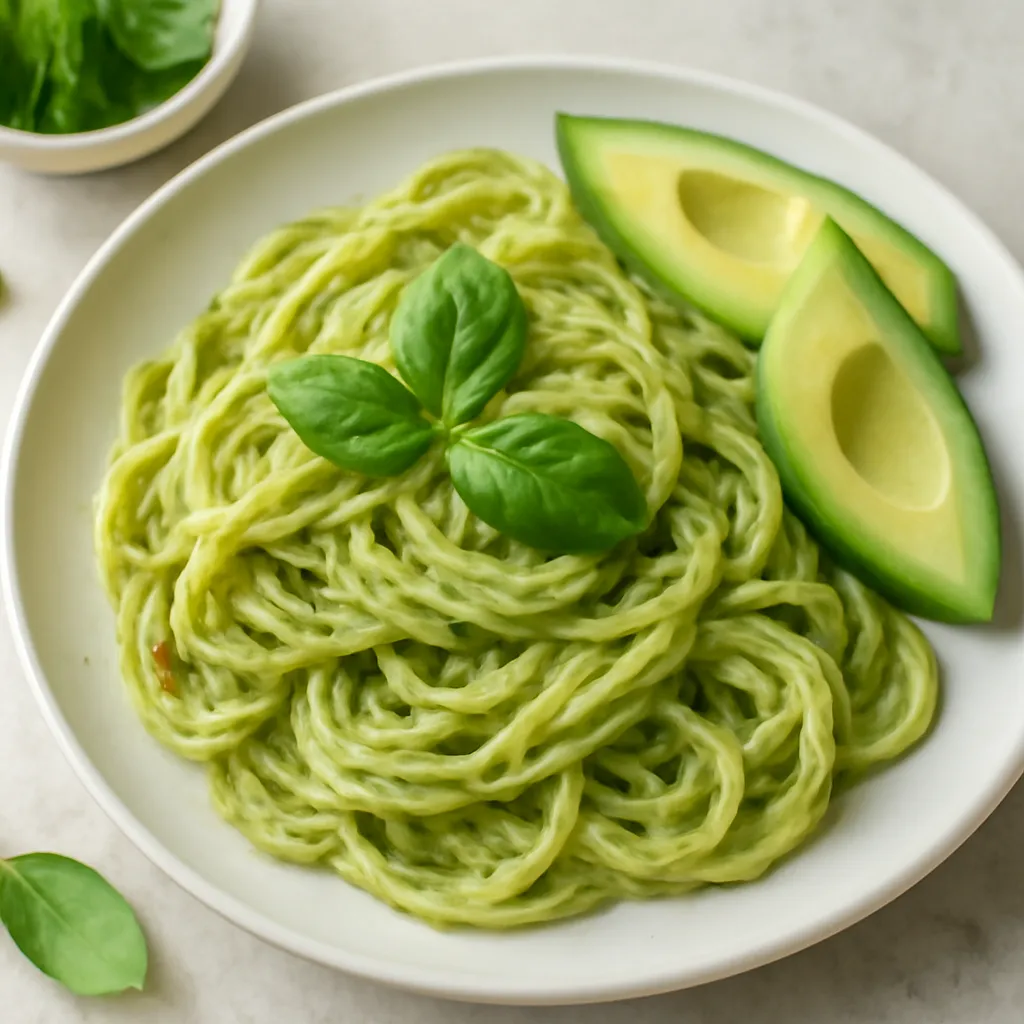
Creamy, aromatic paste made from ripe avocado and fresh basil — a quick and satisfying vegan snack. The combination of the delicate, buttery texture of avocado with the intense, slightly anise-like note of basil and the tangy lemon juice creates a fresh, balanced flavor. The paste is perfect as a spread for bread, a dip for vegetables and crackers, or as an addition to toasts, wraps, and salads. Visually, it looks stunning — light green, creamy consistency with contrasting basil leaves, a drizzle of olive oil, and optional golden pine nuts.
Składniki (9)
- Avocado 2 szt.
- Lemon juice 30 ml
- Olive oil 30 ml
- Garlic 2 ząbki
- 🌿 Przyprawy
- Fresh basil 0.7 pęczek
- Salt 0.1 szczypt
- Ground black pepper 1 szczypta
- ✨ Opcjonalne
- Pine nuts (optional) 30 g
- Chili flakes (optional) 2 szczypty
💡 Kliknij na składnik aby oznaczyć jako użyty
Preparation steps
Ingredient Preparation
Preparation of garlic and basil
Peel 2 cloves of garlic (10 g). For a milder flavor, grate the garlic on a fine grater or use the flat side of a knife to lightly crush it first, then chop it very finely. Tear the basil leaves from the stems (do not chop the stems, they are tougher) and roughly chop about 20 g of leaves — you can also use whole smaller leaves for decoration.
Preparing avocado
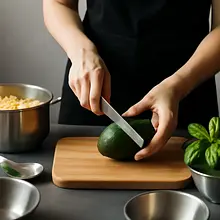
Place the avocado on a cutting board. Holding it steady, cut around it lengthwise until you reach the pit. Twist the halves in opposite directions to separate them. Gently hit the pit with the knife blade so that the knife embeds into it, then twist the knife and remove the pit. Using a spoon, scoop out the flesh from the halves and transfer it to a large bowl. If you want to measure the amount accurately, you can weigh the scooped flesh — typically use two medium fruits (~400 g of total flesh).
Mixing and consistency
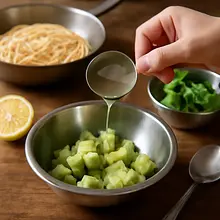
In a bowl with the avocado flesh, immediately add lemon juice (30 ml) — this will prevent browning and add freshness. Add grated/chopped garlic and coarsely chopped basil (20 g). If you want a very smooth paste — transfer the ingredients to a food processor/blender and blend in short pulses for 10–20 seconds until you achieve the desired smoothness. If you prefer a rustic texture, use a fork or masher and mash the flesh until creamy with small pieces (mix for about 1–2 minutes).
Seasoning and emulsifying
While mixing, slowly pour in the olive oil (30 ml) in a thin stream, stirring constantly — this will make the paste silkier and slightly shiny. Add salt (2 g) and pepper (1 g), mix, and check the taste. Taste and if necessary, add more lemon juice (5–10 ml) or salt until the flavor is balanced — acidity, saltiness, and creaminess should complement each other.
Preparation of toppings (optional)
If you are using pine nuts (30 g), heat a dry skillet over medium heat and toast them for 1–3 minutes, stirring often with a wooden spoon — they will be ready when they turn golden and start to release their aroma. Be careful, as they can burn quickly. If you are using chili flakes, prepare them for sprinkling at the end.
Serving
Transfer the paste to a small bowl or a flat plate. Drizzle a little olive oil on top for shine, and garnish with a few basil leaves. Additionally, you can sprinkle with toasted pine nuts (optional) and lightly dust with chili flakes if you want a spicier touch. Serve with fresh bread, toast, crackers, or vegetable sticks.
Cleaning and Storage
If you are not serving the paste immediately, transfer it to an airtight container. To prevent browning, level the surface of the paste and lightly drizzle a thin layer of olive oil on top, then cover with plastic wrap directly touching the surface of the paste (without air bubbles). Store in the refrigerator for up to 24-48 hours.
Fun Fact
Avocado comes from Central America and was used by indigenous people as a valuable source of fat — it was once valued as an energy food. Basil, on the other hand, has a long history in Mediterranean cuisine and is a symbol of aroma and freshness.
Best for
Tips
Serve the pasta in a small bowl or on slices of warm, crispy bread. For a contrast in texture, add toasted pine nuts or chopped sprouts. It also works well as a topping for wraps, tacos, or as a base for sandwiches with grilled vegetables.
Store in an airtight container in the refrigerator for a maximum of 24-48 hours. To slow down browning, cover the surface with a thin layer of oil and press plastic wrap directly onto the paste. Do not freeze — the texture and flavor deteriorate after thawing.
📸 Ugotowane przez społeczność
Zaloguj się, aby dodać zdjęcieDodaj zdjęcie gotowej potrawy
Po zatwierdzeniu przez moderatora otrzymasz 10 punktów doświadczenia.
Nikt jeszcze nie dodał zdjęcia. Bądź pierwszy!
Comments (0)
Be the first to comment on this recipe!
Add a comment