Start by preparing a 24 cm diameter springform pan. Cut a piece of parchment paper and line just the bottom of the pan with it. Then, using a pastry brush, thoroughly coat the sides of the pan with a thin layer of softened butter. Pour breadcrumbs into the pan and tilt it to evenly coat the entire sides. Shake out the excess breadcrumbs. Set the prepared pan aside. Preheat the oven to 170°C with the top and bottom heating function.
Description
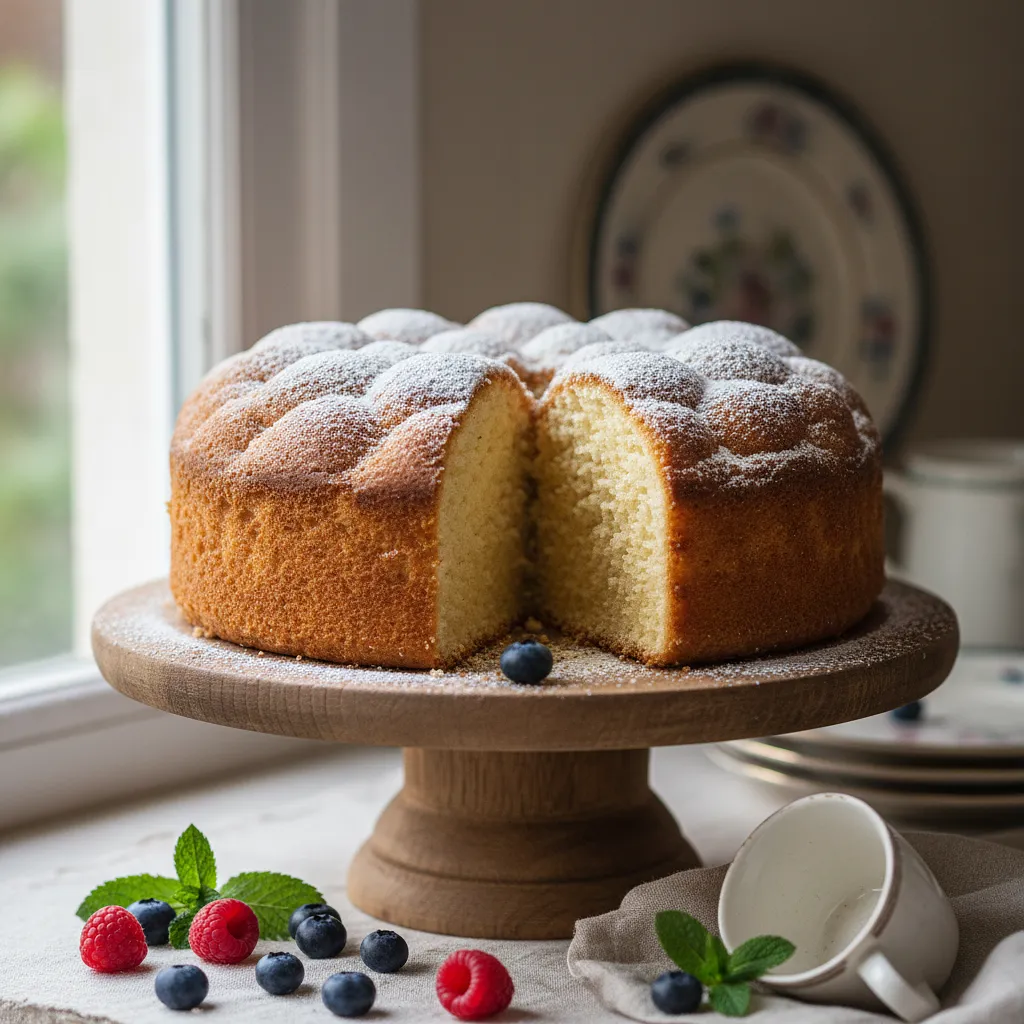
Here is a recipe for an absolutely fundamental baked good in pastry – Genoise sponge. Its magic lies in achieving an extraordinary lightness and fluffiness without using a gram of baking powder or soda. The whole secret is in the technique: patiently beating whole eggs with sugar over a warm water bath. This process incorporates millions of air bubbles into the mixture, which act as a natural leavening agent. As a result, we get a cake with a delicate, springy texture and a subtle, buttery flavor. It is the perfect base for cakes, cream-filled pastries, and desserts like tiramisu. Its neutral taste pairs wonderfully with syrups, soakings, and all kinds of creams. It may look modest, but its perfect execution is a testament to pastry craftsmanship.
Składniki (9)
- Chicken egg (size L) 4 szt.
- Cukier drobny do wypieków 8 łyżek
- Mąka pszenna tortowa (typ 450) 120 g
- Butter (min. 82% fat) 30 g
- Butter for greasing the pan 10 g
- Breadcrumbs for dusting the pan 1 łyżka
- 🌿 Przyprawy
- Salt 0.0 szczypt
- ✨ Opcjonalne
- Vanilla extract 5 g
- Skórka otarta z cytryny 2 g
💡 Kliknij na składnik aby oznaczyć jako użyty
Preparation steps
Preparing the pan and ingredients
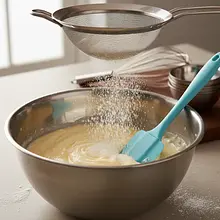
In a small saucepan over the lowest heat, melt the butter (30g) and set it aside to cool. It should be liquid but not hot. Sift the all-purpose flour three times into a separate bowl. You can do this using a fine-mesh sieve. This step aerates the flour, which is extremely important for the lightness of the sponge cake.
Whipping the egg mixture (Key step)
Prepare a water bath. Pour water into a pot to a height of about 3-4 cm and bring it to a gentle simmer (small bubbles should appear, but the water should not be boiling vigorously). Place a metal or glass bowl on top of the pot that fits in size so that its bottom does not touch the surface of the water. Crack whole eggs into the bowl, add sugar and a pinch of salt.
Place a bowl with eggs and sugar over a pot of steaming water. Using a hand whisk, continuously mix the mixture for about 4-5 minutes. The goal is to heat it to a temperature of about 40-45°C (it should feel noticeably warm to the touch) and to completely dissolve the sugar. You can check this by rubbing a bit of the mixture between your fingers - there should be no sugar crystals felt.
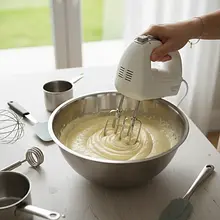
Remove the bowl from the pot and immediately start beating the mixture with a mixer on the highest speed. Beat for about 8-10 minutes. The mixture should triple in volume, become very thick, fluffy, and light cream-colored. When properly whipped, the mixture should flow from the mixer beaters in a thick, continuous ribbon that remains on the surface for a few seconds before dissolving. This is called the 'ribbon test'. At the end of whipping, optionally add vanilla extract or lemon zest.
Combining ingredients
Add 1/3 of the sifted flour to the whipped egg mixture. Using a large silicone spatula, very gently fold the flour into the mixture, making motions from the bottom, through the center, and to the top. Rotate the bowl while mixing. The goal is to deflate the fluffiness of the mixture as little as possible. Repeat the process two more times, adding 1/3 of the flour each time. Mix only until the ingredients are combined.
To the cooled, melted butter, add 2-3 tablespoons of the prepared mixture and mix vigorously in a small bowl. This will 'temper' the butter and make it easier to combine with the rest of the dough. Then pour this butter-egg mixture into the main bowl with the dough. Again, very gently fold in the butter using a spatula, making folding motions until you achieve a uniform consistency.
Baking and cooling
Pour the finished batter immediately into the prepared springform pan. Do this slowly, pouring the batter from a small height to avoid losing its fluffiness. Gently smooth the surface with a spatula. Place the pan in the preheated oven (170°C) and bake for 30-35 minutes.
After about 30 minutes, check if the sponge cake is ready. Insert a wooden skewer into the center. If the skewer comes out dry and without traces of raw batter, the sponge cake is ready. If not, bake for another 5 minutes and repeat the test. The baked cake should be golden brown and springy to the touch.
Remove the hot pan from the oven. Holding it securely (using oven mitts), drop it flat onto the counter or floor from a height of about 30-40 cm. This thermal 'shock' causes a rapid release of steam and prevents the sponge from shrinking and collapsing. It may seem strange, but it's a proven pastry trick.
After 'dropping' the sponge cake, leave it in the pan to cool completely, preferably on a metal rack, which will ensure air circulation from below. Only when the cake is completely cold, gently run a knife along the inner edge of the pan to separate the sides, and then unclip the ring. Remove the paper from the bottom. The sponge cake is ready for further use.
Fun Fact
Genoise sponge cake (Gâteau Génoise) comes from Italy, and its name is derived from the city of Genoa. It was popularized in France in the 19th century and became the basis for many classic cakes, such as Fraisier (strawberry cake). Unlike the classic Polish sponge cake, here whole eggs are whipped together, rather than separating the whites and yolks.
Best for
Tips
Genoise sponge is excellent on its own, simply dusted with powdered sugar and served with a cup of coffee. However, it is most often used as a base for cakes. After slicing it into layers, it should be soaked (e.g., with a punch made from tea, lemon juice, and alcohol), then filled with your favorite cream (e.g., buttercream, custard, whipped cream) and decorated with fresh fruits.
A plain sponge cake can be stored at room temperature, tightly wrapped in plastic wrap, for 2-3 days. If you plan to use it later, after it has completely cooled, wrap it double in foil and freeze it. In the freezer, it will stay fresh for up to 3 months. Thaw at room temperature without removing it from the wrap.
📸 Ugotowane przez społeczność
Zaloguj się, aby dodać zdjęcieDodaj zdjęcie gotowej potrawy
Po zatwierdzeniu przez moderatora otrzymasz 10 punktów doświadczenia.
Nikt jeszcze nie dodał zdjęcia. Bądź pierwszy!
Comments (0)
Be the first to comment on this recipe!
Add a comment