Prepare the tools and ingredients: a 24 cm springform pan (best for tarts), a rolling pin, baking paper, a bain-marie dish (pot + metal/heatproof bowl), an electric mixer with a whisk, 2 bowls (one clean and dry for the egg whites), spoons, measuring cup. Preheat the oven to 180°C (top and bottom heat). Take the butter out of the fridge a moment before use; it should be cold but not rock hard.
Description
Classic lemon tart with fluffy meringue in a modern Polish version. The crumbly, buttery base contrasts with the thick, sweet-and-sour lemon cream, while the lightly browned meringue adds sweetness and texture. The dish looks great on the table (toasted meringue with distinct peaks) and is perfect as a dessert after a family dinner or for a party. The cream contains fresh lemon juice and zest — it can be prepared without the addition of complicated gels; the meringue (Swiss meringue) provides stability and shine, and delicate mint leaves add freshness. Serves for a 24 cm springform pan (8 pieces).
Ingredients Used
Ingredients (11)
- Wheat flour 250 g
- Butter 205 g
- Powdered sugar 70 g
- Chicken egg 6 szt. (~360 g)
- Water 30 ml
- Lemon 3.8 szt. (~300 g)
- Sugar 270 g
- Potato flour 10 g
- 🌿 Przyprawy
- Salt 1 g
- ✨ Opcjonalne
- Mint 10 g
- Vanilla sugar 8 g
💡 Kliknij na składnik aby oznaczyć jako użyty
Preparation steps
Preparation
Base
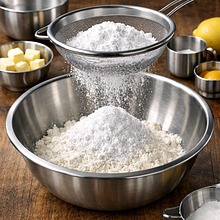
Prepare the shortcrust pastry: in a large bowl, sift 250 g of wheat flour and add 70 g of powdered sugar and a pinch of salt (1 g). Cut 205 g of butter (take 125 g from the portion for the base — the rest will be used for the cream) into small cubes and place it in the bowl with the flour. Quickly rub the butter with your fingers into the flour until the mixture resembles coarse crumbs (butter pieces the size of a pea). Then add 60 g of egg (1 egg) and quickly knead the dough: gather the ingredients together using your hands or a hand and a spatula until the ingredients combine into a uniform mass. If the dough is too dry, add 1 tablespoon (15 ml) of cold water and knead again.
Shaping and chilling: form the dough into a disk, wrap it in plastic wrap, and place it in the refrigerator for at least 30 minutes. After chilling, dust the countertop with flour, roll out the dough to a thickness of about 3 mm (even thickness all around). Gently roll the dough onto the rolling pin and transfer it to the springform pan, pressing it against the edges and bottom. Trim the excess dough with a knife or pastry wheel and press the edges firmly. Prick the bottom with a fork in several places to allow air to escape during baking. Place the pan in the refrigerator for 15 minutes.
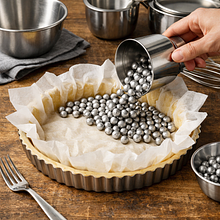
Blind baking: line the chilled base with parchment paper so that the paper touches the bottom and sides, then add baking weights or dry beans/rice. Bake in a preheated oven at 180°C for 15 minutes. After this time, carefully remove the paper with the weights and bake for an additional 6-8 minutes, until the edges start to lightly brown and the surface is dry. Remove and cool on a rack.
Lemon cream
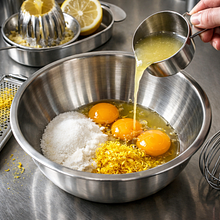
Prepare the ingredients: take 6 eggs, crack them one by one. Separate 3 egg whites into a clean, dry bowl (the egg whites are for the meringue), and place the remaining 3 whole eggs in a separate bowl — these will be the 'eggs for the cream'. Grate the zest from 3 lemons (only the yellow part) and squeeze the juice (you should have about 120-150 ml of juice). In a larger saucepan, mix 180 g of granulated sugar with 10 g of cornstarch.
Prepare the cream: in a bowl with 3 whole eggs, add the grated lemon zest and juice, along with the mixture of sugar and potato starch. Whisk vigorously with a hand whisk until the sugar partially dissolves and the mixture is smooth. Transfer everything to a saucepan and heat over low heat, stirring constantly with a wooden spoon or whisk to prevent the mixture from burning. Cook gently for 6-10 minutes — the cream will thicken and coat the spoon (test: drag a spoon across the bottom of the saucepan — a trail should remain).
Finishing the cream: remove the saucepan from the heat and add the cold butter, piece by piece (80 g), stirring vigorously after each addition until the cream is smooth and silky. Pour the cream into a bowl and cover it with plastic wrap so that the wrap touches the surface of the cream (this will prevent a skin from forming). Set aside to cool slightly (at least 20-30 minutes) — the cream should be warm, not hot, when we fill the base.
Meringue
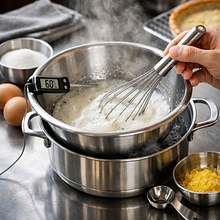
Prepare the meringue using the Swiss method (bain-marie): place 3 egg whites (set aside earlier) and 120 g of granulated sugar in a metal bowl, and optionally 8 g of vanilla sugar (if using). Set the bowl over a saucepan with gently boiling water (the bottom of the bowl should not touch the water). Heat while stirring with a spoon until the sugar completely dissolves and the mixture feels warm to the touch (about 60°C) — check by rubbing a bit of the mixture between your fingers; you should not feel any sugar crystals.
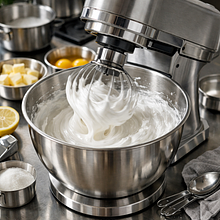
Whip the meringue: after dissolving the sugar, move the bowl (away from the steam) and beat with a mixer on high speed for 5-8 minutes, until the mixture is thick, glossy, and forms stiff, shiny peaks. At the end, add a pinch of salt and mix briefly. The meringue should be smooth, satin-like, and hold its shape.
Assembly and finishing
Filling and finishing the tart: pour the still warm lemon cream into the slightly cooled (but not hot) base — use a spoon or spatula to spread it evenly. Place the tart in the refrigerator for 20-30 minutes to allow the cream to partially set and hold the meringue better. Then, spread or pipe the meringue on top of the cream (you can use a spoon to create peaks or a piping bag with a decorative tip).
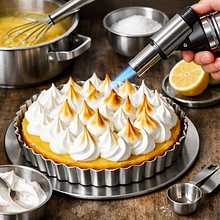
Browning the meringue: to achieve golden peaks, you can use a kitchen blowtorch and gently scorch the meringue surface — move the flame evenly, not leaving it in one spot. If you don't have a blowtorch, set the oven to grill mode (top) and place the tart on the middle or top shelf for 2-4 minutes at a temperature of 220-230°C, watching the meringue every few seconds until it browns. Remove the tart and let it cool completely.
Decoration and serving: just before serving, sprinkle the tart with thin strips of fresh lemon zest and decorate with a few mint leaves (optional). Cut carefully — it's best to use a knife warmed in hot water, wipe it, and cut in one motion to avoid smearing the meringue.
Fun Fact
Lemon curd comes from English cuisine, but in Poland it has been adapted for tarts and cakes - when combined with meringue, it creates a contrast of flavors that is highly valued in modern desserts.
Best for
Tips
Serve the tart cold or at room temperature. The prettiest slices can be achieved by cutting the chilled tart with a sharp, warmed knife. Serve with a cup of strong tea or espresso. For a more refined presentation, add a creamy scoop of vanilla ice cream next to a piece of tart.
Store the tart in the refrigerator (in a closed form or covered) for up to 48 hours. The meringue may start to release some moisture over time (syneresis) — it is best consumed within 24 hours. To refresh the appearance of the meringue before serving, you can quickly torch it.
📸 Ugotowane przez społeczność
Zaloguj się, aby dodać zdjęcieDodaj zdjęcie gotowej potrawy
Po zatwierdzeniu przez moderatora otrzymasz 10 punktów doświadczenia.
Nikt jeszcze nie dodał zdjęcia. Bądź pierwszy!
Comments (0)
Be the first to comment on this recipe!
Add a comment