Check and clean the elderflower blossoms: place the umbels on a clean countertop and gently shake to remove small insects and dust. Do not wash the flowers under running water — they will lose their aroma; if they are very dirty, briefly shake them with a dry cloth. Grate the yellow part of the lemon peel thinly (avoid the white albedo). Cut the lemon in half and squeeze out the juice, straining it through a sieve to remove the seeds.
Description
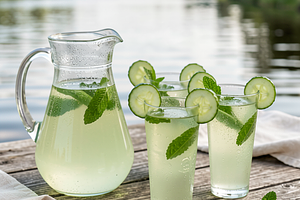
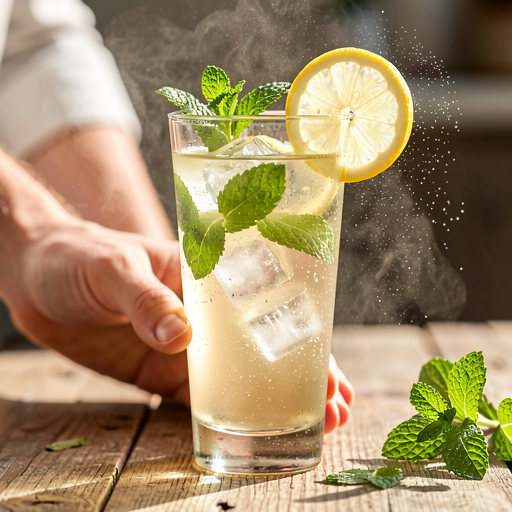
A traditional summer tonic made from fresh elderflower blossoms with a hint of lemon — a drink inspired by the cuisine of Greater Poland, where juices and liqueurs made from fruits and flowers are part of family summer traditions. It has a delicate, floral aroma with a refreshing acidity from the lemon; it quenches thirst on hot days, pairs well with grilled meats and salads, and serves as a base for light cocktails. It looks impressive served in clear glasses with a slice of lemon and a mint leaf.
Ingredients Used
Ingredients (6)
- Elderflower 80 g
- Lemon 1.5 pcs (~120 g)
- Sugar 400 g
- Water 1000 ml
- ✨ Optional
- Citric acid 1 tsp (~5 g)
- Mint 10 g
💡 Click an ingredient to mark it as used
Preparation steps
Preparation of ingredients
Syrup
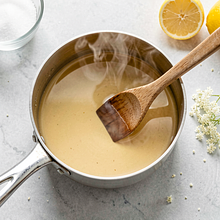
Pour 800 ml of water into a medium saucepan and add the sugar. Heat over medium heat, stirring with a wooden spoon, until the sugar completely dissolves (3-5 minutes). When the syrup starts to gently steam and is clear, increase the heat and bring to a light boil for 1-2 minutes to thicken the syrup. Remove from heat and let it cool slightly for 5-10 minutes — it should be warm, not boiling.
Maceration
To the warm (not boiling) syrup, add the prepared elderflowers, grated lemon zest, and lemon juice. Gently mix with a fork so that the flowers are evenly submerged in the syrup. Cover the bowl with a clean cloth or plate and set it aside in a cool, shaded place for 24 hours. After a few hours, gently stir 1-2 times to release the aroma.
Straining and seasoning
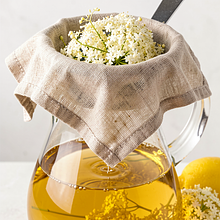
After 24 hours, prepare a fine sieve lined with cheesecloth or a clean cloth over a large jug. Pour the contents through the sieve, then carefully press the flowers with a spatula or spoon to extract all the liquid (do not squeeze too hard to avoid bitterness). If you want to extend the shelf life, dissolve citric acid in 20 ml of boiled water and add it to the strained syrup — mix thoroughly and taste, adjusting with an additional spoon of sugar or a few ml of lemon juice to your liking.
Dilution and serving
Serve the tonic chilled, diluting the syrup with sparkling or still water in a ratio of 1:5 (1 part syrup to 5 parts water) or to taste (for a stronger flavor 1:4). Place ice cubes in glasses, pour in the diluted tonic, garnish with a slice of lemon and a mint leaf. If serving with alcohol, add a splash of vodka or gin.
Storage
Pour the strained syrup into sterilized bottles or jars, seal tightly, and store in the refrigerator for 10–14 days. If you added citric acid and pasteurized the bottles (boiling bath for 10 minutes), you can store them for several months in a cool place.
Fun Fact
The Greater Poland tradition uses elderflowers and blossoms in preserves — in the past, tonics and juices made from elderflowers were prepared for summer parties and to cool off on hot days. Elderflower was also an ingredient in homemade infusions and medicinal syrups.
Best for
Tips
Serve well chilled with plenty of ice and a slice of lemon. For an elegant presentation, use tall highball glasses and add a sprig of mint. For the cocktail, combine the syrup with gin and tonic in a ratio of 1:2:3.
Store in the refrigerator in airtight bottles for 10–14 days. You can also freeze the syrup in ice cube trays in portions of 50–100 ml — it thaws well. For longer storage, pasteurize the bottles (water bath for 10 minutes).
📸 Cooked by the community
Log in to add a photoAdd a photo of the finished dish
After moderator approval, you will receive 10 experience points.
No one has added a photo yet. Be the first!
Comments (0)
Be the first to comment on this recipe!
Add a comment