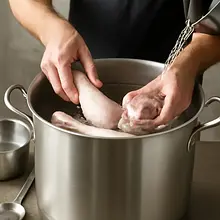
Check the legs: if they have any hair remnants, scorch them over a gas burner or singe them with a hot lighter, then scrape with a knife to remove any impurities. Rinse the legs and a piece of the shoulder under cold running water, making sure the water runs off from the corners and crevices. If they are very large, cut them into smaller pieces to fit in the pot.
Description
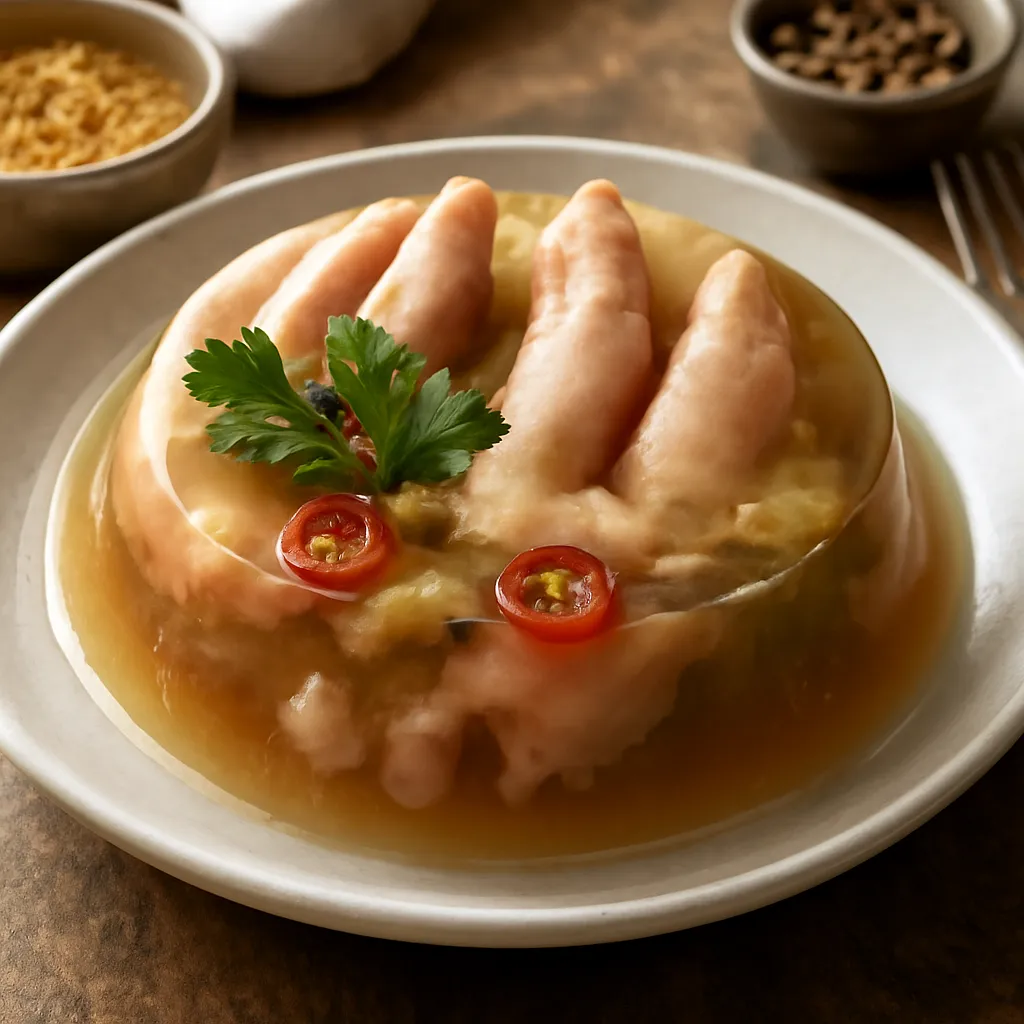
Traditional cold feet are a Polish snack made from a rich, clear meat-bone broth that forms a natural jelly when cooled. They are prepared with pig's feet (rich in collagen) and a piece of meat for flavor, along with vegetables and spices. The dish has a distinct, meaty-spicy taste, a clear, golden jelly, and appetizing pieces of meat and slices of carrot inside. Cold feet are perfect as a snack for Christmas Eve, on the holiday table, or as an addition to sandwiches; they are served chilled, often with horseradish or vinegar and fresh parsley. Visually, they are appealing — the clear jelly reveals pieces of meat, vegetables, and spices, and served on a light platter, they look elegant and rustic.
Składniki (16)
- Pork hocks 1400 g
- Pork shoulder 300 g
- Water 2500 ml
- Onion 1 szt.
- Carrot 1.3 szt.
- Parsley root 1 szt.
- Celery root 100 g
- Garlic 3 ząbki
- 🌿 Przyprawy
- Bay leaf 13.3 szt.
- Allspice 6 g
- Whole pepper 5 g
- Salt 12 g
- Dried marjoram 1 łyżeczka
- ✨ Opcjonalne
- Gelatin (optional) 10 g
- Parsley (for decoration, optional) 1 pęczek
- Grated horseradish (optional, for serving) 50 g
💡 Kliknij na składnik aby oznaczyć jako użyty
Preparation steps
Preparation of the ingredient
Preparing the vegetables
Peel the onion, carrot, parsley root, and celery. Cut the onion in half; if you want a nicer color for the broth, char the cut side of the onion in a dry pan or over a flame for 2–3 minutes until it darkens slightly. Cut the carrot into thick slices (about 5 mm) — set aside some slices for final decoration, and you can add the rest whole during cooking. Leave the garlic in its skins or lightly crush it.
Cooking broth
Place the shanks and shoulder in a large pot (min. 6–8 l). Cover with cold water so that the meat is completely submerged (about 2.5 l). Set the pot over medium heat and slowly heat until foam appears (about 15–25 minutes after turning on). When the foam and sediment appear, reduce the heat to low and skim the foam with a slotted spoon or strainer. After the initial boil, add the charred onion halves, carrot (part), parsley, celery, bay leaves, allspice, peppercorns, and garlic.
Cook on very low heat for 2.5–3 hours with a slight 'flickering' (small bubbles). After about 1.5 hours, add marjoram and season with pinches of salt (about 1 g each), remember that you can add more salt after reducing the broth. After 2.5–3 hours, the meat should be coming off the bone, the skin and cartilage should be overcooked — this is a sign that collagen has formed. Check with a fork: the meat should be very tender.
Straining and degreasing
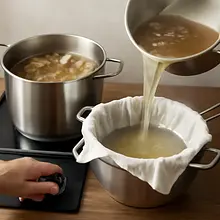
Turn off the heat and carefully strain the broth through a very fine sieve lined with cheesecloth or a cotton cloth into a large bowl or another pot (preferably twice, to achieve a clear liquid). Gently press the vegetables and meat with a spoon to extract the juice, but do not crush them too much to avoid clouding the broth. Leave the clear broth to cool to room temperature, then place it in the refrigerator for 1–2 hours until the top of the jelly/broth solidifies with fat (a white layer of fat will form).
After cooling, a layer of fat will form on top. Carefully remove the cold, hardened layer of fat with a spoon. If there is a lot of fat, you can pour it off with a spatula. Before further use, strain again through a fine sieve to eliminate any small impurities.
Portioning the meat
Remove the meat from the drained bones: separate the tender pieces from the bones, removing larger bits of fat and cartilage. Cut or shred the meat into small pieces (cubes about 1–1.5 cm). Remove the carrot slices and set them aside for decoration. Place the chopped meat evenly in the prepared molds or in one large mold (e.g., a loaf pan), arranging the carrot slices decoratively along the walls of the mold.
Checking and possibly thickening
Check if the broth, after cooling, sets into a gel in a small portion. Pour 2–3 tablespoons of the broth into a small container and place it in the refrigerator for 15–20 minutes — if it thickens to a jelly-like consistency, you don't need gelatin. If the broth is too thin, you can: a) cook the broth longer to evaporate water and concentrate the collagen, or b) prepare gelatin (optional): soak the gelatin in 5 times its volume of cold water for 5–10 minutes, then dissolve it in a small amount of hot broth and mix it with the rest of the hot liquid before pouring into molds.
Pouring and cooling
Gently heat the filtered, defatted broth (do not bring to a boil). If you are using dissolved gelatin, add it now. Pour the hot broth evenly into the prepared molds with meat and carrot decoration – so that the liquid covers all the pieces. Leave to cool to room temperature (about 30–60 minutes), then place in the refrigerator for at least 8 hours, preferably overnight, for the jelly to set properly.
Serving
Take the cold jellied legs out of the fridge to warm up slightly for 5–10 minutes (this makes them easier to slice). Turn the mold upside down onto a plate and gently remove the jelly; if it’s difficult to remove, carefully run a sharp, warm knife along the edge. Cut into slices about 1–1.5 cm thick and serve on a platter. Garnish with fresh parsley (optional) and serve with grated horseradish (optional) and pieces of lemon or vinegar for drizzling if desired.
Final tips and storage
Store the cold legs in the refrigerator in an airtight container for 3–4 days. If you want to freeze them, it's better to freeze individual portions in airtight containers (for up to 2 months), but after thawing, the consistency of the jelly may be less firm.
Fun Fact
Cold feet is a dish known in Central and Eastern Europe — originally prepared from cheaper cuts of meat as a way to utilize collagen and cartilage. The jelly was particularly valued in winter when it was easier to chill and store.
Best for
Tips
Serve chilled on a light platter, decorated with parsley and slices of carrot. Place bowls of horseradish, mustard, or vinegar alongside so guests can season their portion to taste. It pairs well with dark bread.
Store in the refrigerator in an airtight container for 3–4 days. Remove the visible layer of fat before serving to enhance the flavor. If the broth does not gel enough, you can add a small amount of gelatin (see step 8). Do not freeze if you want to maintain the perfect consistency — thawed jelly usually loses some of its elasticity.
📸 Ugotowane przez społeczność
Zaloguj się, aby dodać zdjęcieDodaj zdjęcie gotowej potrawy
Po zatwierdzeniu przez moderatora otrzymasz 10 punktów doświadczenia.
Nikt jeszcze nie dodał zdjęcia. Bądź pierwszy!
Comments (0)
Be the first to comment on this recipe!
Add a comment