In a large, wide bowl, sift the all-purpose flour, powdered sugar (20g), and salt. Sifting is important as it aerates the flour, contributing to the lightness of the dough. After sifting, using a spoon or your hands, create a deep well in the center of the mound, resembling a volcano crater.
Description
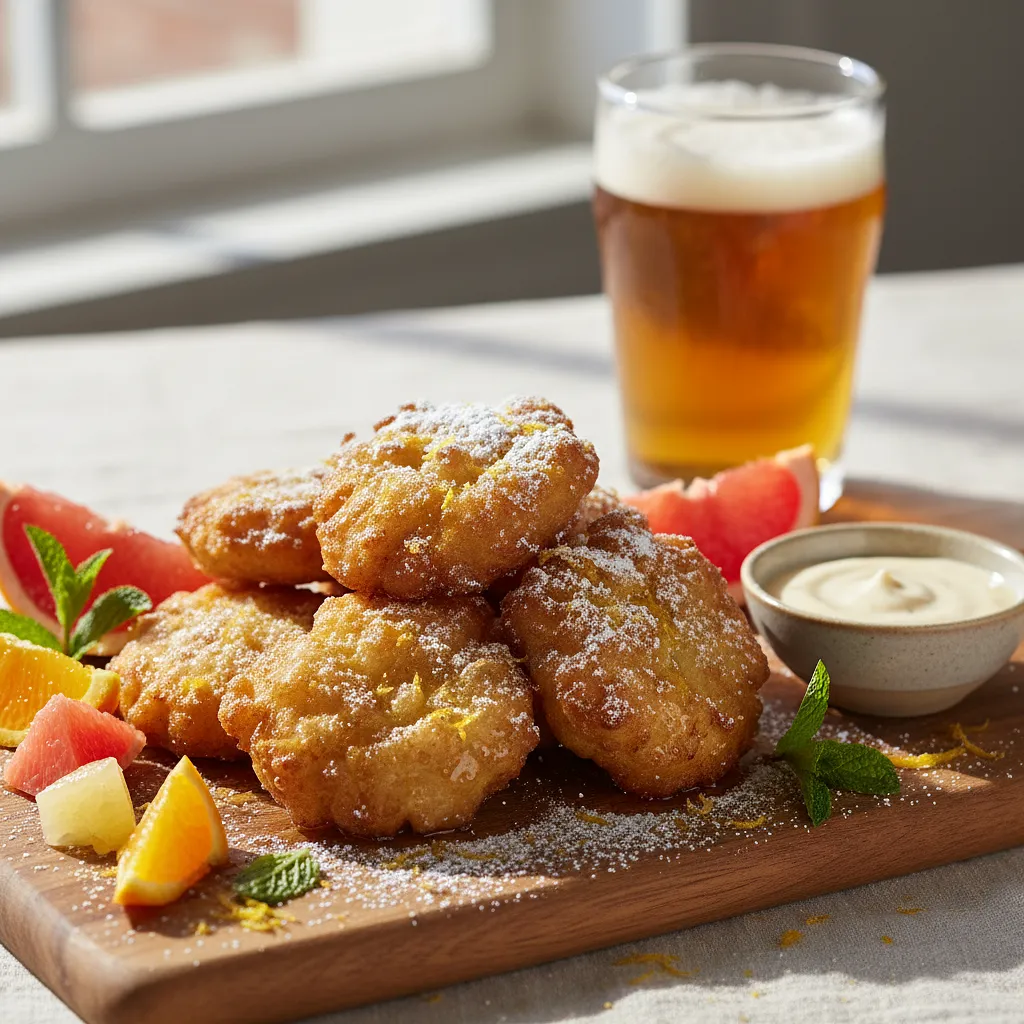
Rediscover a classic of carnival baking! Our recipe for chrust, also known as faworki, is enhanced with light beer and aromatic orange zest. The beer, thanks to its carbon dioxide and yeast content, acts as a natural leavening agent, giving the dough unparalleled lightness and creating characteristic, crispy bubbles on its surface. The addition of spirits ensures that the faworki do not absorb excessive fat during frying, remaining delicate and crunchy. The subtle hint of orange balances the sweetness and introduces a refreshing note. The finished faworki are as thin as parchment, golden, and literally melt in your mouth. Served on a large platter, generously dusted with powdered sugar, they are not only a delicious dessert but also a beautiful decoration for the table during Fat Thursday, family gatherings, or parties.
Składniki (10)
- Mąka pszenna tortowa typ 450 500 g
- Żółtka jaj 5.4 szt.
- Light beer (lager) 200 ml
- Butter 50 g
- Rectified spirit (95%) 1 łyżka
- Powdered sugar (for the cake) 20 g
- Rapeseed oil (for frying) 66.7 łyżek
- 🌿 Przyprawy
- Salt 0.1 szczypt
- ✨ Opcjonalne
- Orange zest 10 g
- Powdered sugar (for dusting) 100 g
💡 Kliknij na składnik aby oznaczyć jako użyty
Preparation steps
Preparing the dough
In a separate, smaller container (e.g., a bowl or jug), combine all the wet ingredients. Using a fork or a small whisk, vigorously beat the egg yolks, then add the beer, melted and slightly cooled butter, and spirits. If using, add the freshly grated orange zest now. Mix until you achieve a smooth, liquid mixture.
Slowly pour the mixture of wet ingredients into the well made in the flour. Using a fork or spoon, begin to gently mix, gradually incorporating the flour from the edges to the center, until all the ingredients come together into a compact, slightly sticky ball of dough. Don't worry if at this stage the dough looks tough and uneven.
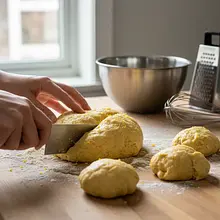
Transfer the dough to a lightly floured pastry board or kitchen countertop. Now comes the key step: aerating the dough. Instead of traditional kneading, we will be 'beating' it. Use a heavy wooden rolling pin and strike the dough for about 10-15 minutes. Flatten it with the strikes, fold it in half, and strike again. Continue until the dough becomes smooth, elastic, and visible air bubbles appear. This is the secret to super crispy angel wings!
Form the dough into a ball, wrap it tightly in plastic wrap or place it in a zip-lock bag and put it in the refrigerator for at least 30 minutes, preferably for an hour. Chilling the dough will allow the gluten in the flour to 'rest', making it easier to roll out the dough very thin.
Rolling and shaping
After cooling, take the dough out of the fridge and divide it into 3-4 equal parts. Work with one part at a time, keeping the remaining ones wrapped in plastic to prevent them from drying out. Roll each portion of dough into a very thin sheet. It should be as thin as possible, almost transparent – you should be able to see the pattern of the countertop through it.
Using a pastry wheel (a crimping wheel) or a sharp knife, cut the rolled-out dough into long strips about 3-4 cm wide. Then, cut each strip into shorter rectangles about 12-15 cm long.
In the center of each rectangle, make a longitudinal slit about 4-5 cm long with a knife. Then, take one of the shorter ends of the rectangle and gently pass it through the slit you made, creating the characteristic shape of a 'bow' or 'ribbon'. Place the finished angel wings on a clean cloth or board, lightly dusted with flour.
Frying and decoration
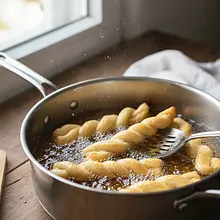
In a wide, flat pot or a deep pan, heat the oil. There should be enough oil (at least 3-4 cm deep) for the angel wings to float freely in it. The oil must reach a temperature of about 175-180°C. To check this without a thermometer, drop a small piece of dough - if it immediately rises to the surface and starts frying intensely, creating lots of bubbles around it, the oil is ready.
Carefully place the angel wings into the heated oil, frying them in batches of 3-4 at a time. Do not overcrowd the pot to avoid drastically lowering the oil temperature. Fry on each side for about 30-60 seconds, until they achieve a beautiful, light golden color. The angel wings fry quickly!
Once ready, remove the golden angel wings from the oil using a slotted spoon or tongs and place them on a large plate or tray lined with several layers of paper towels. The towels will absorb excess fat, making the angel wings crispier.
Once all the angel wings are fried and slightly cooled (but still warm), transfer them to a large platter or serving dish. Using a small sieve, generously dust them with powdered sugar. Don't hold back on the sugar - it should create a thick, 'snowy' layer on the angel wings.
Fun Fact
The tradition of frying angel wings (chrust) in Poland is closely related to the carnival season, especially to Fat Thursday and the last days before Lent. It was a way to 'use up' supplies of fat, eggs, and flour before the start of Lent, during which abstinence from such foods was observed.
Best for
Tips
Angel wings look best arranged in a tall, artistic pile on a large, flat platter or cake stand. Before serving, they can be gently dusted with powdered sugar again. They look beautiful and inviting, serving as the centerpiece of the dessert table.
Angel wings are best on the day they are made, when they are at their crispiest. If there are any leftovers, store them in a loosely closed container (e.g., a cookie tin) lined with paper, at room temperature for up to 2 days. A tight seal may cause them to soften from moisture. Do not store in the refrigerator.
📸 Ugotowane przez społeczność
Zaloguj się, aby dodać zdjęcieDodaj zdjęcie gotowej potrawy
Po zatwierdzeniu przez moderatora otrzymasz 10 punktów doświadczenia.
Nikt jeszcze nie dodał zdjęcia. Bądź pierwszy!
Comments (0)
Be the first to comment on this recipe!
Add a comment