Menu

No-Bake Lemon Cheesecake in the 'Sweet Blog' Style

Desserts Cakes and Bakes Vegetarian Dishes 90 min Medium 9 wyświetleń ~45.68 PLN - (0)
Rate:
(0)

Description

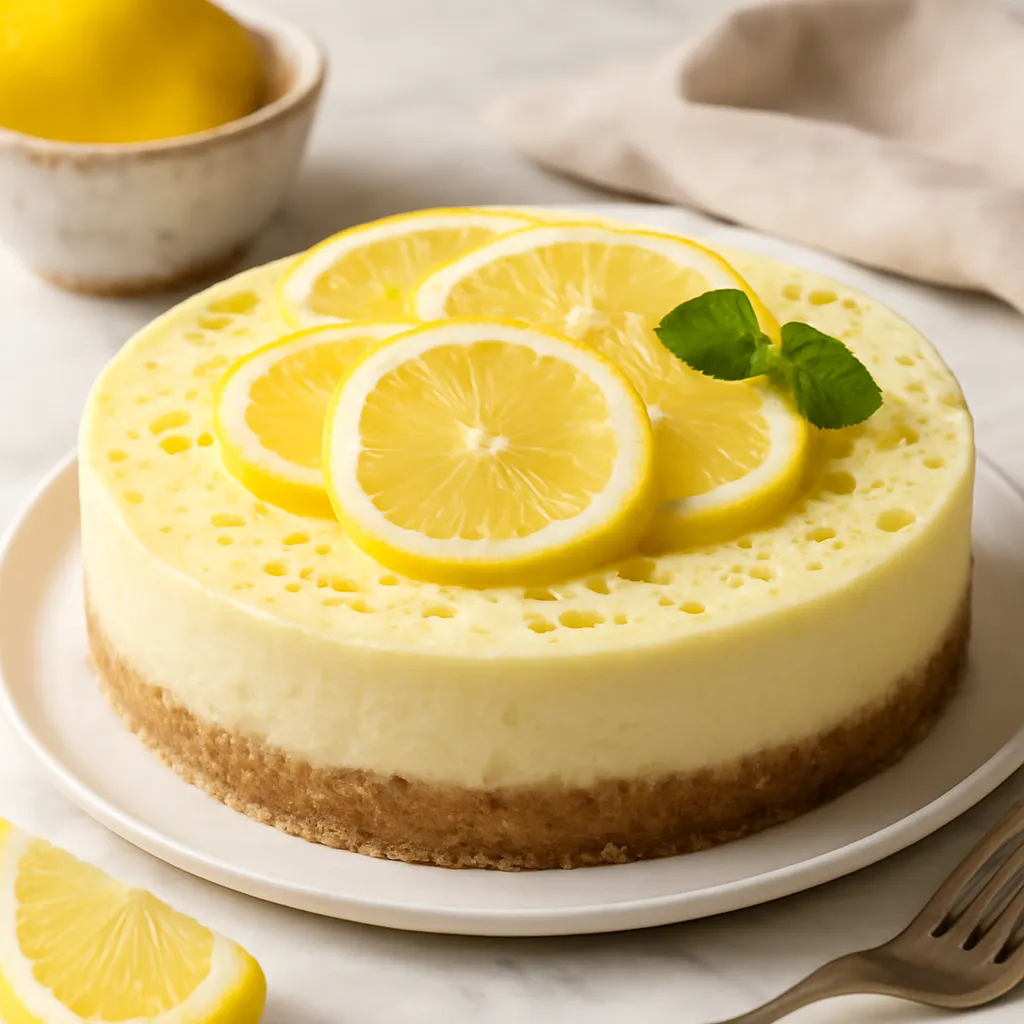
A delicate, refreshing lemon cheesecake without baking: buttery cookie crumbs as the base, a velvety cream cheese-lemon filling made with homemade lemon curd, cream cheese, and stabilized whipped cream, along with a light decoration of whipped cream, lemon zest, and fresh fruits. The dish combines a creamy texture with the intense acidity of lemon, which gives the cake a refreshing quality, while the golden cookie base introduces a pleasant contrast in texture. Perfect for spring and summer gatherings, afternoon coffee, or as an impressive dessert for guests. It looks elegant on a cake stand — the layers are bright, creamy, with delicate air bubbles in the filling and fresh fruity accents on top, making the presentation very "blog-worthy."

Składniki (13)

Servings:
8
  • Butter cookies 200 g
  • Butter 150 g
  • White sugar 150 g
  • Egg 2 szt.
  • Lemon juice 120 ml
  • Lemon zest 8 g
  • Cream cheese (e.g. Philadelphia type) 250 g
  • 30% whipping cream 300 ml
  • Powdered gelatin 8 g
  • Powdered sugar 20 g
  • 🌿 Przyprawy
  • Salt 0.0 szczypt
  • ✨ Opcjonalne
  • Fresh berries (optional) 100 g
  • Mint leaves (optional) 10 g
💰 Szacowany koszt dania: ~45.68 PLN (5.71 PLN/porcję)

💡 Kliknij na składnik aby oznaczyć jako użyty

Preparation steps

Base

1

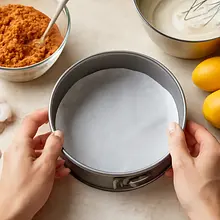
Prepare the pan: use a springform pan with a diameter of 20–22 cm (preferably with a removable bottom). Line the bottom with parchment paper. Place 200 g of butter cookies in a sealable plastic freezer bag or in a food processor. If using a bag, remove the air and seal it, then crush with a rolling pin for 1 to 2 minutes until you achieve fine crumbs resembling 'wet sand' (not powder).

Ingredients: Butter cookies
Use a food processor for a quicker result, but if you don't have one, a rolling pin and a bag are fine. Do not grind to a powder - there should be a few smaller lumps for texture.
2

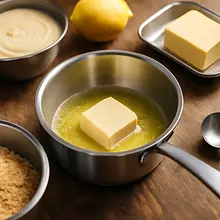
Melt 150 g of butter in a small saucepan over low heat or in the microwave. Do not let it boil — just enough to be liquid. Pour the melted butter into a bowl with the crushed cookies and mix with a spoon or spatula for 30–45 seconds until all the crumbs are slightly moist and stick together when squeezed in your hand.

Ingredients: Butter cookies, Butter
Use a metal bowl for easier mixing. Check: if the mixture holds its shape when squeezed in your hand, the crumble is properly moistened. If it's too dry, add a tablespoon of melted butter.
3

Transfer the cookie mixture to the prepared springform pan and spread it evenly. Use the bottom of a glass with a flat edge or a spoon to press the layer down to the bottom of the pan - the even, compact base should be about 1–1.5 cm thick. Place the pan in the refrigerator for at least 30 minutes to let the base set.

Ingredients: Butter cookies, Butter
It's best to press down with the bottom of a glass in circular motions - this will ensure an even surface. Cooling is important: the bottom must harden so that the mixture doesn't leak out.

Lemon curd - preparation

4

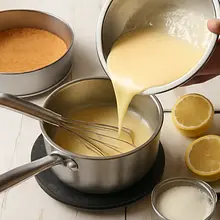
In a bowl, whisk 120 g of eggs (2 eggs) with 150 g of white sugar until the sugar partially dissolves and the mixture becomes slightly uniform (about 30–45 seconds of hand whisking). Add 120 ml of freshly squeezed lemon juice and 8 g of grated lemon zest, and mix.

Ingredients: Egg, White sugar, Lemon juice, Lemon zest
Use a hand whisk or a fork. The eggs should be at room temperature (take them out 30 minutes earlier) — this will make the mixture more uniform.

Lemon curd - cooking lemon curd

5

Pour the egg-sugar-lemon mixture into a saucepan and heat over very low heat, stirring continuously with a wooden spoon or silicone spatula. Monitor the temperature and stir for 6–8 minutes — the mixture should thicken and start to 'coat' the spoon (test: drag the spoon through and check if a clear path remains). Do not boil vigorously — too high a temperature will cause the eggs to curdle.

Ingredients: Egg, White sugar, Lemon juice, Lemon zest
If you're unsure about direct heating, use a water bath (a bowl over a pot of boiling water) — this reduces the risk of curdling. The mixture is ready when it coats the back of a spoon, forming a continuous layer.

Lemon mixture — finishing the curd and gelatin

6

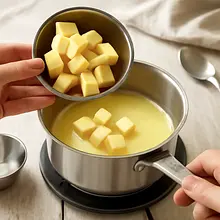
Remove the saucepan from the heat. Add 50 g of chopped butter (you can use part of the previously melted butter) to the hot but not boiling mixture. Stir until the butter melts and the mixture becomes glossy. Strain the curd through a sieve into a clean bowl (this removes any lumps). Cover the surface with plastic wrap directly on the curd (this prevents a skin from forming) and set aside to cool to a temperature of about 40°C.

Ingredients: Butter, Lemon juice, Lemon zest
Adding butter at the end smooths the curd and gives it a velvety texture. Straining the curd is an important step, especially if there were small curds during cooking.

Lemon layer — gelatin

7

In a small bowl, dissolve 8 g of gelatin in 40–50 ml of cold water — sprinkle the gelatin evenly over the surface of the water and let it sit for 4–5 minutes to bloom. Then heat (in the microwave for 8–10 seconds or over steam) until completely dissolved — do not allow it to boil. Pour the dissolved gelatin in a thin stream into the cooled curd, stirring vigorously to avoid lumps. Check the temperature: the curd with gelatin should be warm (about 35–40°C) but not hot.

Ingredients: Powdered gelatin, Lemon juice
Gelatin does not like sudden temperature changes: if the curd is too hot, the gelatin will lose its properties; if it's too cold, streaks may form. Add in a thin stream and mix vigorously.

Chilling and Whipping

8

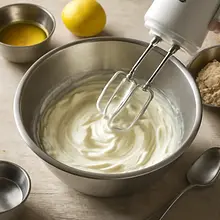
In a very cold bowl, whip 300 ml of 30% cream with 20 g of powdered sugar to stiff but creamy peaks (about 3–5 minutes with a mixer on medium speed). The bowl and whisks should be cold (place them in the fridge for 10–15 minutes before whipping, if possible). The whipped cream should form soft peaks — when you lift the whisk, the tip slightly bends but holds its shape.

Ingredients: 30% whipping cream, Powdered sugar
Do not overwhip the cream: when it starts to hold peaks, stop whipping — longer whipping will result in butter. Check the consistency every 30 seconds.

Lemon mixture — combining ingredients

9

In a large bowl, blend 250 g of cream cheese for 30–45 seconds until smooth (use a mixer on low speed). Add the cooled lemon curd (which already contains dissolved gelatin) and mix together until you achieve a uniform color and consistency (about 1 minute). Then gently fold in the whipped cream: add 1/3 of the whipped cream, mix more vigorously to loosen the mixture, then gently add the remaining cream and fold with a spatula from the bottom up to maintain fluffiness.

Ingredients: Cream cheese (e.g. Philadelphia type), 30% whipping cream, Lemon juice, Powdered sugar
Folding is a delicate technique: swirl the spatula around the bottom of the bowl and lift the mixture over the surface until the ingredients are combined. Do not mix too vigorously — the mixture should be light and airy.

Assembly and cooling

10

Remove the chilled base from the refrigerator. Pour the prepared lemon mixture onto the base and smooth it out evenly with a spatula. Optionally, gently tap the mold on the counter (1-2 times) to release any larger air bubbles. Place the cheesecake in the refrigerator for at least 4 hours (preferably overnight) to allow the mixture to set properly.

Ingredients: Cream cheese (e.g. Philadelphia type), 30% whipping cream, Powdered gelatin
Cooling is critical — gelatin needs time to set the mixture. If you're short on time, place the cheesecake in the refrigerator for 2 hours, and then in the freezer for 1–2 hours (no longer) to speed up the process.

Decoration

11

Before serving, decorate the top: whip 50–60 ml of additional cream (optional 50 g) with 10 g of powdered sugar to soft peaks and place small dollops on the surface of the cheesecake. Generously sprinkle with fresh lemon zest and arrange fresh berries (optional) and a few mint leaves for color contrast and aroma. If you want a glossy top, heat 1–2 tablespoons of reserved curd and spread it thinly over the surface before decorating.

Ingredients: Powdered sugar, Fresh berries (optional), Mint leaves (optional), Lemon zest
Additionally, you can add fresh berries or mint leaves to enhance the flavor and appearance. Use a piping bag with a decorative tip if you want nice dollops of whipped cream.

Serving

12

Remove the cheesecake from the mold: first, run a thin knife along the edge of the springform pan to separate the filling from the sides, then gently open the ring and lift the bottom with the parchment paper onto a flat plate. Cutting: use a very sharp, hot knife (heat it under hot water and dry it), after each cut wipe the knife with a damp cloth to achieve clean slices.

Ingredients: Cream cheese (e.g. Philadelphia type), Butter cookies
Heating the knife gives nice cuts for creamy cakes. Clean the knife after each cut — otherwise, the slices will be dirty.

Fun Fact

💡

Lemon curd originates from English cuisine in the 19th century as a preserved lemon cream for pancakes and toast. In modern desserts, it is often combined with cheeses and whipped cream to create a light, creamy no-bake mixture.

Best for

Tips

🍽️ Serving

Serve chilled, preferably after at least 4–6 hours in the fridge. Cut with a hot knife for clean slices. It pairs wonderfully with Earl Grey tea or iced coffee. You can add a teaspoon of fresh curd and a few berries to each piece.

🥡 Storage

Store in the refrigerator covered with plastic wrap or a lid for 3–4 days. Do not freeze the cake whole (gelatin and cream may change texture), but you can freeze individual portions for 1-2 weeks — thaw slowly in the refrigerator. To refresh the top after storage, add fresh lemon zest and a few berries.

📸 Ugotowane przez społeczność

Zaloguj się, aby dodać zdjęcie
Dodaj zdjęcie gotowej potrawy

Po zatwierdzeniu przez moderatora otrzymasz 10 punktów doświadczenia.

🍲

Nikt jeszcze nie dodał zdjęcia. Bądź pierwszy!

Comments (0)

Be the first to comment on this recipe!

Add a comment

You might also like

Recipe Categories

Desserts
Desserts in: Christmas Eve Dinner

Desserts are a sweet ending to a meal that brings joy to both children and adults. In this category, we present recipes for a variety of sweets - from simple creams and mousses, to elegant panna cottas, and exquisite fruit tarts. Our desserts include both classics of Polish cuisine - fruit jelly,...

See all recipes in this category

Homemade cakes and pastries are the heart of Polish culinary tradition - sweet memories from childhood. In our collection, you will find recipes for classic yeast cakes, shortcrust, sponge, and cheesecake. Apple pie, poppy seed cake, gingerbread, Easter babka, chocolate cake, and New York cheesec...

See all recipes in this category

Vegetarian cuisine is a wealth of flavors without meat - healthy, colorful, and filling. Plant-based proteins: lentils, chickpeas, beans, peas, and soy take center stage. Cheeses and dairy: feta, halloumi, ricotta, and mascarpone in main dishes. Eggs in various forms: omelets, frittata, shakshuka...

See all recipes in this category
Reklama