Start by preparing the dry ingredients. In a large, wide bowl, sift the all-purpose flour. Sifting is important as it aerates the flour, which will affect the lightness of the faworki. Add a pinch of salt and mix everything with a dry whisk or fork to evenly distribute the salt in the flour.
Description
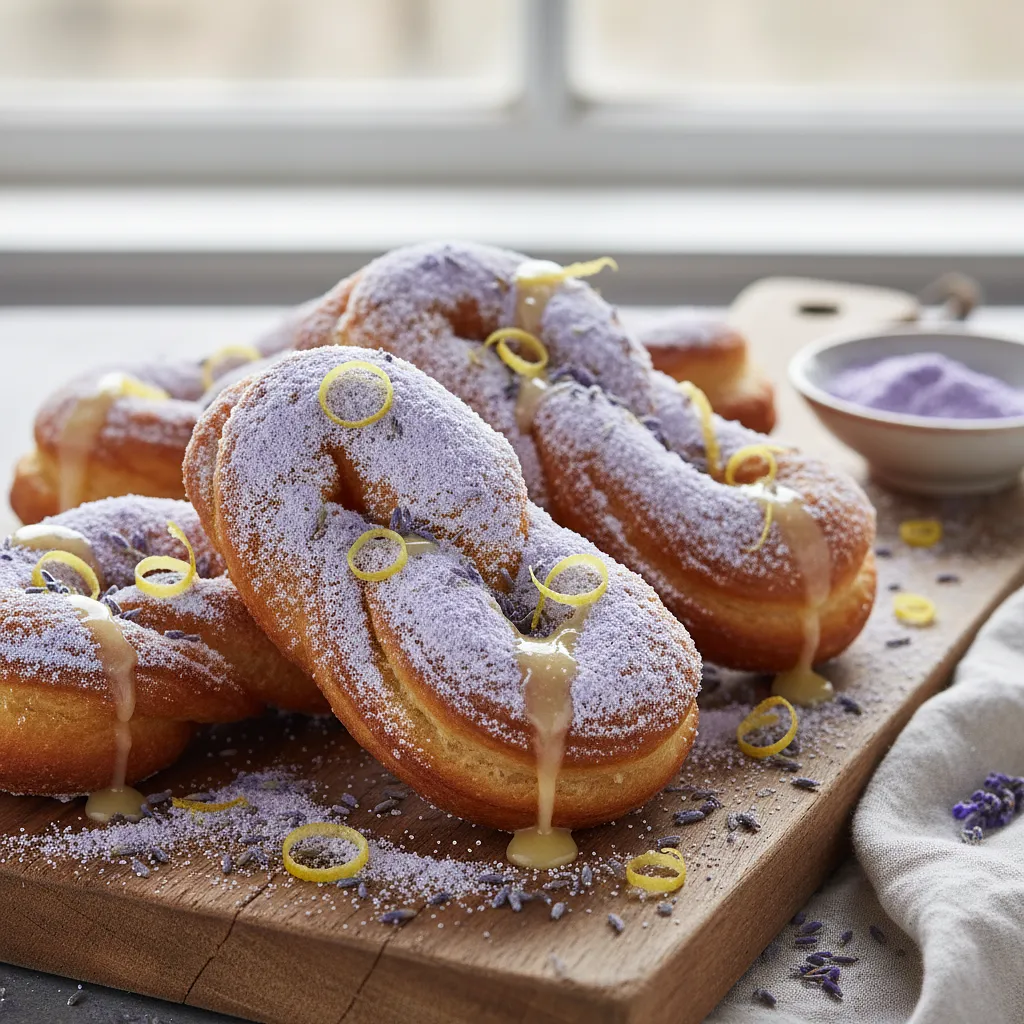
Rediscover the classic of Fat Thursday in a completely new, aromatic version! Angel wings, also known as chrust, are ultra-thin and crispy cookies fried in deep fat, which traditionally reign on Polish tables in the last days of Carnival. My version is enriched with a refreshing hint of freshly grated lemon zest, which perfectly balances the sweetness and adds lightness to the dough. However, the real star is the finishing touch – velvety powdered sugar combined with dried, edible lavender. This combination creates an extraordinary, perfumed aroma that wafts above the plate and transports you to Provençal gardens. The angel wings are incredibly delicate, almost transparent, and after frying, they are covered with characteristic bubbles, which indicates their perfect crispness. Serve them piled high on a platter, as the star of an afternoon tea or a sweet snack alongside aromatic coffee.
Składniki (10)
- Mąka pszenna tortowa typ 450 300 g
- Żółtko jaja kurzego 5 szt.
- Gęsta kwaśna śmietana 18% 100 g
- Rectified spirit 95% 1 łyżka
- Lemon zest 10 g
- Smalec wieprzowy 1000 g
- Powdered sugar 150 g
- 🌿 Przyprawy
- Salt 0.0 szczypt
- Dried culinary lavender 1 łyżka
- ✨ Opcjonalne
- Dark rum 1 łyżka
💡 Kliknij na składnik aby oznaczyć jako użyty
Preparation steps
Preparing the dough
In a separate, smaller bowl, combine all the wet ingredients. Add the egg yolks, thick sour cream, and spirit. Wash the lemon thoroughly, pour boiling water over it, and then grate the zest using a fine grater, adding it to the bowl. Whisk everything with a fork until you achieve a uniform, smooth emulsion with a light yellow color. If you are using rum, add it at this stage.
In a bowl with flour, make a well in the center, resembling a volcano crater. Pour the prepared mixture of wet ingredients into this well. Using a knife or fork, gently start to incorporate the flour from the edges into the center, mixing the ingredients. Continue until a dense, yet still lumpy mass forms. Then transfer the dough to a lightly floured pastry board or kitchen countertop.
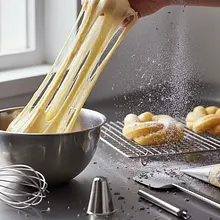
Now the most important and characteristic step in preparing angel wings: aerating the dough by beating. Knead the dough by hand only until the ingredients come together into a ball. Then take a heavy rolling pin and start vigorously hitting the dough, flattening it. Fold the flattened dough in half and hit it again with the rolling pin. Repeat this process (flattening and folding) for about 10-15 minutes. The dough will gradually become smooth, elastic, and uniform. Air bubbles should be visible in the cross-section.
When the dough is smooth and elastic, shape it into a ball. Wrap it tightly in plastic wrap or place it in a ziplock bag. Set the dough in the refrigerator for at least 30 minutes, preferably for an hour. Chilling the dough will allow the gluten to 'rest', making it easier to roll out very thin and preventing it from shrinking.
Rolling and shaping
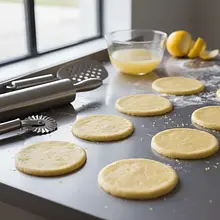
After chilling, take the dough out of the fridge and divide it into 3-4 smaller portions. Work with one portion at a time, keeping the rest covered (e.g., with plastic wrap or under a bowl) to prevent it from drying out. Lightly dust the work surface with flour. Start rolling out the dough as thinly as possible. It should be almost transparent, like a sheet of parchment paper. While rolling, rotate the dough and sprinkle with a minimal amount of flour if necessary.
When the dough is as thin as paper, use a pastry wheel (a crinkled rolling cutter) or a sharp knife to cut it into long strips about 3-4 cm wide. Then, cut each strip into shorter rectangles about 10-12 cm long.
In the center of each rectangle, make a longitudinal slit about 4-5 cm long with a knife. Then take one end of the rectangle and pass it through the slit you made, gently twisting it to the other side. This will create the characteristic shape of the angel wings resembling a bow. Place the finished angel wings on a lightly floured tray or board, covering them with a cloth to prevent them from drying out while waiting to be fried.
Frying
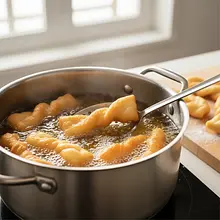
In a wide, flat pot or deep pan, heat the lard or oil. There should be enough fat for the angel wings to float freely in it (about 4-5 cm deep). Heat it to a temperature of about 175-180°C. If you don't have a thermometer, you can do a test: drop a small piece of dough into the fat. If it immediately rises to the surface and starts frying intensely, surrounded by bubbles, the fat is ready. If it sinks to the bottom, it's too cold. If it burns immediately, it's too hot.
Fry the angel wings in batches, a few pieces at a time, to avoid drastically lowering the temperature of the fat. Carefully place them into the hot oil. They will fry very quickly! After about 30-60 seconds, when the bottom turns golden brown and numerous bubbles appear on the surface, gently flip them over using two forks or tongs. Fry for another 30-60 seconds until golden brown.
Once ready, remove the golden angel wings from the fat using a slotted spoon or forks and place them on a large plate or tray lined with several layers of paper towels. The towel will absorb the excess fat. Arrange them in a single layer to prevent them from becoming soft from steam. Leave them to cool completely.
Finishing
Prepare lavender powdered sugar. In a small, dry blender or coffee grinder, add powdered sugar and dried lavender flowers. Blend everything on high speed for several seconds until the lavender is finely crushed and combined with the sugar, giving it a beautiful aroma and a delicate purple hue.
Completely cooled angel wings should be arranged on a large platter or serving dish, forming a mound. Just before serving, generously sprinkle them with the prepared lavender powdered sugar, using a fine-mesh sieve for this purpose. This way, the sugar will evenly coat all the cookies, creating a delicate, snowy layer.
Fun Fact
The name 'faworki' most likely comes from the French word 'faveur', which meant a narrow, silky ribbon. In 18th-century France, such ribbons were a fashionable accessory worn by ladies to pin on gentlemen as a sign of affection.
Best for
Tips
Angel wings look best when piled high in a seemingly careless mound on a large, flat platter. You can additionally decorate them with a few sprigs of fresh lavender or fresh lemon zest. Serve them alongside good quality coffee or tea, which will perfectly balance their sweetness.
Angel wings are best on the day they are made, when they are the crispiest. If there are any leftovers, store them in an airtight container at room temperature for 2-3 days. Keep in mind that over time they may lose some of their crispness. Do not store them in the fridge, as they will become chewy.
📸 Ugotowane przez społeczność
Zaloguj się, aby dodać zdjęcieDodaj zdjęcie gotowej potrawy
Po zatwierdzeniu przez moderatora otrzymasz 10 punktów doświadczenia.
Nikt jeszcze nie dodał zdjęcia. Bądź pierwszy!
Comments (0)
Be the first to comment on this recipe!
Add a comment