Take the meat out of the fridge 20–30 minutes before cutting, so it’s not icy cold. Trim off any larger membranes, if present, and cut the meat into cubes with sides of 2–3 cm: uniform size will ensure even braising. After cutting, pat the pieces dry with a paper towel — a dry surface will brown better.
Description
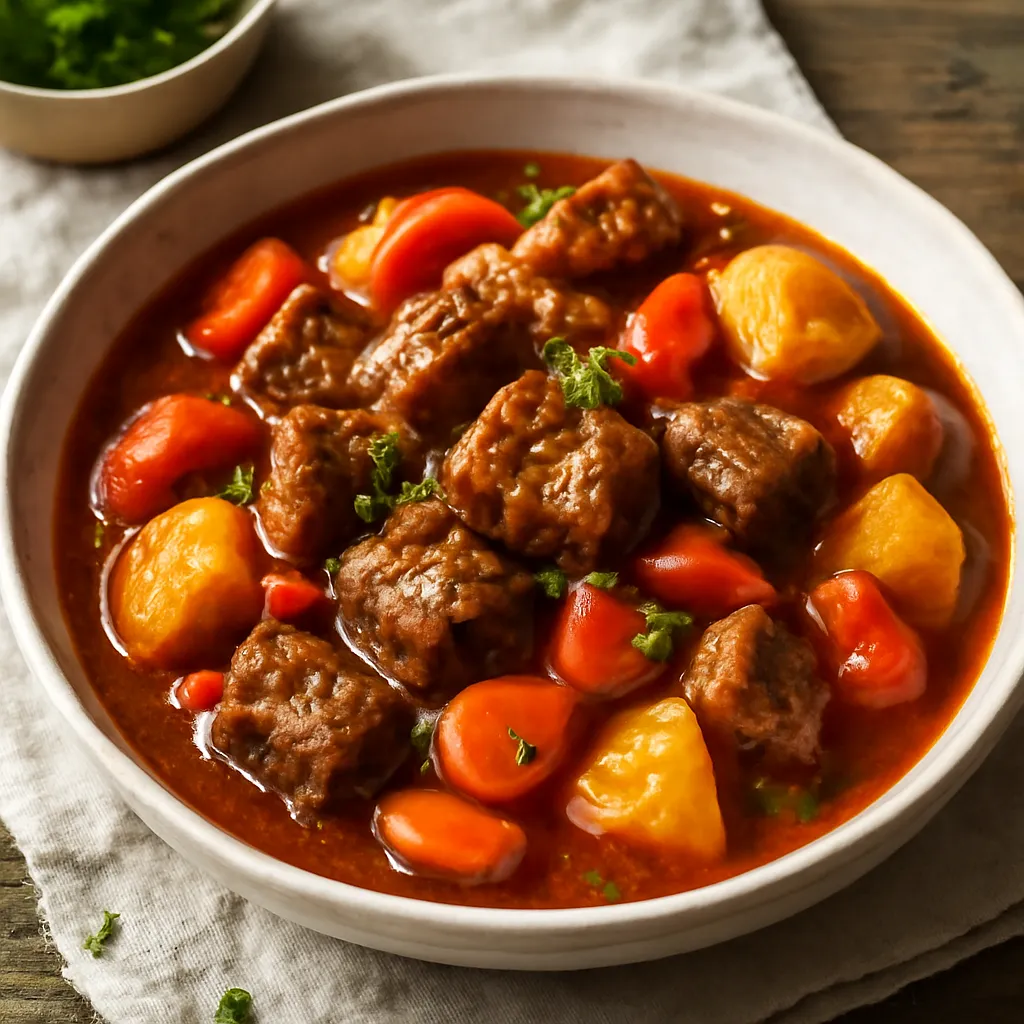
Beef goulash with vegetables is a classic, hearty one-pot dish of European origin, where the meat, slowly braised, gains tenderness and depth of flavor from the vegetables and spices. Perfect for New Year's Eve 2025 as a warm dish, it pairs well with potato purée, Silesian dumplings, groats, or fresh bread. It has a rich, dark red, slightly thickened marinade with a distinct tomato and paprika note, along with the aroma of thyme and bay leaf. Served in a rustic, traditional dish, it looks elegant and homey, while careful browning of the meat and slow braising ensure juicy pieces of beef and tender vegetables.
Składniki (18)
- Beef stew meat 800 g
- Onion 2 szt.
- Carrot 2.5 szt.
- Celeriac 150 g
- Garlic 3 ząbki
- Tomato paste 60 g
- Canned diced tomatoes 400 g
- Hot beef broth 800 ml
- Wheat flour 30 g
- Rapeseed oil 30 g
- Dried thyme 2 g
- 🌿 Przyprawy
- Salt 6 g
- Ground black pepper 2 szczypty
- Sweet paprika powder 1.2 łyżeczka
- Bay leaf 6.7 szt.
- ✨ Opcjonalne
- Butter 20 g
- Red wine 150 ml
- Parsley 0.5 pęczek
💡 Kliknij na składnik aby oznaczyć jako użyty
Preparation steps
Preparation of ingredients
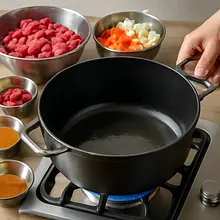
Peel the onion and cut it into large cubes (about 8 mm). Peel the carrots and slice them into pieces 8–10 mm thick. Peel the celeriac and cut it into pieces similar in size to the carrots, about 1–1.5 cm. Finely chop the garlic or press it through a garlic press. Coarsely chop the parsley (if using).
Meat preparation
Prepare a deep flat bowl or plate for coating the meat in flour. Pour in the flour, add a teaspoon of salt and a teaspoon of freshly ground pepper, along with sweet paprika. Add pieces of meat in batches and coat them evenly, shaking off the excess flour.
Sautéing
Heat a heavy pot (preferably cast iron or with a thick bottom, diameter 26–28 cm) over medium-high heat. Pour in the rapeseed oil. Fry the meat in batches (do not add everything at once to avoid dropping the temperature) — each batch for 3–5 minutes, until a deep, brown, crispy crust forms. Once fried, set the pieces aside on a plate.
Reduce the heat to medium. To the same dish, add the chopped onion and optionally a tablespoon of butter, sauté for 6–8 minutes until the onion is translucent and slightly golden. Add the garlic and sauté for another minute — the garlic should not burn.
Deglazing
If you are using wine: pour 150 ml of red wine into the pot and vigorously scrape up all the browned bits from the bottom (deglaze) for 1–2 minutes, until the wine reduces by half. If you are not using wine, pour in 100 ml of hot broth and do the same.
Frying the Aromatics
Add tomato paste (60 g) and sweet paprika; sauté for 1–2 minutes, stirring to eliminate the raw taste of the paste. Stir vigorously until it becomes an aromatic, thick sauce base.
Assembly before braising
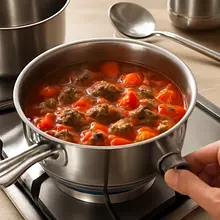
Return the sautéed pieces of meat to the pot along with the juices that have formed. Add the canned tomatoes and hot broth so that the meat is covered by about 1–2 cm. Add the bay leaves and thyme. Bring to a gentle boil.
Stewing
Reduce the heat to very low — it should be a gentle, even simmer (a few small bubbles per second). Partially cover the pot (the lid slightly ajar) and braise for 90–120 minutes. Stir gently every 20–30 minutes and check the tenderness. The meat is ready when it can be easily shredded with a fork.
Adding vegetables
After about 60 minutes of simmering, add the carrot and celeriac. Stir, cover, and simmer for another 30–50 minutes, until the vegetables are soft (they can be pierced with a fork without resistance).
Reduction and seasoning
Uncover the pot for the last 15–20 minutes of simmering to allow the sauce to thicken and the flavors to concentrate. If the sauce is too thin, you can mix 10 g of flour with 20 ml of cold water (slurry) and slowly pour it into the boiling sauce while stirring — cook for 5–10 minutes until thickened. Taste and season with salt and pepper to your liking.
Finishing
2–3 minutes before the end of cooking, add butter (optional) and stir vigorously to give the sauce a shine. After removing from heat, add chopped parsley to taste.
Serving
Let the goulash rest for 10 minutes before serving to allow the flavors to settle. Serve in deep plates or bowls, with mashed potatoes, Silesian dumplings, buckwheat groats, or fresh bread. Garnish with fresh parsley on top.
Fun Fact
Goulash as a dish originates from Hungarian and Central European cuisine — it was traditionally prepared in cauldrons over a fire. The name 'goulash' (gulyás) originally referred to a shepherd's dish.
Best for
Tips
Serve with creamy mashed potatoes, Silesian dumplings, or polenta. For a flavor contrast, add a slice of pickled cucumber or a teaspoon of high-quality mustard. Serve in a shallow bowl with a sprinkle of fresh parsley for color.
Store in an airtight container in the refrigerator for up to 3 days. Can be frozen in portions for up to 3 months. To reheat: slowly warm over low heat, adding a bit of broth if necessary; do not bring to a rapid boil. After thawing, it's good to season again before serving.
📸 Ugotowane przez społeczność
Zaloguj się, aby dodać zdjęcieDodaj zdjęcie gotowej potrawy
Po zatwierdzeniu przez moderatora otrzymasz 10 punktów doświadczenia.
Nikt jeszcze nie dodał zdjęcia. Bądź pierwszy!
Comments (0)
Be the first to comment on this recipe!
Add a comment