Recipe for: Homemade Bread Kvass with Apple Puree and a Slice of Pear

Drinks Regional Cuisine of Poland May Day 48 min Medium 18 views ~31.47 PLN * - (0)
Rate:
(0)
Start Cooking

Description

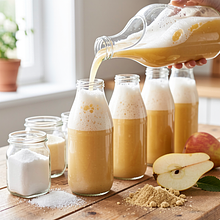
Traditional summer bread kvass in the Greater Poland style: a slightly sour, slightly sweet carbonated drink based on rye bread, served with a thick puree of Polish apples and garnished with a thin slice of pear. Inspired by local, rural flavors of Greater Poland — homemade bread gives a deep, baked aroma, while the apple puree adds freshness and creamy texture. The drink is perfect as a refreshing addition to summer barbecues, picnics, and feasts; serve chilled in tall glasses, with a spoon for the puree. In a sugar-free version, you can reduce the sugar and add honey or more raisins; if you want a stronger fizz — leave it for a second, shorter fermentation in bottles.

Ingredients Used

Ingredients (11)

Servings:
6
  • Rye bread 400 g
  • Water 3000 ml
  • Sugar 250 g
  • Fresh yeast 20 g
  • Lemon 1.3 pcs (~100 g)
  • Mint 30 g
  • Apple 3.3 pcs (~600 g)
  • Pear 1 pcs (~180 g)
  • 🌿 Spices
  • Salt 1 g
  • ✨ Optional
  • Raisins 50 g
  • Cinnamon 2 g
💰 Estimated dish cost: ~31.47 PLN (5.24 PLN/serving)
* Prices missing for some ingredients

💡 Click an ingredient to mark it as used

Preparation steps

Bread preparation

1

Cut the rye bread into slices or cubes with a side of about 2-3 cm. Preheat the oven to 180°C (top-bottom). Place the bread on a baking sheet lined with parchment paper and toast for 15-20 minutes until it is well browned — it should have a dark brown color and an intense aroma of caramelized grain. Toasting will give you a deeper flavor and a nicer color to the sourdough.

Ingredients: rye bread
Use a large baking tray and spread the slices out individually to ensure they toast evenly. Don't burn the bread to a crisp — lightly toasted/burnt edges are fine, but charring will give a bitter taste.
Brewing

2

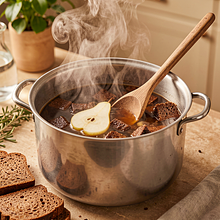
Place the toasted bread in a large pot with a capacity of at least 4 liters. Pour in 3000 ml of boiling water and immediately cover with a lid. Set aside for 4-6 hours in a warm place to allow the bread extract to release its color and flavor — the infusion should be dark brown and smell of bread. Stir at least once with a wooden spoon to release the crumb from the slices.

Ingredients: rye bread, Water
Use a large enameled or stainless steel pot. If you want a stronger flavor, steep for up to 8 hours. Do not use aluminum (it may react).

Draining and Cooling

3

After steeping, strain the infusion through a fine sieve or cheesecloth into a large bowl or another pot. Press the bread pieces with a spoon to extract as much liquid as possible. Allow the infusion to cool to room temperature, about 25°C — it should be pleasantly warm, not hot.

Ingredients: Water
For straining, use cheesecloth folded in several layers or a very fine sieve. Do not add yeast to the hot brew — temperatures above 45°C will kill the yeast.

Sweetening and initial seasoning

4

To the cool infusion, add 200 g of sugar and the juice squeezed from half a lemon (about 50 g). Stir until the sugar is completely dissolved. Add mint (leaves), and optionally raisins — they will speed up fermentation and add a fruity note. Cover the pot with cheesecloth and set it in a warm place (about 20-24°C) for 12-18 hours. After this time, the infusion should start to bubble slightly and have a delicate, tangy aroma.

Ingredients: Sugar, Lemon, mint, Raisins
Use a wooden spoon for mixing. If after 18 hours there are no bubbles, you can add yeast (step 5) or leave it for a few more hours. The fermentation time depends on the room temperature.

Second fermentation (optionally with yeast)

5

If you want to speed up carbonation or the flavor will be too weak, dissolve the remaining 50 g of sugar in 100 ml of warm water (about 30-35°C) and crumble 20 g of fresh yeast into this water. Let it sit for 5-10 minutes until a foam forms. Add the starter to the infusion, mix thoroughly, and pour the brew into clean bottles with closures (preferably glass bottles with a 'kłos' cork or caps). Seal and leave at room temperature for 12-24 hours, checking the pressure of the bottles (they should be firm to the touch).

Ingredients: Sugar, Fresh yeast
Use bottles with a strong seal and place them on a tray in case of leaks. If the bottles are very tight after 12 hours, move them to the refrigerator to stop fermentation. If you prefer without yeast, skip this step and simply chill the infusion.

Preparation of apple mousse

6

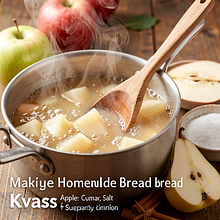
Peel the apples, remove the cores, and cut them into cubes. Place the apples in a saucepan, add 30 g of sugar (part of the sugar from the list), 30 ml of water (you can use a small portion from the total amount), and a pinch of salt. Cook over medium heat for 12-15 minutes, stirring every few minutes, until the apples are soft and falling apart. If you are using cinnamon (optional), add it at the end of cooking.

Ingredients: Apple, Sugar, Salt, Cinnamon
Use a wide saucepan so that the apples evaporate faster and do not overcook nervously. If you have an immersion blender, you can puree the mixture directly in the saucepan for a smooth consistency — blend briefly to avoid overheating the puree.

Cooling the mousse and the acid

7

After the second fermentation, place the bottles in the refrigerator for at least 8 hours (preferably 24 hours) — this will stop the fermentation and chill the drink. Cool the apple juice to room temperature, then store it in the refrigerator in a covered jar. The juice should be thick, aromatic, and slightly sweet and sour.

Ingredients: Apple
Cool the bottles upright. If the puree is too runny, strain off the excess juice; if it's too thick, you can mix it with 1-2 tablespoons of cold acid when serving.

Portioning and serving

8

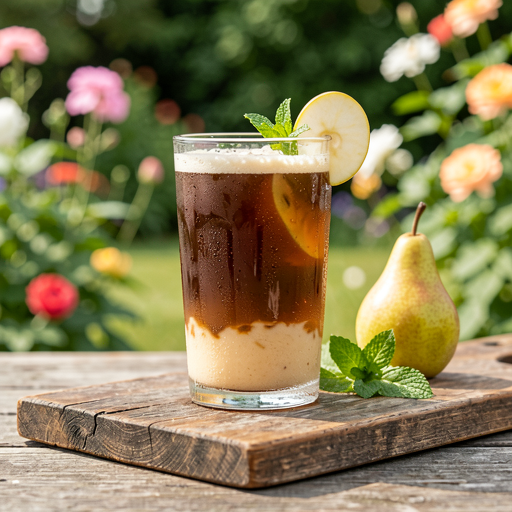
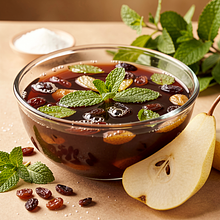
For each serving (about 300-350 ml of the drink), place 2-3 tablespoons of apple puree at the bottom of a tall glass. Gently pour in the chilled kvass so that the puree floats and creates decorative layers. Top with a thin slice of pear as a garnish and a mint leaf. Serve immediately with a long spoon.

Ingredients: Apple, Pear, mint
Use tall, clear glasses to showcase the layers. Pour the drink slowly down the side of the glass to avoid mixing the mousse. Additionally, you can add raisins to each glass for a sweet contrast (optional).

Control and safety

9

Before serving, check the smell and taste of the sour drink — it should be pleasantly sour, slightly sweet, and fizzy. If there is a sharp, unpleasant smell or mold, discard the beverage. Open the bottles carefully (there may be excessive carbonation) — twist slowly while holding over a bowl.

Ingredients: Fresh yeast
Always check the bottles when opening for the first time after fermentation — open over the sink and slowly. Storing in the fridge significantly reduces the risk of excessive fermentation.

Fun Fact

💡

Bread kvass is a drink with a long history in the Central and Eastern European region; in Greater Poland, it was once made on peasant farms as an inexpensive way to refresh and utilize stale bread.

Best for

Tips

🍽️ Serving

Serve well chilled in transparent glasses with a layer of apple puree at the bottom and a slice of pear on the rim. For children, you can reduce the fermentation time to make the acid less sour; for adults, optionally add a shot of vodka or herbs (e.g., rosemary) for a twist.

🥡 Storage

Store bottles in the refrigerator for 5-7 days. After opening, keep in the refrigerator and consume within 2-3 days. If the drink becomes overly carbonated, move the bottles to a cooler place and open slowly to reduce pressure.

📸 Cooked by the community

Log in to add a photo
Add a photo of the finished dish

After moderator approval, you will receive 10 experience points.

🍲

No one has added a photo yet. Be the first!

Comments (0)

Be the first to comment on this recipe!

Add a comment

You might also like

Recipe Categories

Drinks
Drinks in: Valentine's Day

Romantic drinks that will enhance the atmosphere and highlight the flavors of the dishes, perfect for a Valentine's Day dinner.

See all recipes in this category

Traditional recipes from various regions of Poland that showcase the richness of local flavors and ingredients.

See all recipes in this category

May Day is a time when spring comes to life, and we celebrate the arrival of warmer days. It's the perfect opportunity to spend time with family and friends outdoors, at a barbecue or picnic. Culinary traditions associated with May Day include grilling, which has become almost a national sport fo...

See all recipes in this category
Advertisement