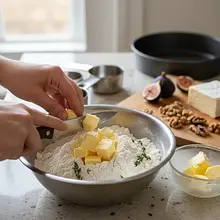
Start by preparing the dough. In a large bowl, place the sifted wheat flour and salt. Remove the leaves from fresh thyme sprigs. You can do this by sliding your fingers along the sprig 'against the grain'. Chop the leaves very finely on a cutting board and add them to the flour. Mix everything with a dry whisk or fork to evenly distribute the salt and thyme.
Description
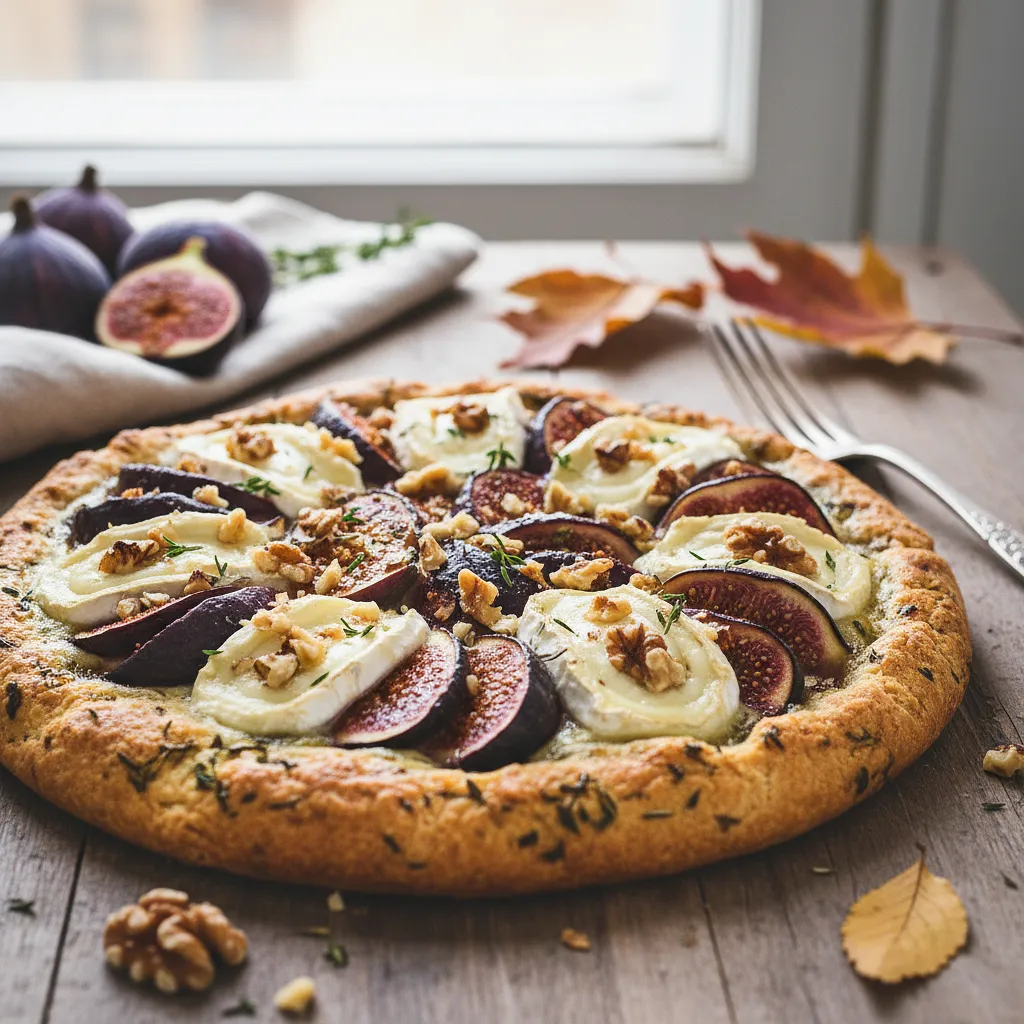
This savory tart is the essence of early autumn, combining elegance and the richness of seasonal flavors. On a buttery, crumbly base with an aromatic hint of fresh thyme rests a velvety filling of creamy goat cheese and cream. The sweetness of ripe, roasted figs perfectly balances the characteristic, slightly salty and tangy notes of the cheese. Crunchy toasted walnuts add texture, and the entire dish is drizzled with liquid honey after baking, subtly enhancing all the flavors. Visually, the dish is incredibly appetizing – the purple figs beautifully contrast with the light filling and golden crust. The tart is inspired by classic French and Mediterranean cuisine. It is perfect as an exquisite appetizer at a gathering, a main course for a light dinner accompanied by arugula salad and a glass of white wine, or as the star of an autumn brunch.
Składniki (15)
- Wheat flour type 450 200 g
- Butter 100 g
- Egg yolk 1.1 szt.
- Egg 1 szt.
- Cold water 30 ml
- Fresh thyme 5 g
- Ser kozi 200 g
- 30% cream 100 ml
- Fresh figs 6 szt.
- Walnuts 50 g
- Honey 40 ml
- 🌿 Przyprawy
- Salt 0.1 szczypt
- Pieprz czarny świeżo mielony 1 szczypta
- ✨ Opcjonalne
- Arugula 20 g
- Balsamic cream 15 g
💡 Kliknij na składnik aby oznaczyć jako użyty
Preparation steps
Thyme Shortcrust Pastry
Take the butter straight from the fridge and cut it into small cubes (about 1x1 cm). Add the cold butter to the bowl with flour. Now the most important step: rubbing the butter into the flour. Using only your fingertips, quickly rub the pieces of butter into the flour until the mixture resembles wet sand or crumble with visible small lumps of butter the size of pea grains. Work quickly to prevent the butter from warming up.
In the center of the dry ingredients, make a small well. Crack the egg yolk into it and pour in the ice-cold water. Using a fork or knife, gently start mixing the ingredients, incorporating the flour from the edges until they begin to come together into larger clumps. Then, quickly knead the dough with your hands into a uniform ball. Do not knead for long – just until the ingredients are combined.
Flatten the formed ball of dough slightly with your hand, creating a disk about 2-3 cm thick. Wrap it tightly in plastic wrap and place it in the refrigerator for at least 30 minutes, preferably for an hour. Chilling the dough is essential for the butter to firm up and the gluten to 'rest'.
Preheat the oven to 190°C (fan) or 200°C (top-bottom). Take the chilled dough out of the fridge. On a lightly floured surface or a piece of baking paper, roll out the dough into a round disc about 3-4 mm thick and larger in diameter than the tart pan. Gently roll the dough onto the rolling pin and transfer it to the pan. Carefully press the dough into the bottom and sides of the pan, using your fingers. Trim the excess dough with a knife, running it along the edge of the pan.
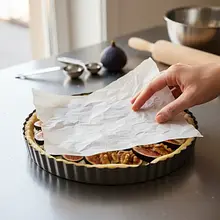
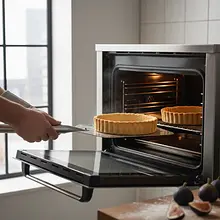
Place a piece of parchment paper on the lined dough, covering the entire surface. Pour weights on the paper – this can be dry beans, peas, rice, or special ceramic baking beads. The weights will prevent the dough from puffing up. Put the pan in the preheated oven and bake for 15 minutes. After that time, carefully remove the paper with the weights and bake the bottom for another 5-7 minutes, until it is lightly golden and dry to the touch.
Filling and Baking
While the crust is pre-baking, prepare the cheese filling. In a bowl, place the crumbled goat cheese. Using a fork or whisk, mash it with the cream until smooth and uniform. Add the whole egg and season with freshly ground black pepper. Mix everything vigorously until the ingredients are combined. The mixture should have the consistency of thick cream.
Prepare the remaining filling ingredients. Coarsely chop the walnuts with a knife. Gently wash the figs and dry them with a paper towel. Cut off the tough ends (stems), then slice each fig into quarters or thicker slices, depending on their size.
Remove the pre-baked crust from the oven. Lower the temperature to 180°C (fan mode). Pour the prepared cheese mixture evenly onto the hot crust. Arrange pieces of figs on top of the mixture, gently pressing them into the filling. Sprinkle everything with coarsely chopped walnuts.
Place the tart back in the oven preheated to 180°C and bake for about 20-25 minutes. The tart is ready when the cheese filling is set (the center may still be slightly wobbly, but not liquid), and the edges of the crust are nicely browned. Remove the tart from the oven and let it cool on a rack for about 10-15 minutes.
Before serving, drizzle the warm tart with streams of liquid honey. If you like, you can decorate it with fresh arugula leaves. Additionally, to enhance the flavor, you can drizzle the whole thing with balsamic cream. Cut into portions and serve warm or at room temperature.
Fun Fact
Figs are one of the oldest fruits cultivated by humans - archaeological evidence suggests that they were grown over 11,000 years ago in the Jordan Valley, making them older than the cultivation of grains such as wheat or barley.
Best for
Tips
The tart is best served warm, but it is also delicious at room temperature. Serve it on a board or a large plate, cut into triangular portions. Next to it, place a handful of fresh arugula drizzled with olive oil and balsamic vinegar, which will add freshness and a peppery flavor to the dish. It pairs perfectly with a glass of chilled dry white wine, such as Sauvignon Blanc, or a light red, like Pinot Noir.
If there are any leftovers, store the tart in the refrigerator, covered with plastic wrap or in an airtight container, for up to 2-3 days. It can be eaten cold straight from the fridge or reheated. To regain the crispness of the crust, it is best to reheat portions in an oven preheated to 160°C for 5-7 minutes. Reheating in the microwave is not recommended, as the pastry will become soft.
📸 Ugotowane przez społeczność
Zaloguj się, aby dodać zdjęcieDodaj zdjęcie gotowej potrawy
Po zatwierdzeniu przez moderatora otrzymasz 10 punktów doświadczenia.
Nikt jeszcze nie dodał zdjęcia. Bądź pierwszy!
Comments (0)
Be the first to comment on this recipe!
Add a comment