Menu

Duck in Oranges

Pikantne Main Dishes European cuisine Dishes for Special Occasions 240 min Medium 15 wyświetleń ~86.78 PLN - (0)
Rate:
(0)

Description

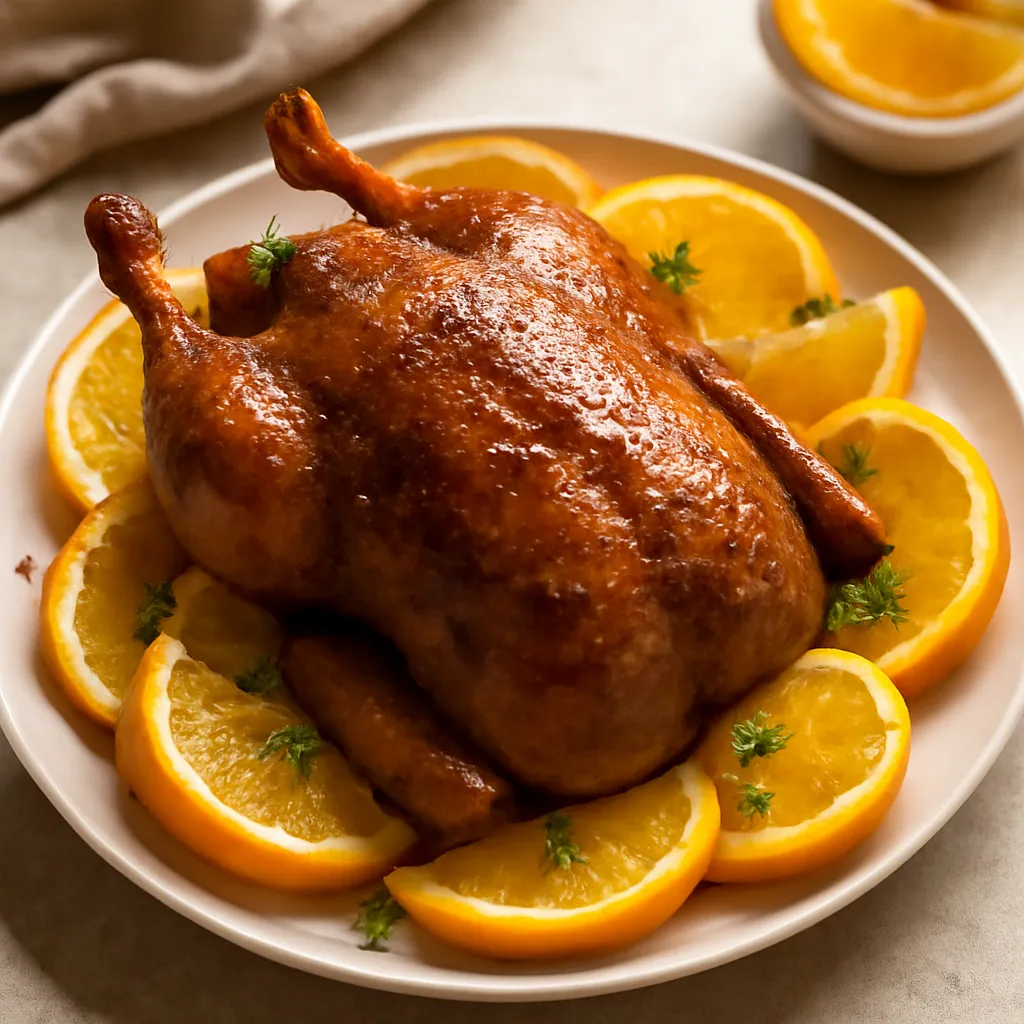
Traditional duck with oranges is an exquisite main dish that combines juicy, roasted meat with an intense, sweet-and-sour orange-honey glaze. This dish is perfect for New Year's Eve 2025 or other festive occasions — it makes a visual impression with its golden, crispy skin and glossy glaze, while the flavor blends the aromatic duck fat, citrus freshness, and a delicate hint of wine and balsamic. Serve with roasted potatoes or celery puree and wine to drink; it looks great on a large platter with orange slices and fresh parsley.

Składniki (15)

Servings:
4
  • Duck (whole, carcass) 1 szt.
  • Orange (fresh) 4 szt.
  • wildflower honey 60 g
  • Balsamic vinegar 30 ml
  • Butter 50 g
  • Dry red wine 150 ml
  • Low-sodium chicken broth 250 ml
  • Garlic 3 ząbki
  • Fresh thyme 0.1 pęczków
  • Wheat flour (for thickening) 10 g
  • Rapeseed oil 15 g
  • 🌿 Przyprawy
  • Table salt 12 g
  • Black pepper (ground) 2 szczypty
  • ✨ Opcjonalne
  • Orange liqueur (Grand Marnier or Cointreau) 30 ml
  • Fresh parsley 0.3 pęczków
💰 Szacowany koszt dania: ~86.78 PLN (21.70 PLN/porcję)

💡 Kliknij na składnik aby oznaczyć jako użyty

Preparation steps

Preparing the duck

1

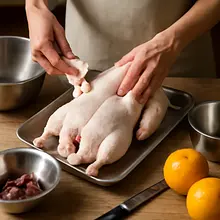
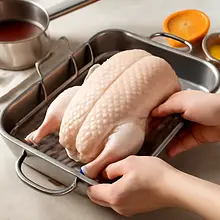
Remove the duck from the packaging, remove the innards (if any) and trim excess skin/wings. Pat the carcass dry with paper towels inside and out — dry skin will brown better. Gently loosen the skin on the breasts with your fingers to separate it from the meat, if possible, leaving the skin intact. Then make crosshatch cuts in the skin (not the meat) with a knife about 3 mm deep — the cuts will help render the fat and make the skin crispy.

Ingredients: Duck (whole, carcass)
Use a sharp chef's knife. Score only the skin and fat, avoiding cutting into the meat — if you cut into the meat, the juices will escape and the meat may be dry. Pat the carcass dry with paper towels before scoring.
2

Rub the inside and outside of the duck with salt (about 12 g in total) and freshly ground pepper (about 2 g). Inside, place two halves of an orange (squeezed and halved), a few cloves of garlic (left in their skins), and 3-4 sprigs of thyme. Lightly sprinkle pepper on the skin outside.

Ingredients: Table salt, Black pepper (ground), Orange (fresh), Garlic, Fresh thyme
Use your hands or rubber gloves for rubbing — you can rub the salt more vigorously on the breasts and more gently on the thighs. If you bought the duck stuffed, remove the stuffing and use the above aromatics.

Marinating

3

Optionally: leave the duck on a tray in the refrigerator, uncovered, for 6-12 hours or overnight. This will allow the skin to dry out further, which will increase crispiness during roasting. If you don't have that much time, leave it for at least 30 minutes at room temperature.

Ingredients: Table salt
The best results are achieved by leaving the duck uncovered in the fridge — moisture will evaporate from the skin. Do not marinate in salt for too long (over 24 hours), as the meat may become too salty.

Baking - preparation

4

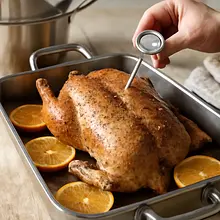
Take the duck out 30 minutes before roasting to reach room temperature. Preheat the oven to 220°C (fan mode not recommended for the initial stage). Place the rack in the roasting pan so that the fat can drain. If you have a kitchen thermometer, insert it into the thickest part of the thigh (you will check the temperature later).

Use a roasting pan with a rack sized to fit the duck (e.g., 30×22 cm). A thermometer is the most reliable way to determine if the duck is cooked — the goal is 75°C in the thickest part of the thigh.

Baking - the beginning

5

Place the duck breast side up on a rack in a roasting pan. Put it in the oven preheated to 220°C and roast for 20–25 minutes — this is a high-temperature stage aimed at quickly rendering some of the fat and browning the skin. After this time, the skin should be golden, and the fat in the roasting pan should be well rendered.

Ingredients: Duck (whole, carcass)
Do not open the oven more than once during this stage — losing hot air will reduce the browning effect. Use a thermometer to check if the crust has browned (it should be deep golden and crispy).

Baking - continued

6

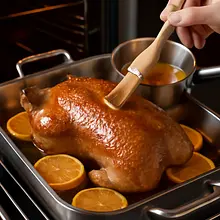
Reduce the oven temperature to 160°C. Weigh the duck and plan the remaining cooking time: roast for an additional 20–25 minutes for every 500 g of the bird (for a 2 kg bird, this is about 80–100 minutes). During roasting, baste the duck with the sauce/fat from the roasting pan every 20–25 minutes to prevent the skin from drying out and to give it a nice shine.

Ingredients: Duck (whole, carcass)
Use a large spoon or ladle for drizzling. If too much fat collects at the bottom of the baking dish, carefully pour it off into a container — leave about 2–3 tablespoons for frying and blanching the garlic under the sauce.

Baking Check

7

At the end of the recommended baking time, check the temperature in the thickest part of the thigh — it should reach 75°C. Alternatively, pierce the thigh with a sharp knife: the juices that flow out should be clear, not pink. If the skin is not crispy enough, increase the oven temperature to 220°C and bake for an additional 8–10 minutes.

Ingredients: Duck (whole, carcass)
Insert the thermometer without touching the bone. If you don't have a thermometer, check by piercing: if the juices are pink, continue baking in 15-minute cycles.

Sauce - preparation and reduction

8

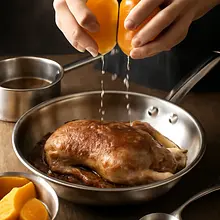
When the duck is almost ready, prepare the sauce. Squeeze the juice from 2 oranges (about 200 g of juice) — grate the zest from 1 orange beforehand, leaving some for decoration. In a medium skillet, heat oil (15 g) over medium heat, add the remaining peeled and finely chopped garlic (from inside the carcass) and sauté for 30–45 seconds until it starts to smell (do not brown). Pour in the red wine (150 ml) and cook over higher heat for 3–4 minutes to evaporate the alcohol and reduce the liquid by about 1/3. Add the orange juice, honey (60 g), balsamic vinegar (30 g), and broth (250 ml). Cook over medium heat for 12–15 minutes until the mixture is reduced by half and takes on a thicker, syrupy consistency.

Ingredients: Dry red wine, Orange (fresh), wildflower honey, Balsamic vinegar, Low-sodium chicken broth, Garlic, Rapeseed oil, Wheat flour (for thickening), Butter
Use a flat pan with a thick bottom that allows for quick evaporation of liquids. The reduction should be noticeable — the volume will decrease, and the bubbles will be larger and slower. If the sauce seems too thin, thicken it with flour diluted in a tablespoon of water (10 g dissolved in 2 tablespoons of water) and cook for 1–2 minutes.

Sauce - finishing touches

9

After reducing the sauce, remove the pan from the heat and add the cold pieces of butter (50 g), vigorously whisking to emulsify the sauce and give it a shine. If you added flour, cook for an additional minute. Strain the sauce through a fine sieve into a pot, pressing the remnants of the skin and garlic with a spoon — you will get a smooth, glossy sauce.

Ingredients: Butter, Wheat flour (for thickening), Orange (fresh)
The butter should be cold — this makes it easier to emulsify and gives the sauce a creamy consistency. Straining through a sieve will remove fibers and grains, resulting in an aesthetically pleasing sauce.

Finishing the duck

10

If you like, brush the duck with a bit of the prepared sauce and return it to the oven preheated to 220°C for 8–10 minutes to let the glaze caramelize slightly. Then remove the duck and transfer it to a cutting board. Loosely cover with aluminum foil and let it rest for 15–20 minutes — this will allow the juices to redistribute evenly.

Ingredients: Duck (whole, carcass), wildflower honey
Resting is key — if you cut the duck right away, the juices will run out and the meat will be dry. You can use this moment to season the sauce and prepare the side dishes.

Sauce - optional flambéing

11

If you want a spectacular finish and are using alcohol, heat the sauce in a small pan to just below boiling point. Remove from heat, pour in the orange liqueur (30 ml), and carefully ignite it (flambé) — keep your hands and face away and use a long lighter. Allow the flame to burn off the alcohol (a few seconds), then extinguish and gently stir the sauce.

Ingredients: Orange liqueur (Grand Marnier or Cointreau)
Flambéing is optional and requires caution. If you are unsure, skip the step or let the alcohol evaporate longer in the pan. Do not attempt to flambé under a hood; have a lid or kitchen fire extinguisher nearby.

Slicing and serving

12

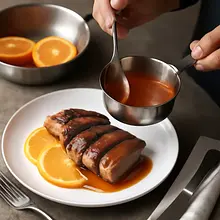
Remove the duck's cover and cut off the legs, then separate the breast fillets. When slicing the breast, cut diagonally at a 45° angle to the grain of the meat to ensure tender slices. Arrange the slices and thighs on a warmed serving platter. Drizzle with the orange-wine-honey sauce and garnish with thin slices of fresh orange and chopped parsley (optional). Serve immediately.

Ingredients: Fresh parsley, Orange (fresh), Duck (whole, carcass)
Use a sharp knife to slice the breast (a carving knife or a filleting knife). Portion thin slices — 2–3 slices of breast per person and one whole thigh each.

Fun Fact

💡

Peking duck and sweet and sour duck dishes have a long history in European and Asian cuisines; the combination of fatty duck with the sweetness of oranges became popular in the 19th century when citrus fruits became more available in Europe.

Best for

Tips

🍽️ Serving

Serve the duck sliced into thin pieces, generously drizzled with sauce. It pairs well with potatoes roasted in duck fat, celery puree, caramelized beets, or caramelized apples. Serve with a glass of red wine with moderate tannins.

🥡 Storage

Store leftovers in the refrigerator in an airtight container for up to 48 hours. Keep the sauce separately in a jar. To reheat the duck, preheat the oven to 160°C and heat for 10–15 minutes covered with foil, then 3–5 minutes uncovered to regain the crispiness of the skin. Reheat the sauce over low heat, adding a little broth if it is too thick.

📸 Ugotowane przez społeczność

Zaloguj się, aby dodać zdjęcie
Dodaj zdjęcie gotowej potrawy

Po zatwierdzeniu przez moderatora otrzymasz 10 punktów doświadczenia.

🍲

Nikt jeszcze nie dodał zdjęcia. Bądź pierwszy!

Comments (0)

Be the first to comment on this recipe!

Add a comment

You might also like

Recipe Categories

Main Dishes
Main Dishes in: Christmas Eve Dinner

Main courses are the heart of every meal - hearty, delicious, and full of nutrients. Meats: beef, pork, poultry, and lamb in various versions. Fish and seafood: baked, fried, grilled, and stewed. Vegetarian dishes: tofu, tempeh, legumes as the main protein. Casseroles: pasta, potato, vegetable wi...

See all recipes in this category

European cuisine is a mosaic of culinary traditions from the Old Continent - from Spain to Scandinavia. Valencian paella and tapas from Spain - sunshine on a plate. Boeuf bourguignon and ratatouille from France - elegance and finesse. Wiener schnitzel and strudel from Austria - Central European c...

See all recipes in this category

Dishes for special occasions are culinary masterpieces for birthdays, anniversaries, and holidays. Grilled beef steak with herb butter - restaurant quality at home. Beef Wellington - beef in puff pastry with duxelles. Roast duck with apples - a holiday tradition in a new edition. Pink salmon with...

See all recipes in this category
Reklama