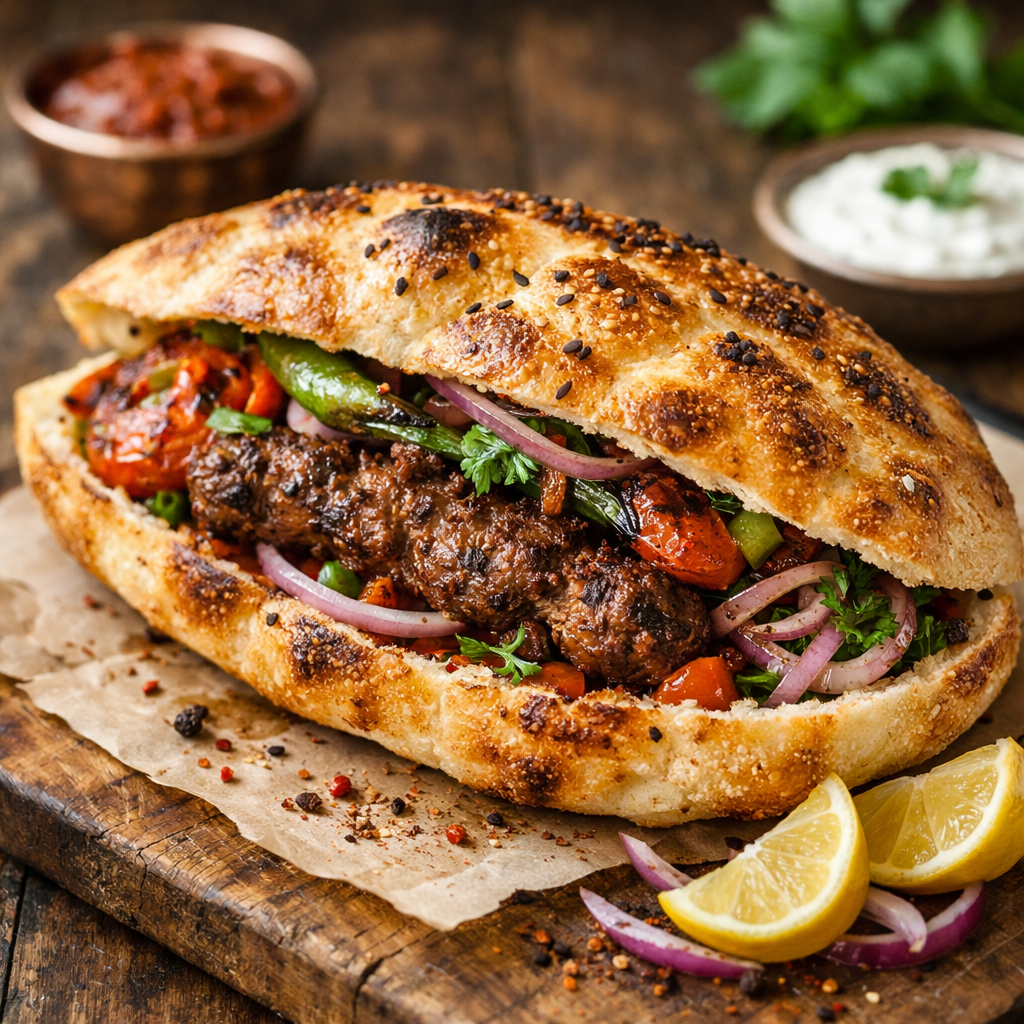
Oven-baked Kebab in Traditional Turkish Bread

Pikantne Main dishes Middle Eastern Cuisine 90 min Medium 58 wyświetleń ~6.42 PLN * 5.0 (1)
Rate:
5.0 (1)
Start Cooking

Description

Homemade oven kebab is aromatic, roasted meat with spices served in soft Turkish bread with yogurt-garlic sauce and fresh vegetables. The recipe combines Middle Eastern flavors (cumin, paprika, garlic) with practical Polish ingredients available in winter and off-season. The dish is hearty, juicy, and has a contrast of textures: crunchy vegetables, soft bread, and a delicate, creamy note of the sauce. Oven kebab can be served for lunch, family dinner, or at a party — sliced thin, it tastes best. For the meat, I suggest a traditional mix of lamb and beef, but I also provide easy substitutes and tips on how to roast the meat without a special vertical spit.

Ingredients Used

Ingredients (15)

Servings:
4
  • Ground lamb and beef mixture 600 g
  • Turkish bread (pita) 320 g
  • Natural yogurt 3.2% 200 g
  • Fresh cucumber 150 g
  • Tomato 1.7 szt. (~200 g)
  • Onion 1 szt. (~150 g)
  • Garlic 3 ząbki (~15 g)
  • Rapeseed oil 30 g
  • Lemon 1 szt. (~80 g)
  • 🌿 Przyprawy
  • Salt 0.2 szczypt (~5 g)
  • Black pepper 4 szczypty (~2 g)
  • Parsley 0.7 pęczek (~20 g)
  • Sweet paprika (powder) 2 łyżeczki (~10 g)
  • ✨ Opcjonalne
  • Cumin 4 g
  • Chili sauce (optional) 30 g
💰 Szacowany koszt dania: ~6.42 PLN (1.60 PLN/porcję)
* Brak cen dla niektórych składników

💡 Kliknij na składnik aby oznaczyć jako użyty

Preparation steps

Marinade and meat

1

Prepare the spices: sift sweet paprika and cumin (if using) into a large bowl, add salt and pepper. Peel and finely chop 2 cloves of garlic (leave the remaining one for the sauce). Add 15 g of rapeseed oil. Mix the ingredients with a dry spoon to create an even mixture.

Use a large steel or glass bowl. A sharp knife and a plastic or wooden cutting board are best for chopping garlic. Do not use an aluminum bowl with acidic ingredients (lemon) — it may affect the taste.
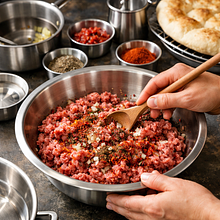
2

Add 600 g of ground meat to a bowl. Using your hands (or a wooden spoon), combine the meat with the spices. Knead vigorously for 2-3 minutes — the meat should become uniform and slightly sticky, making it easy to shape. Try a small piece of the raw meat sautéed in a pan (a small sample) and check the seasoning; adjust with salt/pepper if needed.

Use disposable gloves if you don't want to sabotage the smell with garlic. If you have a thermometer, the meat should be around 75°C inside after baking. Don't knead too long — 2-3 minutes is enough; longer kneading will make the meat too dense.

Shaping

3

Shape the meat into a cylinder 20–25 cm long and 8–10 cm in diameter. If you have a long metal skewer (for kebabs), insert it lengthwise into the meat, shaping the meat around it. Alternatively, form a loaf and place it on a grill over a tray (the juices will drip).

If you are using a skewer, press the meat firmly against the metal so it doesn't fall off during baking. If you don't have a skewer, shape a compact loaf and place it on a baking rack lined with parchment paper. Use damp hands to prevent the meat from sticking.

Baking

4

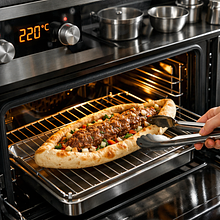
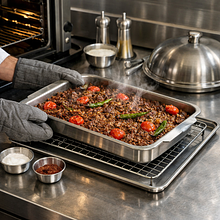
Preheat the oven to 220°C (top-bottom). Place the shaped kebab on the rack, with a baking tray lined with parchment paper underneath to catch the juices. Put it in the preheated oven and bake for 15 minutes at 220°C, then reduce the temperature to 180°C and bake for another 30–35 minutes until the meat is browned and firm. Continuously collect the juices from the tray (baste the meat 1–2 times) – this will keep it juicy.

The best is a grill with a tray underneath. Use a kitchen thermometer: the internal temperature should reach 75°C. Do not bake at a lower temperature for too long — the meat will become dry. Baking time depends on the size of the roll/loaf.

Resting and Slicing

5

After baking, remove the meat from the oven and let it rest for 8–10 minutes to allow the juices to settle. Then, using a sharp carving knife (preferably a long one), slice the meat thinly across the grain (2–3 mm). If you are using a skewer, remove the meat from it and slice it lengthwise or crosswise for thin slices.

Do not slice the meat immediately after removing it — it will lose too many juices. Use a very sharp knife for thin slicing; moist meat is easier to cut with a sharp blade.

Yogurt sauce

6

In a bowl, add 200 g of natural yogurt, press 1 clove of garlic, add 1 tablespoon of lemon juice (about 15 g), chopped parsley (about 10 g), 1/2 teaspoon of salt (about 3 g), and 1/4 teaspoon of pepper. Mix vigorously with a spoon until the sauce becomes smooth. Set aside in the refrigerator for at least 10–15 minutes to let the flavors meld.

Use a ceramic or plastic bowl and a spoon. If the sauce is too thick, add a teaspoon of cold water to thin it out. For a milder flavor, reduce the amount of garlic.

Vegetables

7

Slice the cucumber into thin slices (or half-moons), the tomato into thin slices, and the onion into thin half-moons. You can place the onion in a bowl with a tablespoon of lemon juice and a pinch of salt for 5 minutes to mellow its sharpness. Chop the remaining parsley for sprinkling.

Use a sharp knife and a cutting board. If you want, you can make a quick salad: tomato + cucumber + parsley with a little salt and oil.

Assembly and serving

8

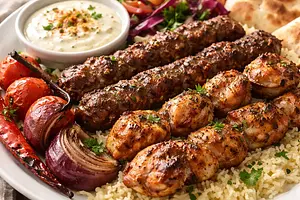
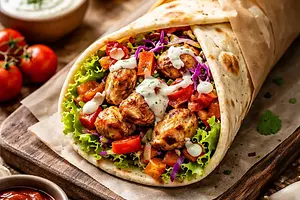
Heat the Turkish breads for 2–3 minutes in the oven at 180°C or on a dry skillet until they are flexible. Cut each bread in half (not all the way, just to create a pocket), spread 1–2 tablespoons of yogurt sauce inside, add a portion of thinly sliced meat (about 150 g per person), add slices of tomato, cucumber, and onion, drizzle with lemon juice, sprinkle with parsley, and optionally drizzle with a bit of chili sauce (optional). Serve immediately.

The best is to serve immediately — the bread will be soft and the meat hot. Use serving gloves at the party to make the portions look nice. Additionally, you can add chili sauce for spiciness.

Fun Fact

💡

Döner kebab, popular on the streets of Turkey and around the world, evolved from a vertical rotisserie; in Poland, well-known street versions have been adapted for home ovens, preserving the main spices and the technique of thinly slicing the meat.

Best for

Tips

🍽️ Serving

Serve the kebab hot, right after slicing the meat. For contrast, serve an additional portion of sauerkraut or pickles. You can serve it with fries or baked potatoes. For a less greasy version, remove excess fat from the tray and serve the meat without additional fatty sauce.

🥡 Storage

Store the meat and sauce separately in airtight containers in the refrigerator for up to 2 days. Do not store filled buns for longer than 2 hours at room temperature. To reheat: place the slices of meat on a baking sheet and heat in the oven at 180°C for 6–8 minutes to prevent drying out.

📸 Ugotowane przez społeczność

Zaloguj się, aby dodać zdjęcie
Dodaj zdjęcie gotowej potrawy

Po zatwierdzeniu przez moderatora otrzymasz 10 punktów doświadczenia.

🍲

Nikt jeszcze nie dodał zdjęcia. Bądź pierwszy!

Comments (0)

Be the first to comment on this recipe!

Add a comment

You might also like

Recipe Categories

Main dishes
Main dishes in: New Year's Eve

Main dishes for New Year's Eve should be hearty and impressive to satisfy the palates of all guests.

See all recipes in this category

Middle Eastern cuisine is a mosaic of flavors from Lebanon, Israel, Turkey, and Iran - aromatic and rich in spices. Hummus, falafel, baba ghanoush, and tahini are staples you can prepare at home. Kebabs, shawarma, and kofta - meat specialties from the grill and rotisserie. Tabbouleh, fattoush, an...

See all recipes in this category
Reklama