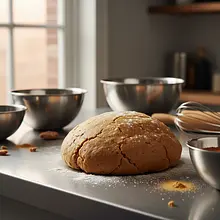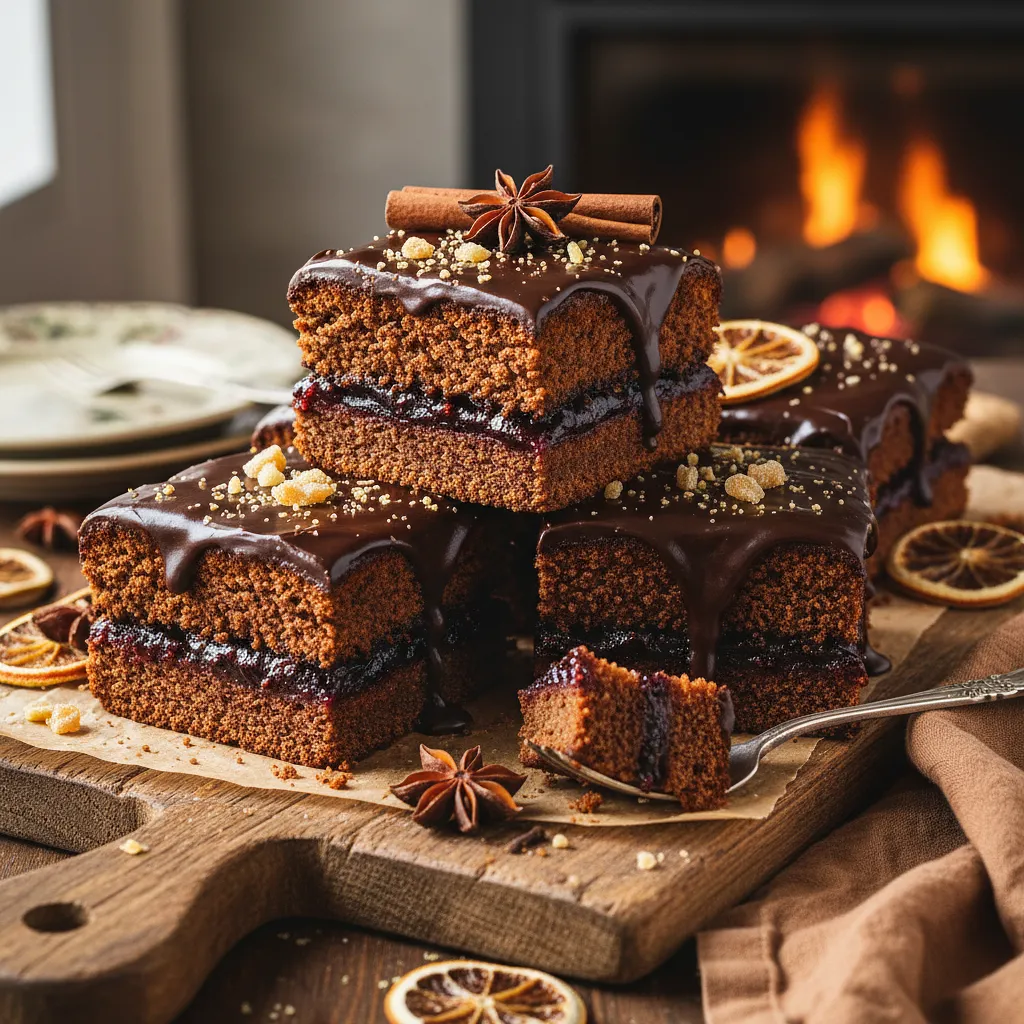
Here is the essence of Polish holidays captured in the form of a moist, aromatic cake. Matured Old Polish Gingerbread is not an ordinary bake – it’s a ritual that begins weeks before Christmas Eve. Its secret lies in the aging process, during which the cake acquires an extraordinary depth of flavor. Honey, butter, and a wealth of spicy seasonings come together in a harmonious blend, creating a thick, dark mass. After baking, the gingerbread is layered with thick, tart plum preserves that perfectly balance its sweetness. The whole is enveloped in a velvety coating of dark chocolate. Each bite is a journey through the traditional flavors of childhood, and the aroma wafting during baking unmistakably heralds the arrival of the magical holiday season. This cake gets better with age.
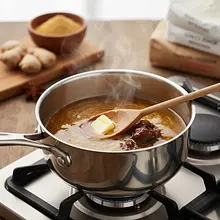
In a heavy-bottomed pot, place the butter, honey, and brown sugar. Heat on low, stirring constantly with a wooden spoon, until all the ingredients dissolve and combine into a smooth, liquid mixture. It is very important not to bring the mixture to a boil – it should only be hot. Remove the pot from the heat and set the mixture aside to cool completely. It should reach room temperature, which may take about 1-2 hours. This is crucial because a hot mixture would scald the flour and curdle the eggs.
Ingredients:
Natural multifloral honey, Extra butter 82%, Muscovado brown sugar
Use a pot with a capacity of at least 2 liters, as the mixture may froth slightly. Stirring prevents the sugar and honey from burning. You can speed up the cooling process by pouring the mixture into a cold metal bowl.
Kneading the dough
2
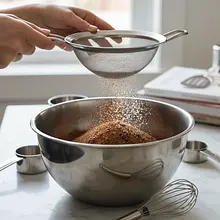
In a large bowl, sift the flour, gingerbread spice, cocoa, and salt. Sifting will aerate the ingredients and prevent lumps. Mix the dry ingredients with a whisk. Make a well in the center. To the cooled honey mixture, add the milk and eggs, then whisk with a fork to combine. Pour the wet ingredients into the well of the dry ingredients. If you are using orange zest, add it now. Start mixing everything with a large spoon or spatula, and when the ingredients begin to come together, switch to kneading by hand or use a mixer with dough hooks. Knead for about 10 minutes until a thick, smooth, and slightly sticky dough forms. Don't worry about its consistency – it will firm up during resting.
It's best to use a large, stable bowl. The dough will be very thick, so if you're kneading by hand, be prepared for some effort. If you're using a stand mixer, set it to low speed. The finished dough should pull away from the sides of the bowl but still be sticky to the touch.
Dough maturation
3
Transfer the prepared dough to a glass or ceramic container (e.g., a Roman pot or a large jar). Cover the container with a clean cotton cloth or cheesecloth and secure it with a rubber band or string. Do not seal it tightly – the dough needs to 'breathe'. Place the container in a cool, dark place (e.g., pantry, basement, or the bottom of the fridge) for a period of 3 to 6 weeks. The longer the dough matures, the tastier and more aromatic the gingerbread will be.
The ideal temperature for aging is 4-8°C. Avoid warm and sunny places. Once a week, you can check on the dough to see if everything is okay. Over time, its color will become even darker, and the aroma more intense.
Baking gingerbread
4
After the resting period, take the dough out of the cool place and leave it at room temperature for 1-2 hours to soften slightly. Preheat the oven to 165°C (fan) or 175°C (top-bottom). In a small bowl, mix the baking soda with one tablespoon of milk until dissolved. Add the mixture to the dough and knead again for a few minutes to distribute the soda evenly. Divide the dough into two equal parts. Place each part into a loaf pan (approximately 10x30 cm) lined with baking paper. Put it in the preheated oven and bake for 45-55 minutes. To check if the gingerbread is ready, insert a wooden stick into the center – if it comes out dry, the cake is baked. Remove from the oven and cool in the pans for 15 minutes, then transfer to a rack to cool completely.
Ingredients:
Baking soda, Milk 3.2%
The dough after resting is hard, which is normal. Warming it up will make it easier to mix in the baking soda. Thoroughly mixing in the baking soda is crucial for the even rising of the dough. Do not open the oven for the first 30 minutes of baking to prevent the dough from collapsing.
Layering and icing
5
When the gingerbread layers are completely cool (preferably the next day), cut each of them in half lengthwise using a long serrated knife. This will result in a total of four layers. Gently heat the plum jam in a small saucepan to make it more fluid and easier to spread. Generously spread half of the warmed jam on the bottom layer of one gingerbread and cover it with the top layer. Do the same with the second gingerbread. Wrap each gingerbread tightly in aluminum foil and set aside for 1-2 days, so that the moisture from the jam seeps into the dough, making it wonderfully soft.
Ingredients:
Plum preserves
Use a bread knife to cut the cake. Try to cut evenly. Gently warming the preserves really makes the job easier. Don't skip the 'resting' stage after layering – that's when the gingerbread acquires its perfect, moist texture.
Decoration
6
After 1-2 days, prepare the glaze. Break the chocolate into small pieces and place it in a bowl. Heat the heavy cream in a small saucepan until just about to boil, but do not let it boil. Pour the hot cream over the chocolate and let it sit for 2-3 minutes without stirring. After this time, gently mix everything with a whisk or spatula until a smooth, uniform, and shiny glaze (ganache) forms. Set the glaze aside for 10-15 minutes to thicken slightly. Unwrap the gingerbread from the foil and place them on a rack with parchment paper underneath. Generously pour the prepared glaze over the gingerbread, allowing it to drip down the sides. If you are using nuts, sprinkle them on top before the glaze sets. Leave it to fully harden.
Ingredients:
Bitter chocolate 70%, 30% heavy cream, Walnuts
Do not mix the ganache too vigorously to avoid introducing air bubbles. If the glaze is too thin, wait a little longer. If it is too thick, add a bit of hot cream. The paper under the rack will make cleaning easier.
Fun Fact
💡
The tradition of aging gingerbread dates back to the Middle Ages in Poland. It was a luxury baked good that only the wealthiest could afford, due to the high price of honey and exotic spices. The dough was often prepared after the birth of a daughter, and baked only for her wedding, which attests to its remarkable durability.
Gingerbread tastes best when cut into thick slices (about 1.5 cm). Serve it at room temperature. It pairs wonderfully with a cup of black coffee, orange tea, or a mug of mulled wine. It can also be served with a dollop of whipped cream or a scoop of vanilla ice cream.
🥡Storage
Store the finished gingerbread in an airtight container in a cool place (not in the fridge) for up to 2-3 weeks. With each passing day, it will gain moisture and become even better. It can also be frozen, tightly wrapped in plastic wrap and aluminum foil.
Homemade cakes and pastries are the heart of Polish culinary tradition - sweet memories from childhood. In our collection, you will find recipes for classic yeast cakes, shortcrust, sponge, and cheesecake. Apple pie, poppy seed cake, gingerbread, Easter babka, chocolate cake, and New York cheesec...
Desserts are a sweet ending to a meal that brings joy to both children and adults. In this category, we present recipes for a variety of sweets - from simple creams and mousses, to elegant panna cottas, and exquisite fruit tarts. Our desserts include both classics of Polish cuisine - fruit jelly,...
Christmas Eve is the most important evening of the year - a time for tradition, family, and special dishes. Our collection of Christmas Eve recipes includes all 12 traditional dishes: from red borscht with dumplings to poppy seed cake and kutia. Recipes for carp in various versions: fried, baked,...
Christmas Eve dishes are the heart of Polish holiday tradition - 12 meatless dishes on the table. Fried, baked, jellied, and Jewish-style carp - the main star of Christmas Eve. Dumplings with cabbage and mushrooms - handmade according to grandma's recipes. Small mushroom-filled pockets for borsch...
Christmas desserts are a sweet finale to the festive dinner - traditional and unique. Poppy seed roll and shortcrust pastry - with ground poppy seeds and dried fruits. Christmas kutia made from wheat, poppy seeds, honey, and nuts - an Orthodox tradition. Old Polish gingerbread maturing for weeks ...
Comments (0)
Be the first to comment on this recipe!
Add a comment