Avocado and Cottage Cheese Pasta

Pikantne Snacks Vegetarian Dishes 10 min Easy 13 wyświetleń ~29.26 PLN * - (0)
Rate:
(0)
Start Cooking

Description

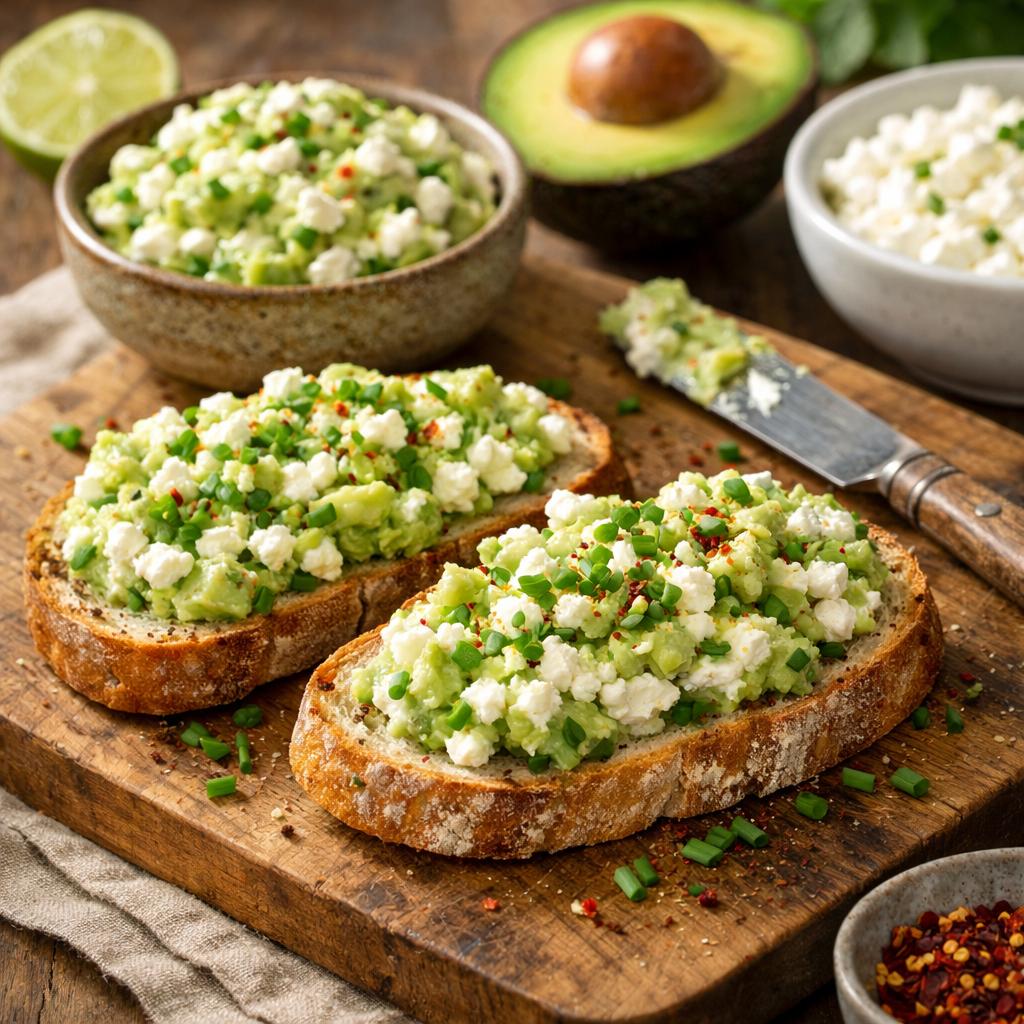
Creamy paste made from ripe avocado combined with delicate cottage cheese — a simple winter idea for a filling and nutritious snack. The dish combines the smoothness and creaminess of avocado with the slightly grainy texture of the cheese, the tartness of lemon, and the aroma of garlic and fresh chives. This dish, inspired by Mediterranean cuisine with a Polish twist (cottage cheese as a local dairy), works great as a spread for rye bread, a dip for raw root vegetables, or a quick breakfast for a warm bite. Visually, the paste has an intense green color broken up by white specks of cheese and green strands of chives — aesthetic and appetizing on any table.

Ingredients Used

Ingredients (9)

Servings:
4
  • Avocado 2 szt. (~400 g)
  • Cottage cheese 200 g
  • Lemon 0.6 szt. (~50 g)
  • Rapeseed oil 15 g
  • Garlic 1 ząbek (~5 g)
  • 🌿 Przyprawy
  • Salt 2 g
  • Black pepper 2 szczypty (~1 g)
  • ✨ Opcjonalne
  • Chives 0.3 pęczków (~30 g)
  • Rye bread 200 g
💰 Szacowany koszt dania: ~29.26 PLN (7.32 PLN/porcję)
* Brak cen dla niektórych składników

💡 Kliknij na składnik aby oznaczyć jako użyty

Preparation steps

Ingredients and preparation

1

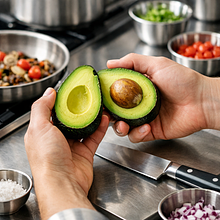
Check the ripeness of the avocado: gently press the fruit with your thumb. It should yield slightly but not be mushy. The skin should be free of deep, dark dents. If the fruit is hard, set it aside for 2-3 days at room temperature; if very soft, use it immediately.

Use gloves if you don't want to feel the strong aroma of avocado on your fingers. A sharp knife and a cutting board are essential. Don't buy fruits with large black spots under the skin.
2

Prepare the lemon and garlic. Place half a lemon (about 50 g) on a cutting board and press it down with your hand, then cut it in half and squeeze the juice into a small bowl, removing the seeds. Peel a clove of garlic and chop it very finely or press it through a garlic press — if you're concerned about the strong flavor, wait 2-3 minutes after chopping before mixing it with the lemon juice, which will mellow the sharpness.

For juicing, use a strainer or hold it by hand to catch the seeds. If you don't have a garlic press, chop as finely as possible and press with a knife.

Assembling the paste

3

Cut the avocado in half lengthwise around the pit. Twist the halves in opposite directions to separate them. Gently tap the pit with the knife blade and twist to remove it. Then, use a spoon to scoop the flesh out of the skin and transfer it to a large bowl. If the avocado has dark spots inside, remove them with a spoon.

Use a sharp knife, hold the fruit on the cutting board while slicing. If you're afraid of hitting the pit with the knife, scoop it out with a spoon. Always secure the stability of the fruit with one hand.
4

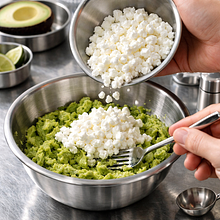
In a bowl with avocado, add cottage cheese (200 g). First, mash the avocado with a fork for about 1-2 minutes — aim for a smooth-creamy consistency with small lumps if you prefer texture. Then add the cottage cheese and mix with a wooden spoon or silicone spatula for another minute until the ingredients are combined: the paste should be uniform, slightly fluffy, but with noticeable curds of cheese.

Use a bowl with a diameter of about 20 cm, a fork to mash the avocado, and a wooden spoon for mixing. If you don't have a fork, use a potato masher. Don't blend for too long — keep some texture.

Seasoning

5

Add the juice of the lemon (the whole from the prepared half), rapeseed oil (15 g), chopped garlic, salt (2 g), and pepper (1 g). Mix for 30–45 seconds and taste. If the paste is too thick, add another teaspoon of oil or a tablespoon of cheese and mix. The goal is a creamy, slightly moist consistency without excess liquid.

Add salt and pepper gradually — it's better to add more later than to over-salt. If you want a more lemony note, add 5–10 g more juice.

Finishing and serving

6

Transfer the paste to a serving dish. If you are using chives (30 g), finely chop a portion and sprinkle it on top for decoration and freshness. Serve with lightly toasted rye bread (200 g) — the paste also tastes great with raw carrots, celery sticks, or crackers.

For serving, it's best to use a small ceramic bowl with a diameter of 12–18 cm. Toast the bread in a dry pan for 1–2 minutes on each side or in a toaster until it becomes slightly crispy.

Final tips

7

Taste the paste once more before serving and adjust the seasonings. If you are preparing it in advance, place plastic wrap directly on the surface of the paste to minimize air contact and discoloration. Remove it to room temperature for 10–15 minutes before serving to allow the flavors to develop.

A common mistake is drying out the pasta - if this happens, add a little oil or cream cheese and mix. Do not store for longer than 48 hours.

Fun Fact

💡

Avocado comes from Central America, where it has been cultivated by indigenous people for millennia; in Poland, it has been popularized as a luxurious ingredient in healthy spreads and salads over the past few years.

Best for

Tips

🍽️ Serving

Serve the pasta in a dish of contrasting color (e.g., white or earthenware), sprinkled with chives and freshly ground pepper. Add cucumber slices, carrot, or radish slices to the set. For a heartier version, add slices of smoked tofu or a hard-boiled egg (optional).

🥡 Storage

Store in an airtight container in the refrigerator for up to 48 hours. To reduce darkening, cover the paste directly with plastic wrap or place a thin layer of oil on top. Reheating is not recommended — only bring it to room temperature before serving.

📸 Ugotowane przez społeczność

Zaloguj się, aby dodać zdjęcie
Dodaj zdjęcie gotowej potrawy

Po zatwierdzeniu przez moderatora otrzymasz 10 punktów doświadczenia.

🍲

Nikt jeszcze nie dodał zdjęcia. Bądź pierwszy!

Comments (0)

Be the first to comment on this recipe!

Add a comment

You might also like

Recipe Categories

Snacks
Snacks in: New Year's Eve

Snacks are the perfect way to make the wait for midnight more enjoyable; they should be small but impressive.

See all recipes in this category

Vegetarian cuisine is a wealth of flavors without meat - healthy, colorful, and filling. Plant-based proteins: lentils, chickpeas, beans, peas, and soy take center stage. Cheeses and dairy: feta, halloumi, ricotta, and mascarpone in main dishes. Eggs in various forms: omelets, frittata, shakshuka...

See all recipes in this category
Reklama