Start by preparing the marinade. In a small bowl, combine Dijon mustard, liquid honey, 2 tablespoons of rapeseed oil, dried marjoram crushed in your hands, salt, and freshly ground pepper. Using a small whisk or fork, mix everything vigorously until you achieve a smooth, uniform emulsion with the consistency of a thick sauce. Set aside.
Description
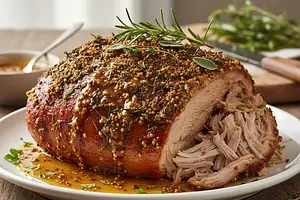
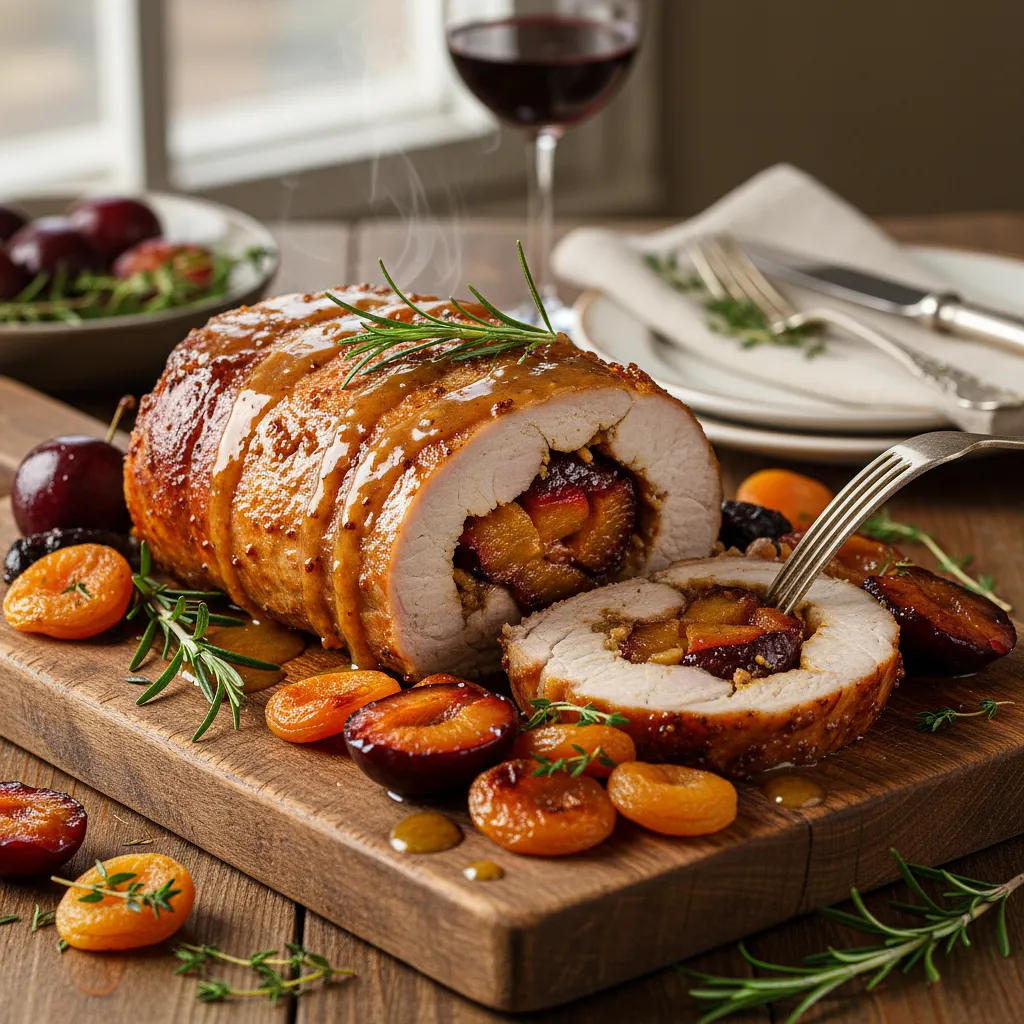
This dish is the essence of holiday elegance and a perfect example of how to plan cooking to avoid pre-holiday chaos. Juicy, aromatic pork loin roll, stuffed with the sweetness of dried plums and apricots, is a classic of Polish cuisine in a modern rendition. The meat, marinated overnight in a honey-mustard glaze with a hint of marjoram, becomes incredibly tender and full of flavor. During baking, a rich, flavorful sauce is created, which perfectly complements the dish. Visually, the dish looks stunning – when sliced, it reveals a colorful, appetizing mosaic of fruit filling. It is the perfect main course for a festive dinner, which can largely be prepared the day before, leaving only the pleasure of baking and enjoying the wonderful aroma wafting throughout the house for the last minute. Serve it with Silesian dumplings and red cabbage to create an unforgettable holiday memory.
Składniki (14)
- Boneless pork loin 1500 g
- Dried plums 18.8 szt.
- Dried apricots 150 g
- Onion 2 szt.
- Garlic 4 ząbki
- Dijon mustard 45 g
- wildflower honey 60 g
- Rapeseed oil 60 g
- Vegetable broth or water 250 ml
- 🌿 Przyprawy
- Dried marjoram 2 łyżeczki
- Salt 10 g
- Pieprz czarny świeżo mielony 2 szczypty
- ✨ Opcjonalne
- Walnuts 50 g
- Fresh rosemary 5 g
💡 Kliknij na składnik aby oznaczyć jako użyty
Preparation steps
Planning: Marinade and Meat (The Day Before)
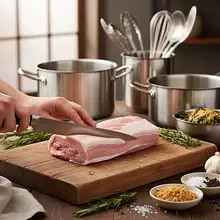
Now the most important stage of preparation: scoring the pork loin. Place the meat on a large, stable cutting board. Using a very sharp, long knife, make a cut along the longer side, about 1/3 of the thickness of the meat, but do not cut all the way through. Open the meat like a book. Then, in the thicker part, make another similar cut, also not all the way through, and open it again. Your goal is to obtain one large, rectangular piece of meat about 1.5-2 cm thick. If the piece is uneven, gently pound it with a meat mallet through plastic wrap to even out its thickness.
Rub the prepared piece of meat thoroughly on both sides with the marinade you prepared earlier. Massage it into the meat with your fingers, making sure it covers the entire surface, including all the crevices. Then roll the meat back into its original shape (without the filling yet), wrap it tightly in plastic wrap, and place it in the refrigerator for at least 12 hours, preferably for a full day. This time will allow the marinade to penetrate deeply into the structure of the meat.
Day of Serving: Stuffing and Shaping the Roll
Take the meat out of the fridge about 30-40 minutes before stuffing, so it reaches room temperature. In the meantime, prepare the filling. Cut the dried plums and apricots into larger cubes (about 1 cm). Peel and finely chop the onions. Peel the garlic and either press it through a garlic press or chop it very finely. In a large skillet, heat the remaining 2 tablespoons of oil. Add the onions and sauté over medium heat for 5-7 minutes until they become translucent and soft. Add the garlic and sauté for another minute until it releases its aroma. Remove the skillet from the heat, add the chopped fruits and optionally chopped walnuts. Mix everything and set aside to cool slightly.
Unroll the marinated pork loin on a board. Evenly spread the prepared and slightly cooled fruit and onion filling over its entire surface. Remember to leave about a 2 cm free margin along one of the longer sides – this will make rolling easier and prevent the filling from spilling out.
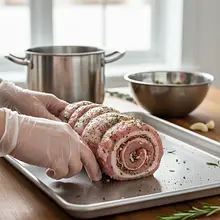
Now it's time to roll. Starting from the longer side where you didn't leave a margin, begin to tightly roll the meat into a log. Try to do this as tightly as possible so that the roll retains its shape after baking. Once the roll is wrapped, prepare the butcher's twine. Wrap the roll with the twine at several centimeter intervals along its entire length, tying it securely. This will prevent the meat from unrolling during baking.
Baking and Making the Sauce
Preheat the oven to 180°C (fan) or 200°C (top-bottom). In a large baking dish or roasting pan that can fit the roll, heat a little oil on the stove. Carefully place the roll in the dish and sear it on each side until golden brown, about 2-3 minutes per side. This process will seal the pores in the meat and keep the juices inside.
Once the roulade is seared, remove the dish from the stove. Pour hot broth or water into the bottom. Optionally, you can add a sprig of fresh rosemary. Place the dish uncovered in the preheated oven. Bake for about 80-90 minutes. Every 20 minutes, baste the roulade with the sauce that forms at the bottom of the dish. To check if the meat is done, insert a kitchen thermometer into the thickest part – it should read 70-72°C. If you don't have one, clear juice, not pink, should flow out when pierced.
Remove the baked roll from the oven and carefully transfer it to a cutting board. Loosely cover it with aluminum foil and let it rest for 10-15 minutes. This is an extremely important step that allows the juices inside the meat to distribute evenly. If you cut it right away, most of the delicious juices will run out onto the board.
Place the dish with the sauce that remained after roasting on the stove over medium heat. Scrape all the tasty, browned bits from the bottom. Cook the sauce for a few minutes until it thickens slightly. Taste and season with salt and pepper if needed. If the sauce is too thin, you can thicken it with a bit of cornstarch mixed in cold water. Before serving, remove the string from the roll and slice it into pieces about 1.5 cm thick. Serve drizzled with hot sauce.
Fun Fact
The tradition of combining pork with dried plums in Polish cuisine dates back to ancient times. It was a way not only to enhance flavor but also to preserve and add sweetness to dishes at a time when sugar was a luxury item. Plums perfectly balance the taste of fattier cuts of meat.
Best for
Tips
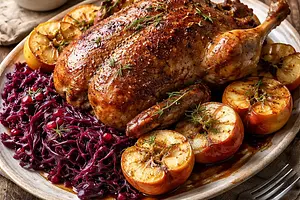
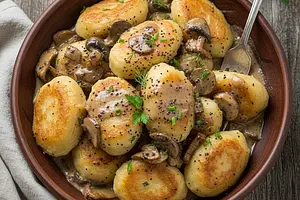
Serve the roll warm, arranged on a large platter and drizzled with sauce. It pairs perfectly with traditional Polish sides: Silesian dumplings with a hole for collecting the sauce, mashed potatoes, or buckwheat. As a vegetable side, warm red cabbage, sautéed beets, or a roasted root vegetable salad work wonderfully.
The remaining roll can be stored in the refrigerator, in an airtight container, for up to 3 days. It is best to reheat it in slices on a skillet with a bit of sauce or in the oven (160°C) covered with aluminum foil to prevent it from drying out. The roll also tastes great cold as a gourmet cold cut for sandwiches.
📸 Ugotowane przez społeczność
Zaloguj się, aby dodać zdjęcieDodaj zdjęcie gotowej potrawy
Po zatwierdzeniu przez moderatora otrzymasz 10 punktów doświadczenia.
Nikt jeszcze nie dodał zdjęcia. Bądź pierwszy!
Comments (0)
Be the first to comment on this recipe!
Add a comment